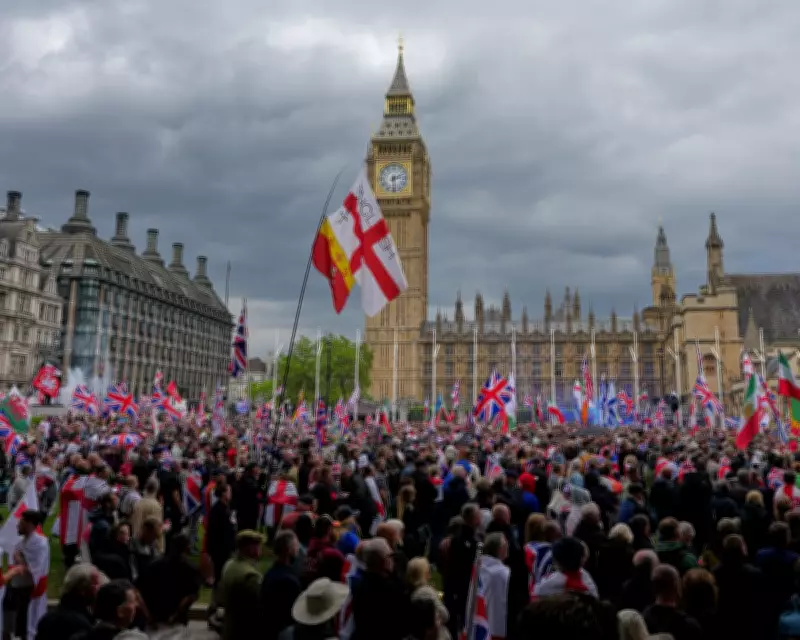
Thousands of protesters took to the streets of London on Saturday, 16 May 2026, for two competing demonstrations: the Nakba 78 March for Palestine and the far-right Unite the Kingdom rally. The events unfolded simultaneously, drawing significant police presence and public attention.
Pro-Palestine March
The Nakba 78 March for Palestine commemorated the 78th anniversary of the Nakba, the mass displacement of Palestinians in 1948. Demonstrators called for an end to UK support for Israel and protested against the Unite the Kingdom rally. Police estimated that about 30,000 people would attend the pro-Palestine march, which featured a wide range of activists carrying signs and banners, including slogans against Donald Trump and Nigel Farage. The Palestinian key, a symbol of homes lost in the Nakba, was prominently displayed.
Former Labour leader and Your Party co-founder Jeremy Corbyn addressed the crowd, stating that Westminster needed a change in policy, not 'personalities'.

Far-Right Rally
The Unite the Kingdom rally, called by far-right activist Tommy Robinson (also known as Stephen Yaxley-Lennon), concluded at Parliament Square, which features a statue of Winston Churchill. The march was smaller than last year's protest. Supporters of Robinson gathered opposite police, and some arrests were made, including one protester in South Kensington.
Police officers were deployed in large numbers to maintain order between the two groups. The far-right rally and the pro-Palestine march took place at the same time, with participants from both sides occasionally coming into close proximity.
Key Observations
- Pro-Palestine: Thousands marched, with some bringing instruments and displaying banners against Donald Trump and Nigel Farage.
- Far-Right: The Unite the Kingdom rally was smaller than previous years, but still drew a significant number of supporters.
- Police: Officers made at least one arrest in South Kensington during the pro-Palestine march.
The demonstrations highlighted ongoing tensions around the Israeli-Palestinian conflict and the rise of far-right activism in the UK. Both events remained largely peaceful, with police managing to keep the two groups separate.