The Home Office has quietly passed laws to delegate biometric checks for mercy flights to allies, sparking accusations that Labour is outsourcing security vetting amid fears terrorists are slipping through the net. Immigration chiefs previously faced a choice between skipping checks or withdrawing support during chaotic evacuations.
Background of the Evacuation Blunders
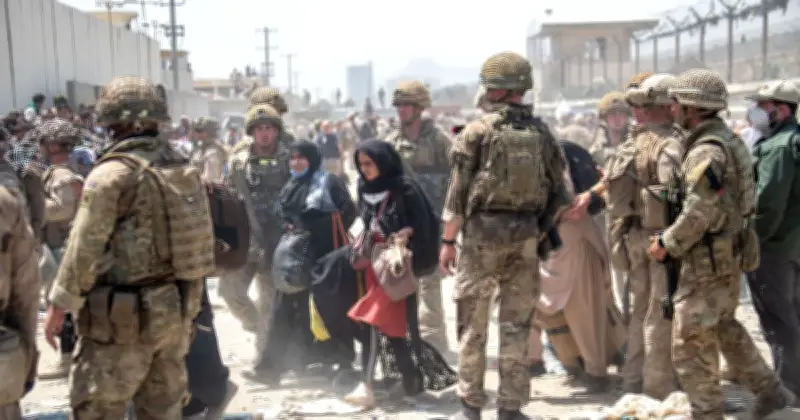
Former Defence Secretary Sir Ben Wallace admitted to MPs that Taliban fighters may have been granted asylum in Britain after slipping onto flights during the evacuation of Kabul. He stated: 'I’m sure in a large-scale evacuation we didn’t get everything right, but ultimately we tried to vet and did as much as we could.' The Home Office hopes that allowing allies to gather critical details will prevent dangerous individuals from boarding flights. However, one source quipped that this could lead to France carrying out security checks, despite their documented failures in the Channel migrant crisis.
Expert Concerns Over Sovereign Capability
Michael McManus, Director of Research at the Henry Jackson Society, warned: 'The lessons of Afghanistan were not simply about collecting better data. They were also about ensuring Britain has the sovereign capability to conduct security screening and evacuation operations without excessive reliance on partners. While cooperation with allies will always be necessary, the UK should be cautious about building critical border and security functions around the assumption that others will do the job for us. Recent experience has shown that international partners do not always deliver outcomes in line with British interests. The Government should therefore treat third-party biometric collection as a contingency measure rather than a substitute for maintaining sufficient UK personnel and capabilities overseas. At a time when public concern over illegal migration and the screening of arrivals remains high, any proposal to outsource elements of migrant vetting to third countries or foreign personnel must be approached with caution. Public confidence in the immigration system depends on the British Government being able to demonstrate that those entering the country have been subject to rigorous checks carried out to standards that it can verify and control.'

Data Breach and Asylum Offers
The Taliban swept to power after the United States withdrew its military from Afghanistan in August 2021. Tens of thousands of Afghans applied to come to the UK, claiming they had worked for the British. Following the Kabul evacuation, the names of some 33,000 people who had been helping Western forces were accidentally shared online by a Royal Marine in April 2022, exposing them to the Taliban. The blunder was discovered in August 2023 and led to nearly 24,000 Afghan soldiers and their families being secretly offered asylum as part of the Afghan Relocations and Assistance Policy (ARAP).
Political Reactions
Reform UK’s Zia Yusuf said: 'The Tory Government is the most notorious people smuggling gang in British history. Tens of thousands of Afghans have been brought here without the knowledge of the British public, costing £5.7 billion. Now we find out some of them are potentially terrorists - that these men were not vetted. It is treachery of the highest order.'

Home Office Documents Reveal Gaps
Home Office documents seen by the Daily Express reveal: 'Under the current framework, biometric data collection is tied to an application for entry clearance, which needs to be completed online. This process is not usually practical during evacuations, or other critical situations where decisions need to be made at pace on the risk to individuals and the Government. It also does not account for those who, whilst wishing to be supported to exit a country, have no intention to travel on to the UK. It can also hinder the Government’s ability to make informed decisions about providing support or facilitating movement.' Officials admitted this means terrorists, extremists, or individuals who 'present a known risk' to the UK could be 'supported to exit a country, or travel to the UK'. In a section discussing financial costs, officials add: 'This measure grants the Home Office the power to delegate the collection and capture of biometric information to authorised persons (such as US military personnel). It is currently unclear to what extent that power will be used and if it will result in a requirement for more staff or technology.'