
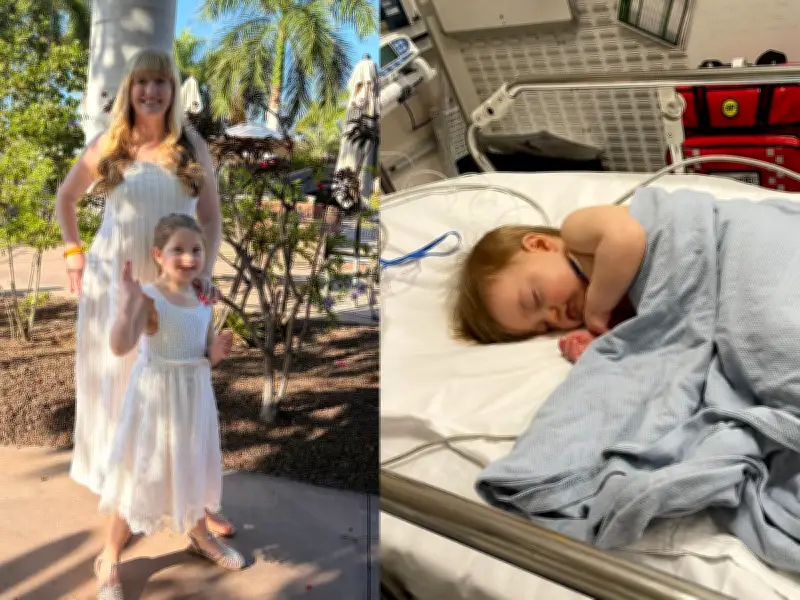
Louise van der Valk, 36, from Essex, is urgently raising funds for a cure after her daughter Scarlett was diagnosed with beta-propeller protein-associated neurodegeneration (BPAN), a rare genetic disorder that will likely trigger dementia and Parkinson's disease-like symptoms during adolescence. Scarlett, now five, suffered a 30-minute seizure on the day of her first birthday party in February 2022, which led to a diagnosis following genetic testing in early 2023.
Diagnosis and Early Symptoms
Scarlett experienced her first prolonged febrile seizure just an hour before her first birthday party. Louise recalled: "Her eyes glazed over, she started to dribble and she went very still." Doctors initially reassured her that febrile seizures were common in young children and that Scarlett would likely outgrow them. However, further seizures occurred in April and October 2022, the latter lasting about an hour and requiring hospitalisation. At 20 months, Scarlett had not yet begun talking. An MRI and genetic testing in October 2022 eventually confirmed a mutation in the WDR45 gene, linked to BPAN.
Impact of BPAN
BPAN is a progressive iron-storage disorder that causes seizures, developmental delays, and intellectual disability in early childhood. As patients enter late adolescence or adulthood, they typically develop movement disorders, cognitive decline, and symptoms similar to dementia and Parkinson's disease, including loss of ability to walk, talk, and swallow. According to Action Medical Research, children with BPAN may eventually lose these skills and become more susceptible to infections. Louise described the diagnosis as "a nightmare I couldn't wake up from."
Scarlett's Current Condition
Despite initial predictions that she might never speak, Scarlett now attends a mainstream school with special educational needs support. She can run, talk, and enjoys Disney princesses and singing. Doctors believe she may be on the milder end of the BPAN spectrum, as some children remain non-verbal and immobile. Louise said: "It's heartbreaking to know she's going to regress, but if they find a cure, she could potentially live a happy, long and normal life." Scarlett undergoes yearly assessments at Great Ormond Street Hospital, which Louise finds emotionally draining.
Fundraising Efforts
Following Scarlett's diagnosis, Louise raised over £30,000 for Great Ormond Street Hospital Charity to fund BPAN research. In 2024, the money supported a research grant at Great Ormond Street and University College London focused on finding a cure, as well as a family day for those affected. Louise and her fellow campaigners from Action for BPAN, where she serves as a parent ambassador, are now aiming to raise £2.3 million to advance gene therapy research into clinical trials and secure government backing. In June 2026, she climbed Snowdon with colleagues as part of these efforts. Louise said: "We're doing it for our children. They could find a cure within their lifetime. In global terms, £2.3 million really isn't a lot of money, and what a legacy for people to get behind."
Personal Impact
Louise, who also has a three-year-old daughter Felicity, described the diagnosis as devastating. She said: "Learning that even if Scarlett does remain relatively mild in childhood, without treatment the overall outcome doesn't change, was devastating. That was when the grief really hit me – the realisation that one day I would lose my daughter." She channels her energy into fundraising to maintain her "sanity" and hopes a cure can be found within Scarlett's lifetime.




