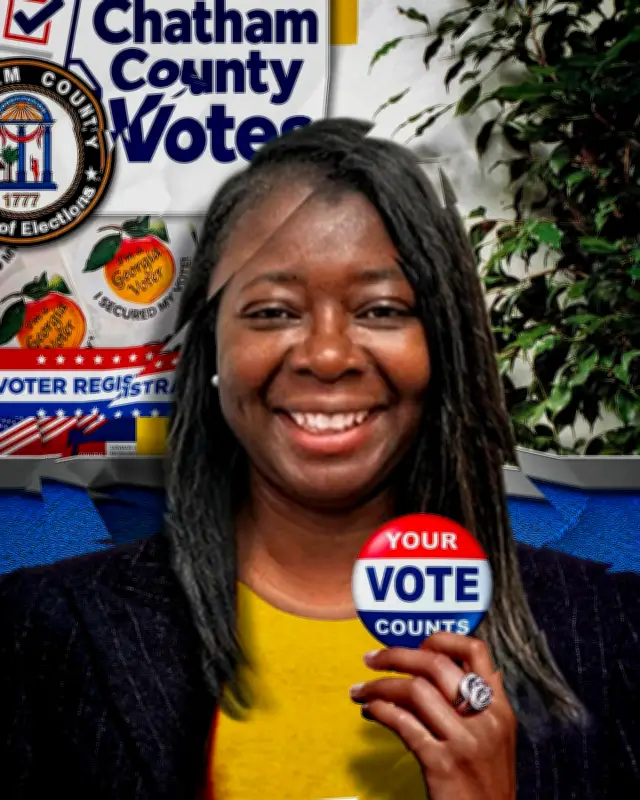
Sabrina German, director of voter registration for Chatham County, Georgia, has spent 30 years in the elections field, yet she avoids discussing politics entirely. “I don’t talk politics with anyone,” she says, a strategy born from the need to remain neutral in a deeply polarized environment.
German is one of thousands of officials nationwide responsible for registering voters and overseeing elections. Her role places her in the crosshairs of election deniers and political activists ready to allege missteps, whether real, perceived, or fabricated. To counter accusations of partisan bias, she keeps her own views private.
A Career Built on Neutrality
German, 56, grew up in McClellanville, a town of fewer than 1,000 on the South Carolina coast. She joined the elections field in Savannah, Georgia, in October 1996, rising from absentee ballot clerk to head of the registration office. Since last year, she has served as president of the Georgia Association of Voter Registration and Election Officials (Gavreo).
Her daily life, from volunteer work to personal relationships, is constructed to avoid politics. She has walked out of rooms when conversations turned political. “You can sway people away from the topic which they think they want to talk about, and then you can start talking about something else,” she explains. “The way you start talking about it, you begin to tell them what your office does and what you can do for them versus feeding into their politics.”
Pressure from Election Deniers
In Georgia, the fallout from the 2020 presidential election persists. Two Fulton County poll workers, Ruby Freeman and her daughter Shaye Moss, endured years of death threats after being falsely accused of election fraud. They later won a $148m defamation judgment against Rudy Giuliani. German says she would stand by workers like them: “You definitely want to stand by a person like Ruby Freeman, because you know the work that they’re doing, and you know their heart for the business.”
Conservative activists continue to inundate election offices with voter challenges and lawsuits. In the months before the 2024 election, a single voter, Helen Strahl, challenged the registration of more than 1,000 Chatham County voters and sent the board names of over 20,000 others for “list maintenance.” German’s staff spent weeks managing the deluge while preparing for the presidential contest.
Election Day Realities
Election day for German starts at 7am and often ends after 10pm. Her team answers phone calls, ensures voters go to the correct polling places, processes absentee ballots, and completes advance voting paperwork. She advises election offices to “document everything,” noting that challenges can arise months after votes are cast. “Your documents are going to be able to tell the story for your office,” she says.
Georgia counties can now open and scan absentee ballots earlier, but officials must count without stopping and finish absentee ballots by 5pm the day after the election. State law requires certification by 5pm on the Monday following the election. German worries about the toll on poll workers, who often work 16-hour shifts for $75 a day in Chatham County, with supervisors earning up to $320.
German is less concerned about security at polling places than about activists following workers home. “That’s the part that bothers me most when I talk about security,” she says. Her counterpart Brook Schreiner resigned as Chatham County’s elections director last month after the board reportedly lost confidence in her. Despite the pressure, German emphasizes that poll workers are not political: “Some of our poll workers, they really understand and feel that it’s their civic duty when they come,” she says, noting many return year after year.