Florida Military Crew Recounts 'Miraculous' Ocean Plane Rescue with Low Fuel
Florida Crew Recounts 'Miraculous' Ocean Plane Rescue

A military rescue crew in Florida has described the survival of all 11 individuals rescued from a plane crash in the Atlantic Ocean as "pretty miraculous," noting that their helicopter had just five minutes of fuel remaining when the last survivor was hoisted aboard.

Rescue Operation Details

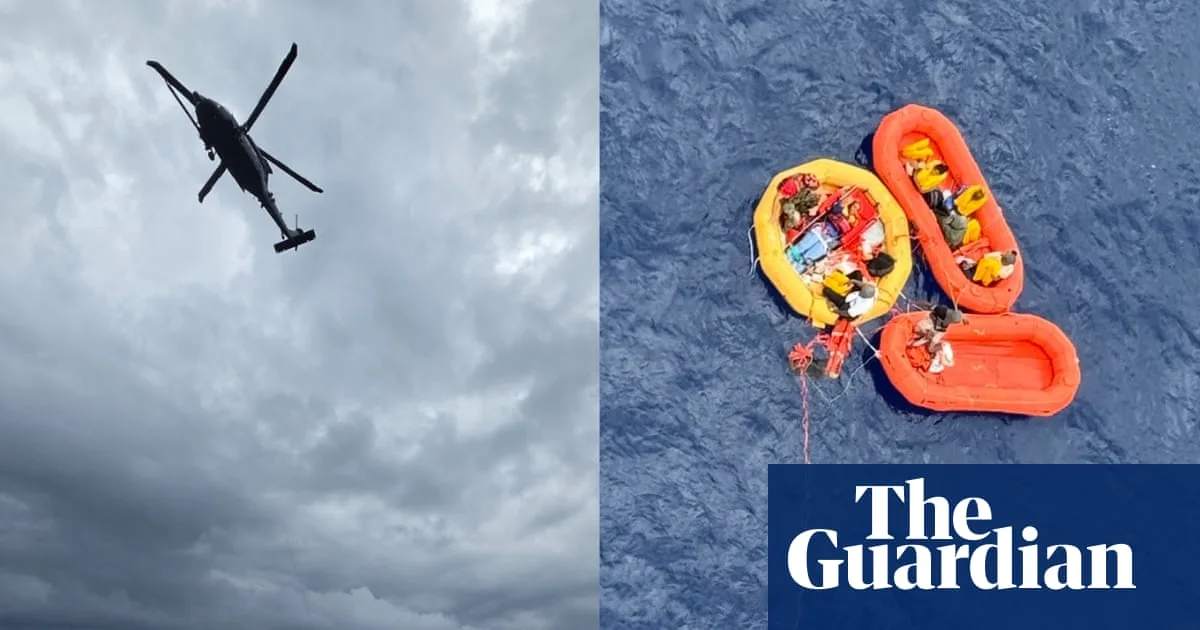
Members of the 920th Rescue Wing, based at Patrick Space Force Base near Cape Canaveral, responded swiftly on Tuesday to reach the passengers and crew in rough seas. The survivors had emerged from a small Beechcraft twin-propeller aircraft that ditched into the water approximately 80 miles east of Melbourne on Florida's east coast.

By the time rescuers arrived in a Combat King II transport plane and an HH-60W Jolly Green II helicopter, the survivors—all Bahamian adults—had been crowded into the only tiny life raft available for about five hours. There was no sign of the aircraft or wreckage, and first responders indicated the passengers had no way of knowing help was on the way.

Wide Pickt banner — collaborative shopping lists app for Telegram, phone mockup with grocery list

Crew Accounts

Major Elizabeth Piowaty, pilot of the transport plane, stated at a press conference on Wednesday: "I've not known anyone to survive ditching in the ocean. From what I've seen, for all those people to survive is pretty miraculous, and then get in the raft all together."

Over nearly an hour and a half, the helicopter crew conducted nine lifts using a winch and basket in choppy seas to bring all survivors onboard before flying them to waiting ambulances at Melbourne airport.

Lieutenant Colonel Matt Johnson, who piloted the helicopter, revealed that his aircraft had only about five minutes of fuel remaining when the last person in the raft was rescued. He termed that moment "bingo time," a military term for the hard deadline to leave the scene due to low fuel. His helicopter had in-flight refueling capability, but using it would have delayed getting survivors, some requiring urgent medical attention, to shore. "We did not need to do that yesterday, but we were ready to go," he said.

Urgency and Survivor Accounts

Piowaty noted that an incoming thunderstorm added urgency to the search, which was initiated by the plane's emergency beacon activating on impact and detected by the US Coast Guard. The aircraft was reportedly on an internal flight between the Bahamian islands of Marsh Harbour and Grand Bahama when it ditched; the cause of the emergency is under investigation.

Air Force Captain Rory Whipple, one of the crew winched down to the life raft, said the survivors "were in distress, physically, mentally, emotionally" after so long in the ocean, unaware of any rescue possibility. "They didn't even know that we were coming until we were directly overhead. So you have to imagine the emotional injuries sustained out there, not knowing if someone was going to rescue them. But that's our job. We have the best job in the world, on someone's worst day we are at our best to bring everyone home."

One survivor, Olympia Outten, a passenger traveling with her son and niece, said the pilot appeared to have gotten off course in stormy weather, fuel ran low, and the plane had to ditch. She recounted, "I was trapped, I had my seatbelt on, my son was saying 'Mummy, go' we had to get out." Her son helped free her, and in the water she kept telling herself, "God, save us, let someone see us." When the US aircrew, who had been conducting water rescue training in the area, responded, she said the survivors felt joy. Swells were increasing up to 5 feet, and storms were imminent when the rescue occurred. No official explanation for the crash has been provided.

Pickt after-article banner — collaborative shopping lists app with family illustration