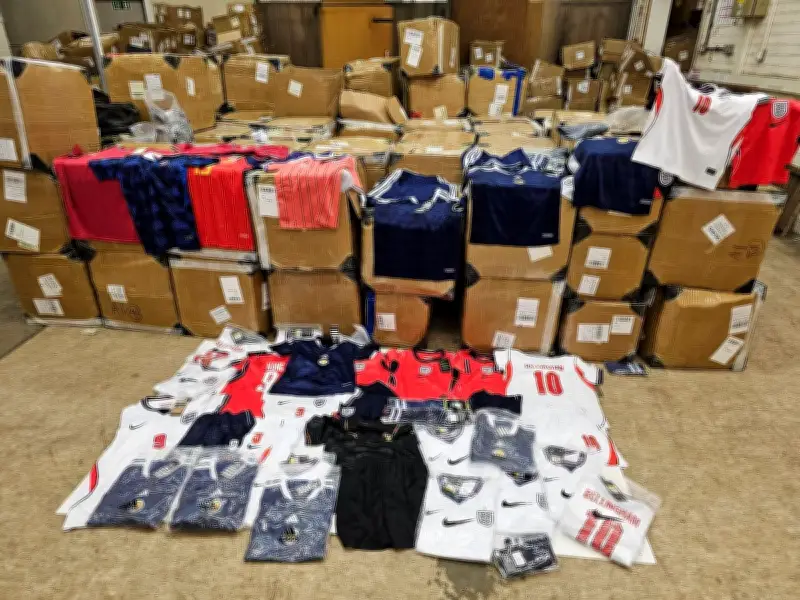
Nine tonnes of fake football shirts worth £5.5 million, intended for sale during the World Cup, have been seized in Edinburgh in the largest ever raid of its kind in the UK. The Edinburgh Council's Trading Standards Team confiscated an estimated 58,000 counterfeit jerseys and kits, including the new home and away Scotland shirts worn against Haiti, Morocco and Brazil.
Intelligence-led operations
The haul follows a series of intelligence-led operations with assistance from Police Scotland and the National Trading Standards Intellectual Property team in Newport Trading Standards. Weighing over nine tonnes and valued at over £5 million, it is one of the largest seizures of its kind in the UK.
Risks of counterfeit goods
Unlike authentic shirts, counterfeits bypass safety regulations, are often poor quality, and may expose buyers to harmful toxins in dyes and materials. Fake shirts also have strong links to funding organised crime. The seized shirts, stored in a secret warehouse, will be securely recycled after being confirmed as counterfeit by brand holders. Investigations into the source and supply routes continue.

Official reaction
Regulatory Convener, Councillor Neil Ross said: "Our Trading Standards team have secured a tremendous result in intercepting these shirts. With the World Cup well underway this is a timely reminder that criminals exploit major sporting events by flooding the market with counterfeit goods to cash in on fan demand." He added: "Let me be clear, this is not a victimless crime. Counterfeiters undermine legitimate businesses, rip off supporters and sell products with no guarantee for how or where they were made or whether they meet basic safety standards."
Scotland fans had been irate during the World Cup after the new official salmon away shirt sold out in retailers. The jersey retailed for around £75 in stores such as JD Sports, but fake versions have been found online for as little as £11.
Impact on Scottish football
A Scottish Football Association spokesperson said: "The Scottish FA invests income into the game at every level, from the grassroots scene through to the senior international squads. Without the funds generated from licensing, merchandising and sponsorship, this would be severely impacted. Counterfeit goods hit those revenues and, therefore, the amount that we can pour back into Scottish football. We are committed to tackling fake merchandise and protecting our loyal supporters from sub-standard products."
The spokesperson continued: "Scotland’s return to the FIFA World Cup stage has, understandably, led to huge demand for official kit and merchandise. Unfortunately, major tournament involvement also brings about a rise in counterfeit goods. Aside from taking funds away from local community clubs, charities and key programmes, these items are typically poor quality and have often skipped rigorous safety tests. They can be highly flammable, made with harmful dyes and can be linked to funding organised crime networks and human exploitation. We would strongly encourage Scotland supporters to opt for official merchandise – to protect them and Scottish football."
Wider enforcement
Christopher Bell, Chair of the Society of Chief Trading Standards Officers in Scotland (SCOTSS), said: "This is a great result, particularly taking place ahead of the World Cup. The scale of such a seizure shows the challenge faced by Trading Standards teams throughout the country. Officers help to protect legitimate trade and intercept illicit goods, which are often linked to organised crime."

John Herriman, Chief Executive of the Chartered Trading Standards Institute, added: "This is an outstanding seizure that strikes a significant blow against organised criminal networks while protecting consumers from potentially unsafe and substandard products. The global trade in counterfeit and pirated goods remains one of the world's most pervasive illicit markets. The latest international estimates put its value at around $467 billion a year, representing 2.3% of global trade. Far from being a victimless crime, counterfeiting undermines legitimate businesses, deprives economies of revenue, puts consumers at risk, and provides a source of income for organised crime groups. The proceeds from counterfeit goods can help fund a range of serious criminal activities, including human trafficking, modern slavery and the exploitation of vulnerable people. Seizures like this demonstrate the vital role Trading Standards and enforcement partners play in disrupting criminal networks and protecting the public."
A spokesperson for Back Four Brand Protection said: "We’ve never seen a seizure of this scale in the UK. A huge proportion of the total were England and Scotland shirts, as well as other countries such as Spain, Portugal and France. We estimate that this seizure represents an estimated £5.5 million in genuine product."