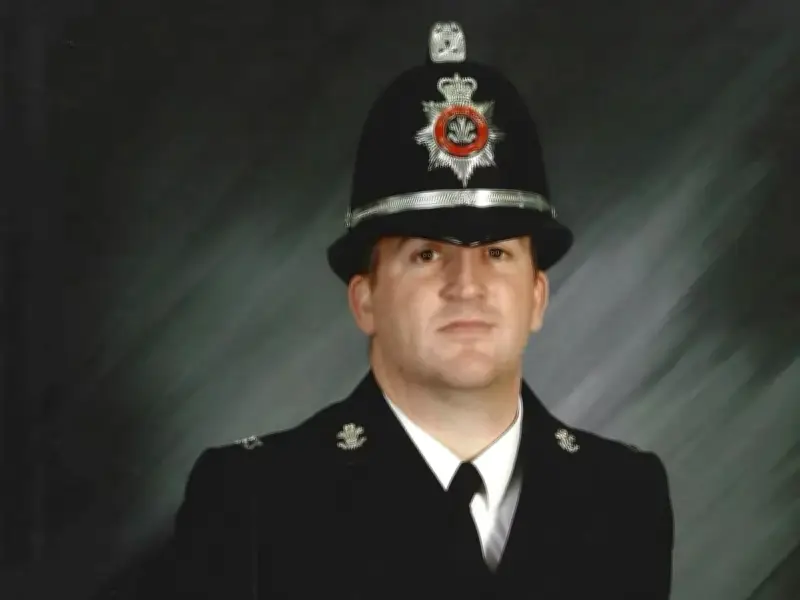
A South Wales Police sergeant took his own life while off duty with work-related stress. Assistant Coroner Gavin Knox said he will issue a Prevention of Future Deaths Notice after South Wales Police failed to carry out a stress risk assessment on Sergeant Nicholas John Williams.
Sgt Williams, a father of three and grandfather, was found dead at home, by his wife Keri, on April 2 2023, the day before he was due to return to the job he'd come to dread, a three day inquest at Pontypridd Coroner's Court heard.
Coroner records suicide verdict
Concluding the inquest on October 16, Coroner Knox recorded a verdict of suicide on the 54 year-old officer, adding that a stress risk assessment had not been carried out that may have prevented his death.
"I have a concern that other deaths will occur with South Wales Police's lack of knowledge of stress risk assessment," Coroner Knox told the final of the inquest on Friday October 16.
Sgt Williams' family said after the hearing that he had been let down by the force he worked for.
Work-related stress factors
The hearing was told that South Wales Police knew the reasons for Sgt Williams' work related stress - an unresolved complaint against him. He also had problems with work IT to help manage his dyslexia, an unwanted move to Fairwater Police Station as well as allegations that his boss, Chief Inspector Chris Peters, was bullying him. Yet, officers managing his return to work did not carry out a stress risk assessment, which may have avoided his death, the coroner said.
The coroner was also concerned about the force's failure to take account of the father of three's neurodiversity. His ADHD and autistic traits made it harder for Sgt Williams to interpret what people meant and sometimes caused people to misinterpret his direct manner, the hearing was told.
Sgt Williams had a longstanding workplace diagnosis of dyslexia and was diagnosed with ADHD early on during his sick leave.
'Failed opportunity'
"The absence of that risk assessment may have led to a disclosure of increased risk of suicide. It (a SRA) may have led to the offer of welfare support for the officer," said the coroner.
"A SRA may have helped avoid Nick's death."
The failure to carry out such an assessment during the sergeant's six month sick leave with stress was "a failed opportunity, considering the stress he was under", the coroner added.
He said he was "surprised" and concerned that neither Inspector Kate Lerwill, from Fairwater Police Station, who was tasked with managing the officer's return to work, nor the Police Federation Officer helping him, or others, knew about SRAs.
Family statement
After the inquest Sgt Williams' family issued a statement through his oldest daughter Hannah, saying he had been let down by the force he worked for.
Hannah said: "The evidence from his colleagues at his inquest has shown that he was hardworking, dedicated, knowledgeable and very good at what he did.
"My dad was dealing with repeated IT failures, difficulties implementing his reasonable adjustments, uncertainty surrounding his career and worsening work-related stress.
"Most concerningly, the inquest has identified multiple points at which my dad's deteriorating wellbeing was known or could have been acted upon. SWP knew he was experiencing work-related stress. Its own wellbeing service had been told that my dad had researched methods of suicide.
"We also heard inspectors give evidence that they had never seen a stress risk assessment, despite stress risk assessment forming part of SWP's own absence procedures. Evidence has exposed gaps in knowledge and understanding around neurodiversity, reasonable adjustments and the processes available for managing work-related stress.
"On 1 April 2024, my dad submitted a grievance detailing serious concerns about his treatment. The following morning, when he was due to return to work, he took his own life."
"My dad spent his life protecting and helping other people. He wasn't just a police officer. He was my dad, a husband, a grandfather and someone who genuinely wanted to make a difference."
The evidence we have now heard raises serious questions about failings within South Wales Police: how my dad was managed, how his neurodiversity and reasonable adjustments were understood, how his deteriorating wellbeing was responded to, how an investigation was allowed to continue for months without him even giving his account, and why opportunities to intervene were missed.
Police response
After the inquest and the coroner's statement, that he would be issuing a Prevention of Future Deaths notice, South Wales Police Assistant Chief Constable Marc Attwell said: "We were deeply saddened by the loss of Nick in such tragic circumstances.
"Nick joined South Wales Police in July 2005 and spent the majority of his service in Barry and the Vale of Glamorgan.
"He worked in a number of roles, but the majority of his service was spent as a neighbourhood officer. This role is one of the most important in policing as it focuses on building trust and confidence in policing, as well as preventing crime and improving community safety. He was promoted to Neighbourhood Sergeant in October 2022.
"It's a matter of deep regret that Nick didn't feel well enough supported by the organisation and we will carefully work through the coroner's findings to reflect on and learn any lessons. Our thoughts remain with Nick's family and friends."
If you are affected by the issues raised in this story please contact the Samaritans helpline on 116 123. This number is free to call. You can also call the Mind support line in Wales on 0300 102 1234.