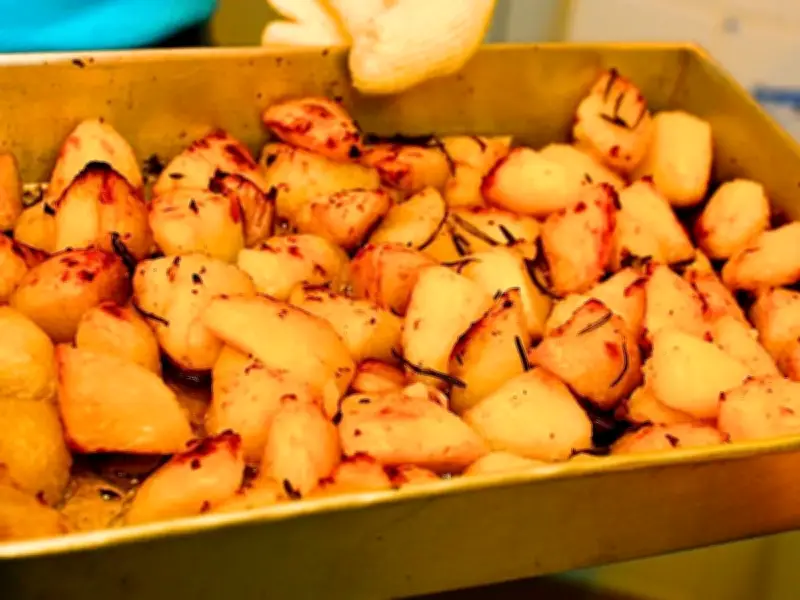
Roast potatoes can be unpredictable, sometimes emerging perfectly golden and crisp, other times pale and soggy. The issue often comes down to excess moisture on the tray, as potatoes contain a lot of water that turns to steam during roasting.
Home cook Barry Lewis has tested numerous roast potato recipes and found that spraying them with a little vinegar helps them crisp up. He said: "About halfway through cooking, I took them out, gave them a light spray of vinegar, turned them, and put them back in. I did this twice in total. What surprised me was that they didn't taste of vinegar at all. Instead, they developed a slightly better crust and just a touch more depth in flavour."
Why vinegar works
Vinegar contains acetic acid, which interacts with pectin, a natural compound that helps potatoes retain their structure. This reduces the likelihood of the potatoes breaking apart, and the acidity can help define the crust during the final cooking stage, resulting in a crunchier exterior.
The minimal moisture from the vinegar also absorbs into the potatoes, helping them to brown and develop a deeper crust. The result is perfectly crispy potatoes, and they won't taste of vinegar, as most of it evaporates during cooking.
Ingredients and method
To make crispier roast potatoes, you will need one kilogram of Maris Piper potatoes, three tablespoons of vegetable oil, duck fat or goose fat, two teaspoons of white or malt vinegar, and salt.
The type of oil or fat is important. Most standard cooking oils have a low smoke point, meaning they cannot reach sufficiently high temperatures without becoming smoky and burning. Vegetable oil, duck fat, or goose fat can withstand the elevated temperatures required to roast potatoes to a crisp. If you opt for a low-smoke oil, such as olive oil, your potatoes are far more likely to turn out soggy.
Cooking steps
Begin by preheating the oven to 220C (or 200C fan). Peel the potatoes and cut them into uniform chunks approximately five centimetres in size. Place the chunks into a pot of cold salted water, bring to a high heat until boiling, then reduce to a simmer and cook for eight to ten minutes.
Once tender, drain the potatoes in a colander and leave them to steam-dry for around five minutes. This rest is crucial; otherwise, trapped steam will keep them soft in the oven. After draining, give the potatoes a gentle shake in the colander to roughen their surface, creating additional edges that produce a superior crust.
While the potatoes are resting, pour the oil or fat onto a baking tray and place the empty tray in the oven for five minutes to heat through. Once hot, carefully remove the tray from the oven and arrange the potatoes across it in a single layer. Return it to the oven and roast for 25 to 30 minutes.
When the potatoes begin to turn golden, gently drizzle the vinegar over them, using only enough to lightly coat them. Turn the potatoes over and continue cooking for a further ten minutes until golden. Then flip them once more, spray the other side with vinegar, and roast for an additional ten to twenty minutes.
The entire process should take approximately 50 to 60 minutes, but once removed from the oven, the potatoes should boast a perfect, crackling, deep golden exterior that delivers a satisfying crunch with every bite.