Cheshire's Forgotten Blitz Uncovered in Extraordinary Police Archive
While London, Birmingham, and Coventry dominate historical narratives of the Blitz, a remarkable new publication has revealed that the county of Cheshire endured its own devastating bombardment during the Second World War. For the first time, rare photographic evidence compiled by Cheshire Constabulary officers provides unprecedented insight into this overlooked chapter of Home Front history.
The Photography Ban That Made Police Records Invaluable
In 1939, the War Office issued the Control of Photography Order, strictly prohibiting civilians from capturing images "of any object or subject conceivable connected with the prosecution of war." This sweeping legislation meant ordinary residents could not document bomb damage in their own communities, creating a significant gap in the visual record of wartime Britain.
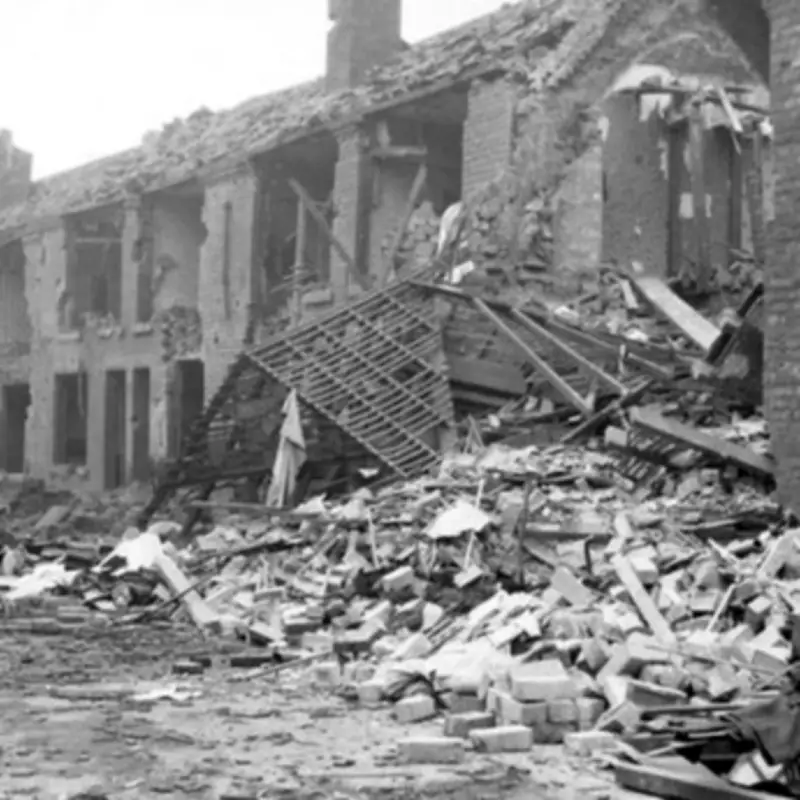
However, Cheshire police officers operated under different regulations, allowing them to systematically photograph bomb damage throughout the county. Their detailed records have now been compiled into a groundbreaking book that transforms our understanding of Cheshire's wartime experience.

Why Cheshire Became a Luftwaffe Target
Contrary to popular perception, Cheshire contained several strategic targets that attracted German attention. According to authors Rose and Paul Hurley, whose book "Blitz on Cheshire" publishes in March 2026, the county housed critical infrastructure including the Crewe Railway Works and Rolls-Royce factory.
"Its strategic location between frequent targets Liverpool and Manchester meant it would fall prey to the Luftwaffe's habit of dumping unused bombs on return journeys," the Hurleys explain. This positioning made Cheshire particularly vulnerable to what they describe as "a dumping ground" for German ordnance.
The Devastating Human Cost
The photographic evidence reveals catastrophic damage to both residential and industrial premises across Cheshire. Crewe suffered especially severe bombing due to its importance as a railway junction connecting six major lines and as the manufacturing site for Rolls-Royce Merlin aero engines used in Hurricane and Spitfire aircraft.
One particularly tragic incident occurred on December 29, 1940, when a German Junkers Ju 88 bomber targeted the Rolls-Royce factory without warning. Sixteen workers were killed instantly, with another dying in hospital days later, despite elaborate camouflage efforts including painted gable ends and smoke screens created by burning waste oil.
Altrincham's Christmas Tragedy
Altrincham's proximity to Manchester made it another casualty during the Manchester Blitz of December 1940. The authors document numerous tragedies, including a bombing at 2am on December 23 that claimed multiple lives.
"There were many tragedies during these two days," the Hurleys write, "including the deaths of two children aged just 5 and 2 and their mother from the Hough family." In nearby Moss Lane, six houses were destroyed, resulting in twelve deaths. A memorial garden on Oakfield Road now commemorates these devastating events.
From Bombs to Propaganda
As the war progressed, Cheshire became an unexpected target for Nazi propaganda as well as bombs. In December 1944, Hitler launched V-1 flying bombs—nicknamed "doodlebugs"—toward Britain. When one intended for Manchester landed in a Kelsall field on Christmas Eve 1944, miniature copies of the German propaganda booklet "The Signal" were discovered nearby in cardboard tubes.
These propaganda efforts ultimately proved futile, falling on deaf ears as the war approached its conclusion. The photographic record preserved by Cheshire police now stands as a powerful testament to the county's resilience during this challenging period.
The publication of "Blitz on Cheshire" represents a significant contribution to Second World War historiography, providing visual evidence of a Home Front experience that has remained largely hidden for eight decades. Through these carefully preserved police photographs, the true extent of Cheshire's wartime suffering and resilience finally comes to light.