Cape Town's 'Hell Run' Highway to Get 10ft Wall Amid Crime Controversy
A substantial 10-foot high wall is set to be constructed along Cape Town's notorious 'Hell Run' motorway, a stretch of the N2 highway that has become infamous for violent criminal attacks targeting tourists and commuters. The ambitious project, unveiled by Mayor Geordin Hill-Lewis, aims to shield the hundreds of thousands of travellers who use this arterial route each year from smash-and-grab assaults and ambush-style robberies that have led to multiple fatalities.
Grim Reputation and Fatal Incidents
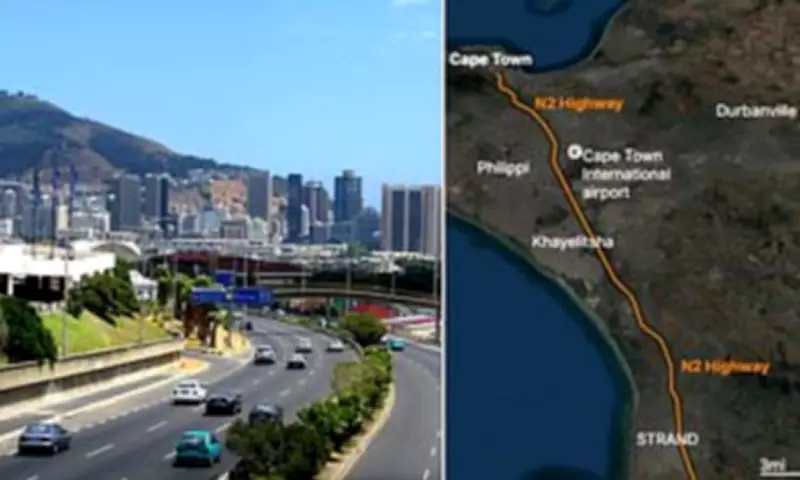
The N2 highway, one of Cape Town's main thoroughfares connecting the international airport to the city, has gained a grim reputation over recent years. Repeated violent incidents have occurred along this corridor, which passes alongside densely populated townships with some of South Africa's highest rates of violent crime. Among the victims was British surgeon Kar Hao Teoh, who was shot dead in front of his family in 2023 after taking a wrong turn off the highway into Nyanga when a strike blocked the N2.
In another tragic incident, 64-year-old Karin van Aardt was fatally stabbed at a traffic light just off the N2 shortly after leaving the airport in December. CCTV footage from February showed armed men wielding rifles bringing three-lane highway traffic to a complete standstill, highlighting the brazen nature of attacks in the area. The highway offers many tourists their first, often jarring, introduction to Cape Town's extremes of wealth and poverty, framed by views of luxury homes, sprawling informal settlements, and the looming presence of Table Mountain.

Mayor's Defense and Project Details
Mayor Geordin Hill-Lewis has vigorously defended the £5 million scheme, arguing that the wall would replace an existing outdated structure while being accompanied by improved lighting and pedestrian crossings. Addressing councillors last month, he stated the barrier would 'protect motorists against the kind of violent and traumatic attack which has become far too commonplace in recent years' and provide safety to those living along the route.
The mayor struck a combative tone toward opponents of the project, saying: 'We are paying no attention to those posturing and grandstanding on this project, especially those urging us to pursue 'healing' and hand-holding with the criminals.' He added that opponents 'can be soft on crime if they want to, and play kumbaya with criminals if they want to, but residents will take note.'
Fierce Opposition and Criticism
Despite the mayor's insistence that the plan enjoys strong backing, the proposal has ignited fierce controversy across political and community lines. Critics accuse officials of effectively sealing off adjacent townships and attempting to obscure Cape Town's stark inequality and entrenched poverty rather than addressing the underlying causes of crime.
Acting Police Minister Firoz Cachalia expressed skepticism earlier this year, stating: 'The construction of a wall [or] barrier will not, in itself, directly address organised criminal activity operating beyond the immediate roadside environment, firearm-related offences, gang-related violence, or broader public order challenges affecting surrounding communities.'
The opposition Build One South Africa party has warned that the plan risks reinforcing apartheid-era spatial divisions, with a spokesman noting: 'Symbolically, it will use infrastructure to divide communities and keep poverty out of sight. For many residents, the project mirrors the thinking of apartheid spatial planning. Separate communities and shield inequality from those passing by.' Opponents have compared the proposed barrier to a Berlin Wall-style division between rich and poor communities.
Broader Context and Political Reservations
The wall proposal comes amid broader efforts to tackle violent crime in the Western Cape region, including the deployment of troops under Operation Prosper to assist police in addressing escalating gang violence in the Cape Flats area along the highway's route. However, even the ruling African National Congress (ANC) has expressed reservations about the project.

Local ANC leaders have called for the project to be paused pending a full impact assessment, noting it 'did not enjoy unanimous support.' Provincial spokesman Akhona Jonginamba stated: 'There are deep concerns from residents, community organisations and civic structures about the project's real intent, its social impact and its effectiveness.'
As the debate continues, the 'Hell Run' wall project highlights the complex challenges of addressing violent crime while navigating South Africa's painful history of spatial segregation and ongoing socioeconomic disparities.