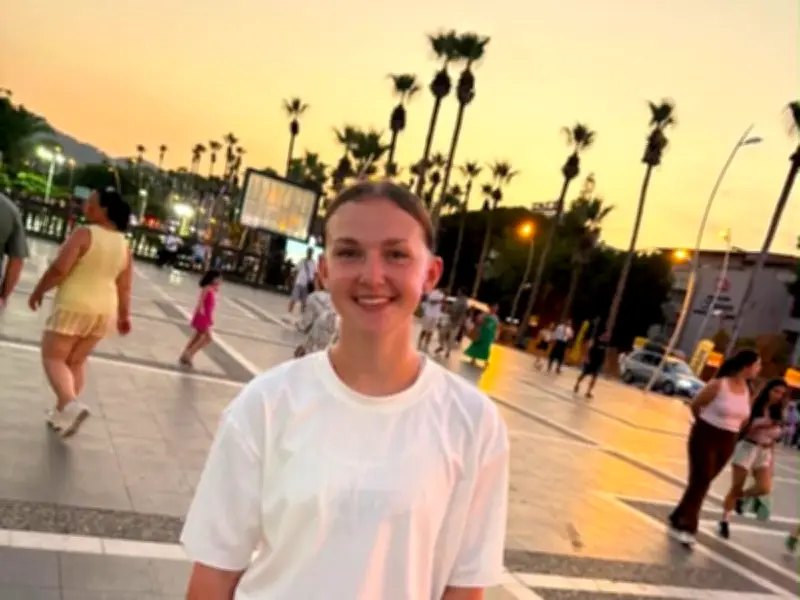
An 18-year-old Scottish woman was injected with the date-rape drug GHB in a Magaluf nightclub, leaving her unable to walk, talk, or see. Taylor Coulter, from Port Glasgow, was on a girls' holiday celebrating the end of high school when a man deliberately bumped into her at Bananas nightclub on the Magaluf Strip and injected her arm with gamma-hydroxybutyrate (GHB), a potent central nervous system depressant.
Immediate Collapse and Symptoms
Within minutes of the injection, Coulter collapsed into a friend on the dancefloor. She began vomiting and lost the ability to walk, talk, and see. Recalling the incident, she told the Daily Record: "I was making my way back from the bathroom when the man bumped into me. I instantly felt a sharp pain in my arm and cold liquid running through my body. As I made my way back to my friends, I collapsed into one of them and everything went black."
Her friends carried her to the hotel, placed her in a cold shower to try to revive her, and called an ambulance. Coulter's parents, Stuart, 45, and Alison Coulter, 46, were also notified. She said: "My friends put me in a cold shower to try and wake me up. I was vomiting and my vision was blurry. I couldn't walk or talk or hear anything. I remember thinking 'Am I going to survive? Am I going to make it?' I was so scared I was going to die. If my pals hadn't been there, who knows what might have happened to me."
Hospital Treatment and Aftermath
An ambulance took Coulter to hospital, where doctors confirmed she had been injected with GHB—a drug often used in spiking because it is odourless, colourless, and tasteless. She was placed on a drip and given antibiotics. Due to the needle injection, she also had to be tested for HIV and other sexually transmitted diseases. She was discharged the following day, and the incident was reported to Spanish police.
Since returning to Scotland, Coulter has struggled with the physical and psychological effects. She said: "I'm struggling to walk anywhere by myself. I'm constantly having to stop to take breaths. I've lost all my strength and have nightmares about it all happening again. I'm so on edge when I'm out in public now. I'm nervous to socialise and I don't feel comfortable going out."
Impact on Future Plans and Family
Coulter, a player for Greenock Morton Women's FC, was due to move to the US for a two-year football scholarship but said the incident "massively" set her back. "It was meant to be a holiday to mark the next stage in my life but it has ruined my confidence," she said. Her younger sister Leah had a trip to Magaluf booked for next year, but Coulter begged her parents to cancel it.
Her father, Stuart, described the experience as every parent's worst nightmare and warned other young travellers. He said: "Taylor thinks she was targeted because she is a young female who was seen alone. With girls there is the fear of a sexual element, but this is a massive problem regardless of gender. It can happen to anyone and even boys get targeted so they can be robbed. The aftermath of this incident has been horrendous for our family."
Warning to Others
Coulter issued a warning to young people heading to party resorts: "Spiking can happen to anyone regardless of age, gender, or whether you're sober or drunk. Young people need to keep their wits about them and speak to their friends about this being a possibility. Stay with your pals and never venture off alone, even if you think you are safe. Be aware of your surroundings and protect your drinks in case something is dropped in them. Most importantly, if you think you or a friend have been spiked, alert bar and security staff and phone an ambulance. Get properly checked out and don't be embarrassed about side-effects. There is nothing to be ashamed of if this happens to you."
A Foreign Office spokesperson said: "We are working closely with the travel industry and tour operators to raise awareness of the dangers of drink spiking abroad. Although most British holidaymakers return home with positive experiences, it is important to recognise that drink spiking can happen almost anywhere. That is why we regularly update travel advice to help people reduce the risks."