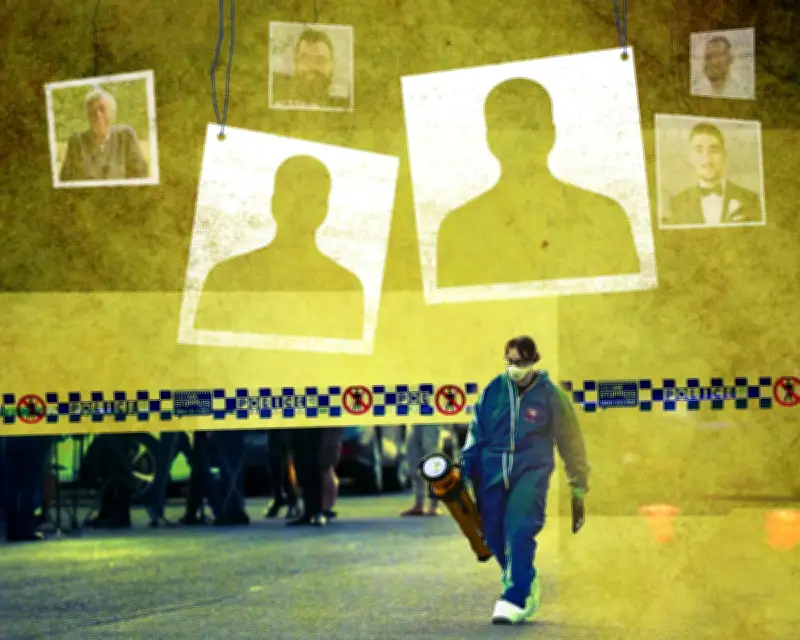
At least six deaths involving mistaken identity have occurred in Sydney since the start of last year, as the underworld increasingly outsources contract killings to inexperienced amateurs recruited through encrypted apps.
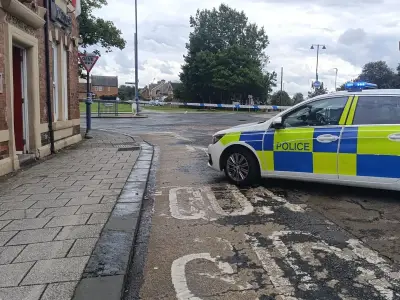
On Wednesday, a driver pulled up in front of a house in Merrylands West, in Sydney's west, and fired at least four shots from two semi-automatic handguns at men outside the property. The car was stolen and later burnt out, with the shooters likely fleeing in another stolen vehicle.
Streamlined contract killings
Over the past five years, the underworld contract kill has become streamlined. Such killings typically require at least two stolen cars, multiple guns, an encrypted method of communication, intelligence on the target, and a contract worth anywhere from tens of thousands to millions of dollars.

A crew is assembled via what police have dubbed "crimetasker": underworld figures post on encrypted apps about contracts, and people agree to take on the job without having any relationship with, nor knowledge of, the person who needs the work done.
No longer are such gangland hits carried out by professional hitmen with their own firearms, cars, crews and links to those paying the contract. Now, only the killing itself is outsourced: the person paying the bounty provides everything else.
Mistaken identity deaths
The Merrylands shooting resulted in the death of electrician Joshua Macdonald. It was the second underworld hit in Sydney involving a case of mistaken identity in as many days. Marco Tapia, a 23-year-old biomedical engineering student, was shot dead in his bed on Tuesday during a home invasion in Glen Alpine. Neither man had any link to organised crime, police said.
"What we are seeing at the moment is not the act of a genuine human," the New South Wales police commissioner, Mal Lanyon, said on Thursday.
Lanyon also said young people were increasingly being recruited to carry out such offences by people based offshore. "What we've seen over the last few days are people who have very little experience, people who have taken a job for very little money, and people who are going to face very lengthy consequences in jail when we arrest them."
"We know that those organising it are recruiting young, inexperienced people and using encrypted communications. So, as an organisation, we are focusing on technology and making sure that we have every capability we need to target these people."
Police response and gang feuds
"Let me be very clear: we will not be surrendering our streets to organise criminals," said the police minister, Yasmin Catley. "Not now. Not ever. I do not accept this is out of control."
Catley also said that 800 people had been arrested by the taskforce responsible for gang violence in the past year, though others quickly filled their place. When asked if more could be done to stop young people from becoming involved in gang violence, the acting premier Prue Car said "nothing's off the table".
The recent Sydney murders occurred in the context of a feud between the Alameddine crime network and a gang calling themselves the Coconut Cartel. Court records relating to separate feuds involving the Alameddines show they could be sparked by "illegal drug distribution, family grievances, historical murders and serious assaults, repeated kidnapping for ransom offences and so on".
In one such feud, involving the Hamzys, prices up to $2m were put on the head of some Alameddine figures, and $800,000 on others, court records show. The Hamzys provided shooters with a SKS-style assault rifle, M16-style assault rifle, a 9mm pistol and ammunition to take down Alameddine crime family members. The gunmen tried to carry out the 2021 contract, but one forgot to take the safety off the M16 as he lined up a target, meaning he failed to get a shot away, court documents show.

Efforts to prevent youth recruitment
In Victoria, where the state government has also struggled to choke the pipeline of young people going into organised crime, the South Sudanese-Australian community has warned that more needs to be done to stop boys and young men being "groomed" to carry out contracted violence. Part of the Victorian government's response is to hold workshops in schools and youth justice facilities to help young people identify grooming tactics, understand criminal exploitation, and know how to say no. The workshops, starting this month, will be held in locations chosen using police data and intelligence.
One person familiar with the Victorian program, speaking on condition of anonymity to protect his relationship with government and police, says while any action would be welcome, not enough is being done to address the root issues of crime. "There's just been a complete loss of hope, there's no prospect of any kind of trajectory towards success for some of these kids," the source says. "Then you see this job out to make quick money, and it's all sorted for you. You just have to turn up."
This has led to more young people without any history of criminal offending leaping from cleanskin to murderer. "We're seeing kids go from zero to hero just like that," the source says.
Meanwhile, the NSW parliament was told last week that the state was on track for a four-year high in gangland gun violence. Scott Cook, a NSW police deputy commissioner, told a committee hearing on 28 August that there had been 50 "organised crime public place shootings" for the year up until that month. All but two occurred in metropolitan Sydney. That is already more than the 2023 and 2024 calendar years, and on track to top the 67 recorded last year.
But, as Lanyon said in the wake of this week's shootings, much of the violence is being directed from overseas. When asked about what could be done to stop overseas puppetmasters, Cook told the parliamentary committee that the answer was beyond the reach of state governments. "We have plenty of crimes that we can investigate and plenty of measures that we can use to investigate those crimes," he said. "But the struggle that we have is the ubiquitous nature of telecommunications and how they are used by organised crime networks across the globe. Most of the … organised crime that occurs in New South Wales has a nexus globally."