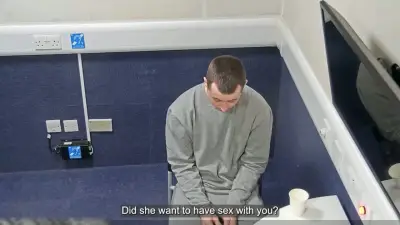
The government is planning to offer sex drive-suppressing drugs to thousands of male prisoners in England and Wales, in a scheme aimed at reducing reoffending and easing the prison overcrowding crisis. The plan, revealed by the Guardian's home affairs editor Rajeev Syal, would see an initial pilot scaled up to include 20 prisons this autumn, with officials potentially ready to launch the drugs across prisons and probation services by the end of 2028 if early results prove favourable.
Pilot details and target group
The number of sex offenders in prison in England and Wales has risen sharply in recent years to 15,000, driven by mounting prosecutions for historic crimes and a huge increase in online offending, with more than 850 men arrested on suspicion of online child sexual abuse every month.
Government sources have told the Guardian that ministers are keen to expand the voluntary use of sex drive-suppressing drugs as they search for solutions to the prison overcrowding crisis. Prisoners on the trial are typically offered a combination of pills: a selective serotonin reuptake inhibitor (SSRI), such as sertraline, which limits invasive sexual thoughts, and anti-androgens, which reduce testosterone production and limit libido. One in four sex offenders – equating to 3,750 current prisoners – would be considered for the treatment.

How the medication works
"It's meant to target sex offenders who experience intrusive, persistent and intense sexual thoughts, as well as persistent arousal and unhealthy sexual urges and sexual behaviours," Rajeev says. "There are people who are obsessed with sex, but don't want to be."
Prof Belinda Winder, a leading forensic psychologist who has evaluated the use of these drugs, insists that the scheme does not amount to "chemical castration" – a phrase that's also inaccurate because it requires the continued ingestion of medication, not surgical intervention. The proposal for "mandatory chemical castration" made by then justice secretary Shabana Mahmood last year has since "hit the rocks", says Rajeev.
"There is wide agreement that this scheme has to be voluntary," he says, "working with people who really want to stop their offending, with their knowledge and consent."
Considerations and concerns
Medicating offenders raises complex questions. Concerns have surfaced about the limited data available on the long-term effects of these medications. For example, testosterone suppression can cause osteoporosis and cardiovascular disease. Serious side effects could also affect how likely offenders are to continue with their medication once they leave prison, Rajeev says. Their use could even result in legal action being taken against the government, particularly if an individual claims they felt pressured into the scheme.
Assessing who is suitable for medication takes lengthy observation and analysis. Intensive oversight would also be necessary once a prisoner was released from custody, to ensure they continued to take their medication. "That's one big problem with seeing this as a way of bringing down prison overcrowding," says Rajeev. "How do you monitor it outside, given how over-stretched the probation service already is?"
In other jurisdictions, including Australia and the US, modern mandatory schemes have been subject to fierce debate about whether they are, in principle, inhumane, a populist exploitation of public disgust for sex offenders, or a brave and creative approach to rehabilitation. Critics are already warning that the voluntary nature of the scheme could become blurred if an offender's willingness to take medication is considered when making parole decisions, or if it's used as a criterion for eligibility in future early release programmes.
Alternatives and impact
For some prisoners treated by Prof Winder, this medication has been transformative. One man who experienced problematic sexual arousal – intense sexual urges throughout the day – described finally being able to follow the plot of a film without being plagued by compulsive thoughts. "Without the drugs, these images were going around his head all the time," said Winder. "He did not want them any more."

Sex offenders already have comparatively low reoffending rates compared with other groups – 11.7% for those released in early 2023, compared with 21.7% for other violent offences, or 19.6% for robbery. The fact that the government is prepared to focus on such a radical solution – which it accepts is not appropriate for the majority of sex offenders – underlines how very little support is available for this group.
There are alternatives. The Circles programme provides a local network of volunteers to support and hold accountable their "core member", a child sexual offender who wants to reintegrate into the community. Although evaluations consistently show its significant impact on reoffending, its founder, Rev Harry Nigh, has spoken of being worried that a rightward shift in politics was making it tougher for decision-makers to justify funding these interventions.
"If the government can ensure that a quarter of the sex offender population will take a pill and not feel compelled to commit another crime, relieving some of the huge pressure on the criminal justice system, it's a huge win," Rajeev says.