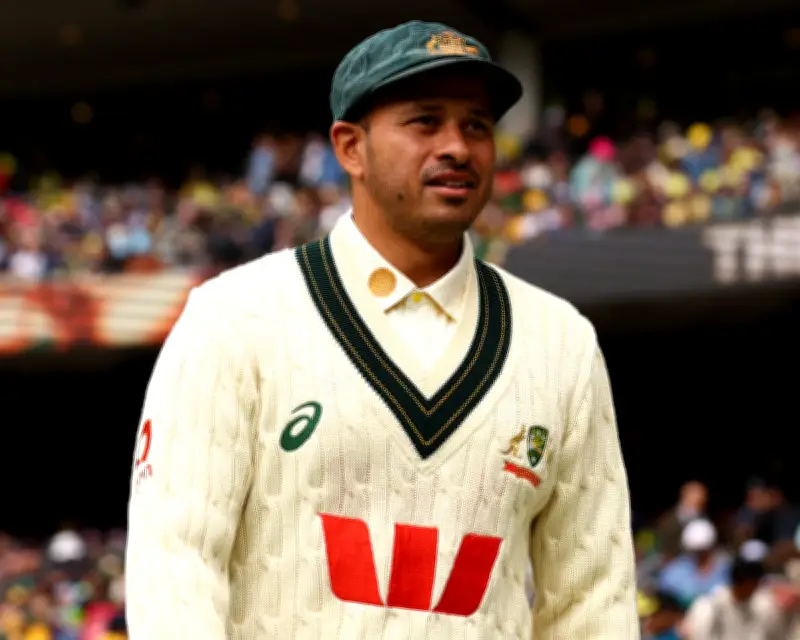
Usman Khawaja, the former Australian cricketer, has written a deeply personal account of his experiences with Islamophobia and racism, revealing that despite his success on the field, he often felt like an outsider. In an article for Guardian Australia, Khawaja described how prejudice 'chips away at someone’s sense of belonging' and urged for greater reporting of anti-Muslim abuse.
Growing Up in Western Sydney
Khawaja, who grew up in western Sydney, said diversity was simply a fact of life there, not a political talking point. His friends came from various cultures, languages, and faiths. He noted that if he experienced prejudice, it was not because he was Muslim—most people knew little about Islam then—but because he was 'the brown kid.' Racism, he said, 'rarely shouts. More often, it whispers that perhaps you don’t quite belong.'
Cricket as a Place of Belonging
Cricket, with its straightforward scorecard, became a refuge where performance supposedly mattered above all. However, Khawaja admitted that even as he progressed to the Australian team, he sometimes felt like an outsider. 'Not because people necessarily intended it, but because when you’re one of very few people who look like you, pray like you or share your background, you become constantly aware of your difference,' he wrote.

He contrasted diversity—often celebrated in campaigns—with true inclusion, which requires creating an environment where no one questions their belonging.
The Christchurch Mosque Shootings
The 2019 Christchurch mosque shootings, in which 51 worshippers were killed, profoundly changed the conversation for Khawaja. He emphasised that hatred begins with words and stereotypes, not violence. 'It’s the slow process of dehumanising people until the unthinkable becomes possible,' he said.
This motivated him to speak at the Reporting Islamophobia campaign, led by special envoy Aftab Malik. Khawaja stressed the importance of reporting abuse, noting that 'hate can build up' and that every insult or threat chips away at belonging. Reporting helps show the scale of the problem and provides evidence for action.
Focus Shifted from Cricket to Faith
Khawaja observed a shift over time, with people focusing more on his faith than his cricket. While Australians once debated his batting technique, some stopped talking about his batting altogether. 'The cricketer disappeared behind the Muslim,' he wrote.
His wife, an Australian who converted to Islam, has often received more abuse than he has. 'Watching someone you love become a target because of the faith she chose reminds you that prejudice never just affects one person,' Khawaja said. 'It reaches families, children and whole communities.'
Muslims Share Australian Values
Khawaja stressed that most Muslims want what every Australian wants: to build a good life, raise families, contribute to communities, and practise their faith in peace. He noted that many Muslims do not drink alcohol, dress modestly, and strive for kindness and respect—values that strengthen Australian society.
'Australia has given me opportunities my parents could hardly have imagined,' he said. 'Every time I pull on the baggy green, I do so with huge pride. This is my home.'
Hope for the Next Generation
Despite challenges, Khawaja believes the Australia he cherishes is not defined by prejudice but by teammates who become lifelong friends, neighbours who look out for each other, and strangers who wish him well before a Test. 'Those Australians far outnumber the angry voices online,' he wrote.
He hopes the next young Muslim kid in western Sydney will not wonder whether they belong. 'They will simply pick up a bat, walk to the crease and know that the only thing anyone cares about is how they play. That’s an Australia worth batting for.'
Usman Khawaja played for Australia from 2011 to 2026, becoming the first Muslim to represent the country in Test cricket during the 2011 Sydney Ashes Test.