
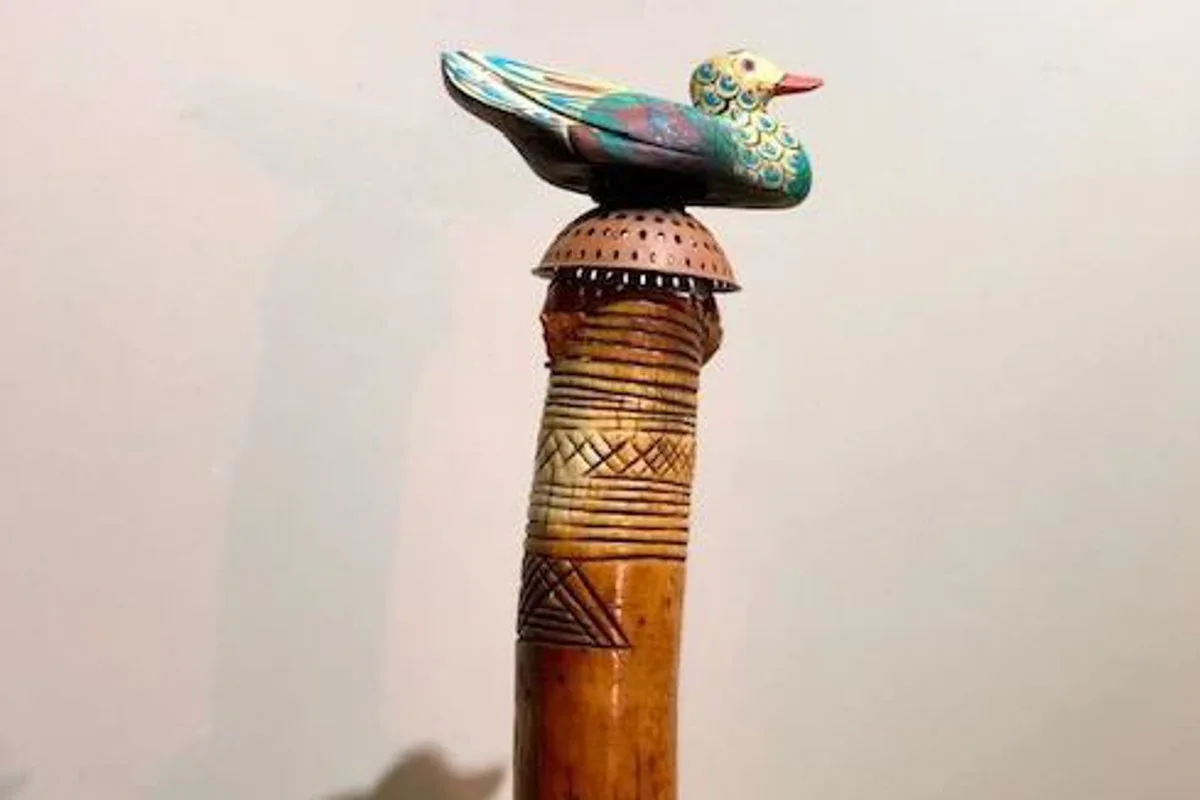
An art collector has lost a legal battle with the government after being prohibited from selling a rare surrealist sculpture due to its inclusion of a 165-year-old elephant tusk.
Devon-based art expert Victor James was blocked from selling Eileen Agar’s 1930s creation, The Obelisk of Satisfied Desire. Ms Agar, a British surrealist who died in 1991 at the age of 91, is renowned for works that can fetch over £100,000.
The phallic sculpture, described as “an assemblage of five objects: a metal dish, a decorated candle, a small colander, a model duck and the tusk”, was deemed by authorities to fall foul of the 2018 Ivory Act. The legislation bans dealing in ivory or objects containing it, except under specific, exceptional circumstances.
An exemption exists for pre-1918 items considered “of outstandingly high artistic, cultural or historic value”. However, Mr James, whose gallery is located in Colyton, Devon, challenged the Department for Environment, Food and Rural Affairs’ decision to deny him an exemption certificate for the “exceptionally rare” piece.
He argued that the ivory element of the sculpture was a distinct, pre-carved African artefact dating from 1860, and that this should qualify the entire sculpture for exemption. The court ultimately upheld the government's ban.
Judge Sophie Buckley, sitting in a division of the First Tier Tribunal dealing with the welfare of animals, said: “If the tusk were separated from the sculpture and were the ‘item’ in relation to which the exemption were made, it is accepted that it would, subject to assessment, satisfy the condition of being pre-1918.” But she went on to say: “The sculpture is clearly the ‘item’. The sculpture is more than a collection of separate objects. Eileen Agar has made a new object.”




