World Cup refereeing has been largely competent, with VAR playing a crucial role in correcting on-field errors, according to former Premier League referee Chris Foy. Writing in his analysis, Foy defends the officials against criticism from England manager Thomas Tuchel and others, while highlighting key decisions that were correctly made.
Tuchel's Criticism Dismissed as Reverse Psychology
Thomas Tuchel described the refereeing as 'unreliable, erratic and not good enough' after England's win over Mexico. Foy interprets this as reverse psychology, noting that officials have generally been correct. 'Like everyone, referees cannot be perfect,' he writes, citing that most decisions have been positive.
Egypt's Complaints Against Argentina Dismissed
Egypt claimed injustice after their 2-1 loss to Argentina, but Foy confirms both disputed decisions were correct. Marwan Attia's foul on Lisandro Martínez in the build-up to Egypt's disallowed goal was a clear shirt pull and studs on the foot. The ball moved forward continuously until the goal, making the disallowance right. For Argentina's winner, Julián Alvarez's contact with Mohamed Salah was minimal and did not meet the foul threshold.
Quansah Red Card Correct; Appeal Surprising
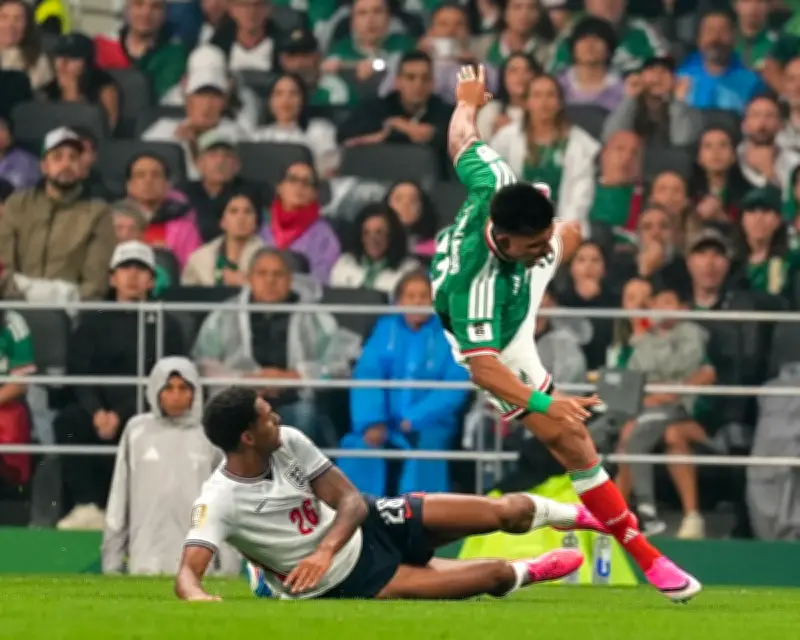
Jarell Quansah's red card for a slide tackle on Jesús Gallardo was properly awarded after VAR review. Foy was surprised referee Alireza Faghani missed it initially. 'After the VAR rightly recommended a review we got the correct outcome.' He finds England's consideration of an appeal surprising, given the use of Article 27 of FIFA's disciplinary code to suspend Folarin Balogun's ban.
Balogun Sending Off Justified
Folarin Balogun's red card for a challenge on Tarik Muharemovic was supportable, Foy argues. The ball was not at a playable distance, and the contact on the calf and achilles endangered safety. 'That could have caused serious injury,' he notes. FIFA used Article 27 to overturn the automatic ban, a move Foy had never heard of before.
VAR Interventions: Hits and Misses
VAR has been correctly used for red cards, with 13 issued this tournament compared to four in each of the previous two. However, Foy criticizes some interventions. Vinícius Júnior's disallowed goal for Brazil against Scotland was a mistake—contact was minimal and not a foul. Harry Kane should have had a penalty against DR Congo, but VAR correctly stuck with the on-field decision as it wasn't a clear error. VAR rightly awarded France a penalty after Désiré Doué was fouled by Paraguay's Diego Gómez.
Refereeing Styles and Control
Foy notes differing styles from various confederations but emphasizes universal fouls. He criticizes referee Ilgiz Tantashev for failing to caution Paraguay players, which undermined his control. He also questions the decision to allow Leroy Sané's goal for Germany after Aleksandar Pavlovic kicked Pedro Vite in the head, calling it a clear foul. 'All I can think is that the video assistant and the referee both felt that it was six and two-threes,' he writes.
Overall, Foy concludes that refereeing has been fine, and player safety remains paramount. VAR has been used appropriately for red cards, even if some interventions have been imperfect.