Survivors of violent crime and families of victims have criticised the UK government for announcing “world first” plans to introduce restriction zones for serious offenders freed from prison within a few weeks without spelling out how they would work.
Key campaigners who have championed the idea of the zones, designed to “lock” offenders into specific areas, accused the government of seeking to grab headlines rather than providing the detail that would reassure survivors and families.
Campaigners demand clarity
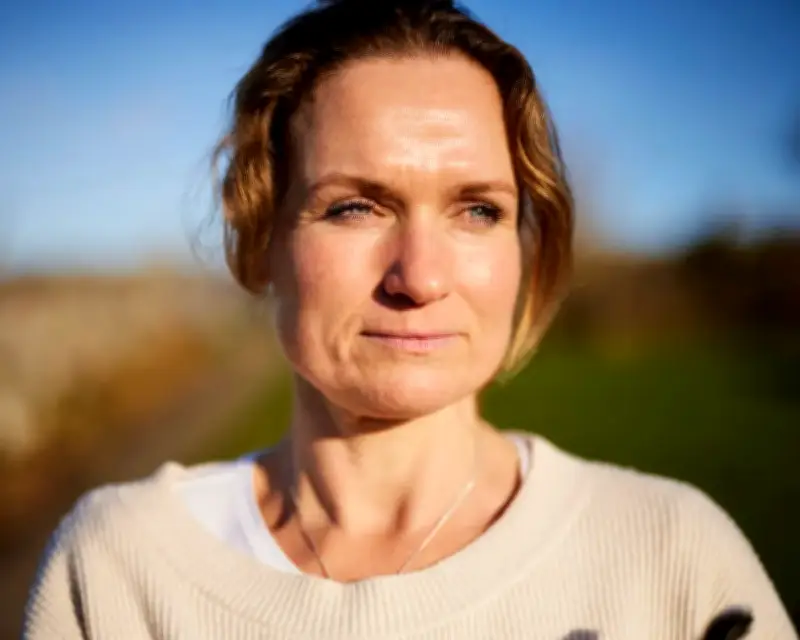
Rhianon Bragg, who has become a leading campaigner on domestic violence after she was stalked and held hostage at gunpoint by her ex-partner, said she was concerned that the announcement had come before a working system was ready.

She said: “Victims can’t rely on headlines. I can’t imagine how anxious victims whose offenders may be being released are feeling right now. The announcement leaves critical questions unanswered.”
The Ministry of Justice (MoJ) said at the weekend that restriction zones would be introduced in October in England and Wales and would mean serious sexual and violent offenders could be confined to areas of a few miles.
How the zones are meant to work
Offenders would be tagged to keep tabs on their movement and victims would have a say in setting boundaries.
The MoJ said it was the first measure of its kind in the world and was a “more rigorous” version of “exclusion zones”, which ban offenders from specific locations such as a victim’s home or place of work.
Bragg said she and fellow campaigners wanted more detail on which offenders would be included, how zones would be implemented, what would happen if an offender left their zone and whether agencies such as the Probation Service and the police had the capacity to manage the system.
Victims' concerns over implementation
Announcing the scheme, the justice secretary, Alex Norris, said no victim should “fear the shadow of an abuser”.
Bragg said: “Speaking from my own lived experience, if that is to be achieved then restriction zones need to be the other side of the country from the area the victim is in.”
Bragg and fellow campaigners wrote to the government before the parliamentary recess asking for a meeting so that specifics could be discussed, but it has not taken place. She said: “We need more transparency. If the system’s not ready, victims will be put at risk.”
The campaigner Hetti Barkworth-Nanton, whose best friend, Joanna Simpson, was killed by Simpson’s estranged husband, said: “A headline doesn’t help victims one jot. The lack of detail is a huge issue.
“We have been asking them for two months to meet with us to discuss how they are going to implement it and which offenders are going to be eligible.
“You’ve got thousands of victims out there today who are utterly terrified at a visceral level of their offenders coming out of prison and they don’t know if their offender is going to be subject to restriction zones or not.
“It creates more uncertainty for them, more trauma for them. The MoJ needs to hurry up and engage properly with victims.”
Barkworth-Nanton, who co-founded the Joanna Simpson Foundation, which campaigns on domestic abuse and homicide, agreed the size of the restriction zone was not relevant. “I don’t care whether it’s 2 miles, 5 miles, 10 miles, 15 miles. The important thing is twofold.
“One is whatever that restriction zone is, probation needs to be confident that they can monitor them. And the second thing is it needs to be far away from the victim. So a 2-mile restriction zone, 5 miles away from the victim’s home is hopeless.”
Joanna Simpson’s mother, Diana Parkes, a leading campaigner for restriction zones, said: “On the whole I’m happy but we want to hear what the total plan is.”
Natalie Queiroz, who was repeatedly stabbed by her partner while she was eight months pregnant and is now a victims’ advocate in the West Midlands, said: “Restriction zones are a really positive solution and all credit goes to all those who campaigned hard for them.

“However, I’m yet to be convinced of the breadth of their impact in reality. The MoJ have stated that they will be enforced for the most serious violent offenders as well as for serious sexual offenders. Many domestic abuse offenders who still pose a significant risk to their victim will not fall under this definition and hence will not have a restriction zone applied to them.”
Next steps and unanswered questions
The MoJ said further details would be announced in due course. It said the government would work closely with victims’ groups and other stakeholders as the scheme was rolled out to ensure it was operating as intended.
Queiroz added: “The effectiveness of restriction zones will rely heavily on them being properly monitored and any breaches being addressed without delay. There needs to be clear commitment to investment into the active monitoring of them.”