Inside Cambodia's Abandoned Scam Factories: Global Fraud Network Exposed
Cambodia's Abandoned Scam Factories: Global Fraud Network Exposed

Inside Cambodia's Abandoned Scam Factories: Global Fraud Network Exposed

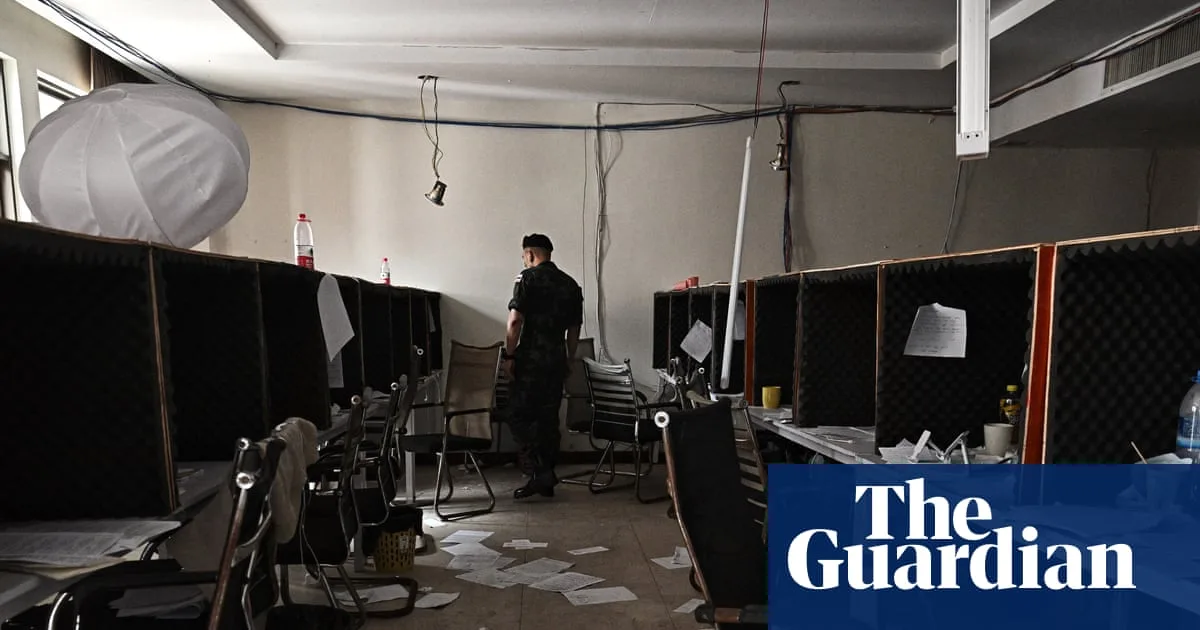
In a Cambodian compound near the Thai border, rooms meticulously designed to resemble Singapore and Australian police offices stand abandoned, with documents scattered across desks and floors. This chaotic scene represents the hurried departure of a sophisticated fraud operation that targeted victims globally, including many in the United Kingdom who lost billions of pounds.

Personal Data and Scripts Left Behind

Among the discarded papers were detailed profiles of potential victims, including a 73-year-old Japanese retiree with his phone number and bank account balance clearly documented. Another file contained information about an American woman who had disclosed being a domestic abuse victim. Nearby, investigators found carefully crafted scripts for love scams and police impersonation schemes, alongside a room set up to mimic a Vietnamese bank office.

The visit to the bombed-out Royal Hill compound, facilitated by the Thai military that occupied the area following December border clashes, provides unprecedented insight into industrial-scale fraud operations that have fleeced billions from victims worldwide. Reuters verified one document by contacting the Japanese retiree, who confirmed receiving a call late last year from someone claiming to represent an electricity company threatening to cut his power unless he provided bank details.

Global Criminal Operations and Crackdowns

Southeast Asia has emerged as a global epicentre for cyber-fraud in recent years, with compounds mostly operated by Chinese criminal gangs proliferating across Cambodia, Laos, the Philippines, and lawless border areas between Myanmar and Thailand. These facilities are frequently staffed by trafficking victims living in brutal conditions.

Recent police raids and military actions have forced criminal gangs to flee scores of scam compounds across Cambodia. The December strikes by Thailand's military – who claimed the centres were also staging drone attacks during border conflicts – combined with Cambodian government crackdowns have triggered an exodus of more than 100,000 people from compounds nationwide.

International Response and Executions

China has taken formal legal action against criminal gang leaders, executing at least 15 members of two different scam mafias operating in nearby Myanmar within a single week earlier this year. Foreign governments including the United States have pressured Southeast Asian nations to crack down on these operations, with Americans alone losing an estimated £7.36 billion to regional scam centres in 2024.

The Cambodian government stated that the Royal Hill compound was actually a hotel that Thailand had occupied by force. However, Interior Ministry spokesperson Touch Sokhak separately affirmed the government's "will" to crack down on scam centres and repeated a pledge to eliminate cyber fraud by April.

Sophisticated Operations and Security Measures

Documents found at the site revealed sophisticated management structures, with Chinese-language papers outlining how the complex's unidentified management leased space to different scamming groups. Financial statements showed managers charging tenants thousands of dollars monthly in rent, with some criminal gangs falling behind on payments.

Security measures were remarkably thorough, with documents showing bosses demanded military-style anti-riot and emergency drills. Security guards received orders to prevent "loitering" nearby, while property management notices banned food delivery services that could bring outsiders on-site. Other regulations prohibited unspecified "illegal activity," forbade shirtless wandering, and demanded "civilised" behaviour from workers.

Cryptocurrency Connections and Operational Challenges

Reuters discovered details about a cryptocurrency wallet in one document, which blockchain-analysis firm Crystal Intelligence reviewed at their request. Analyst Nick Smart confirmed the wallet had interactions with "many known high-risk services," including gambling sites and cash-conversion locations.

Not all fraud attempts proved successful, according to an October 2025 notebook entry found at the site. That day, workers making calls faced "only abuse and scam answers" from their targets, highlighting occasional operational challenges.

Human Trafficking and Humanitarian Crisis

The U.S. State Department's 2024 Trafficking in Persons Report highlighted O'Smach, where the compound is located, as a hub for abuses. A former worker from a neighbouring scam compound – a Madagascar citizen who identified as a trafficking victim – described conditions matching those observed by Reuters journalists.

The worker, speaking anonymously due to fear of retribution, explained that captors returned his passport and allowed him to leave days after Thailand began bombing the area. Many former compound residents have since lined up outside embassies in Phnom Penh seeking help to return home, creating what Amnesty International has termed a "humanitarian crisis."

Global Spread of Fraud Operations

Delphine Schantz, regional representative for the United Nations Office on Drugs and Crime, warned that scammers targeted by raids often relocate and reconstitute themselves into smaller operations. "We see those scam centres now kind of mushrooming all over the world in different places, along the same model as what we've seen in Southeast Asia," she explained, noting her agency shares expertise with national law enforcement agencies.

Japanese and American authorities did not respond to requests for comment about documents showing their citizens being targeted. Reuters could not establish what entity ultimately controlled the Royal Hill compound, where Cambodian land records remain inaccessible.