The doctor involved in Christa Pike's botched Tennessee execution had also been the physician at a failed execution just four months earlier, court records show.
Failed execution in May
On 21 May, Tony Carruthers was scheduled for execution, but 30 minutes into the process the IV team had still failed to establish the two peripheral IV sites required to lethally inject the prisoner, according to a court-filed declaration from his solicitor Maria DeLiberto of the American Civil Liberties Union (ACLU).
The declaration, a copy of which was obtained by PEOPLE, stated that Dr Fowler was subsequently summoned into the chamber to assist. The TDOC Lethal Injection Execution Protocol explicitly defines the roles and duties of each team member, and specifies that the doctor is responsible for "determining if the inmate is deceased" and "establishing central line IV if necessary."
Dr Fowler attempted to insert a central line in two locations, but neither proved successful, according to the declaration. Authorities ultimately determined to abandon Carruthers' execution. DeLiberto would subsequently state that by the time the execution was abandoned, her client was "clearly in pain" and "gutturally groaning," saying: "It hurts, it hurts."
Pike's botched execution
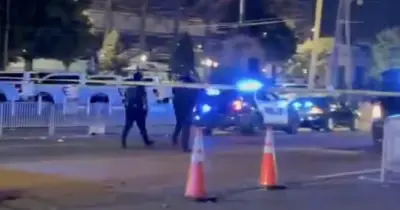
Despite Carruthers' failed execution attempt in May, Dr Fowler was requested to serve in the identical role just four months later at Pike's botched execution. On September 30, Pike, 50, survived two doses of pentobarbital after Tennessee attempted to execute her for the 1995 killing of classmate Colleen Slemmer.
The lethal drugs failed to end her life, instead leaving her arms scorched and blistered. According to 911 dispatch recordings, it took 31 minutes for prison officials to confirm that a request for emergency medical assistance was legitimate after confusion between prison staff and first responders delayed the response.
Following the botched execution, Pike spent several days unconscious and breathing through a ventilator in intensive care. Doctors feared she had suffered brain death. Yet she regained consciousness, began speaking and was discharged from a Nashville hospital on October 9.
Training concerns
This follows lawyers representing Tennessee death-row prisoners filing a 2025 deposition from a prison warden who testified that execution teams did not practise inserting IV lines during training sessions. According to the court filing, the warden stated that the Tennessee Department of Correction commissioner instructed that IV lines should not be inserted during practice sessions. The warden further testified that the team neither practised nor prepared for emergencies, according to reports from WSMV.