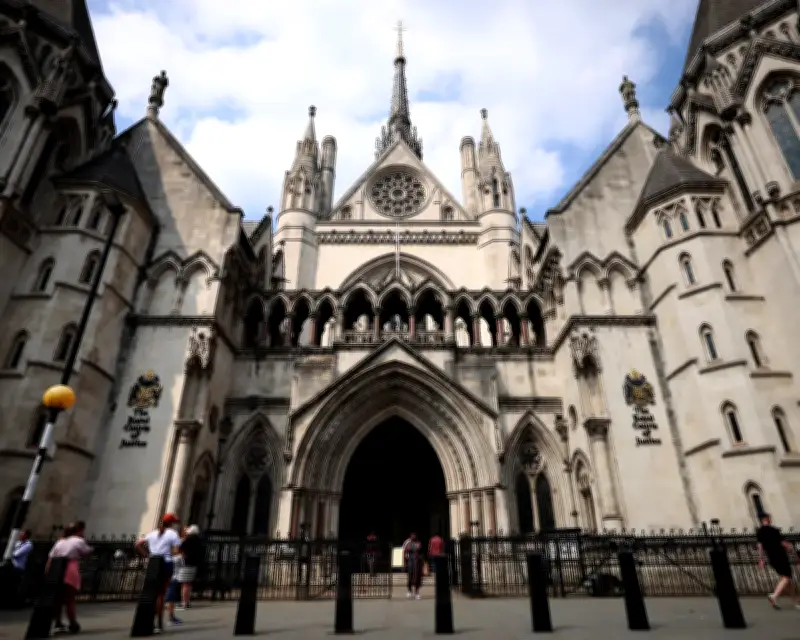
A senior Crown Prosecution Service (CPS) prosecutor cited an imaginary legal precedent during a high court dispute over whether a child should be prosecuted for the rape of his younger sister, according to court documents. The error has raised fresh concerns about AI hallucinations affecting the justice system.
Ravinder Dhillon, representing the CPS, referenced a made-up case called CPS – R v J [2024] EWCA Crim 3529 while arguing in favour of prosecuting the boy, who was 11 at the time of the alleged rape of his seven-year-old sister. The case does not exist, and The Guardian understands the reference came from an AI response generated during an internet search.
Judges and expert criticise error
Two senior high court judges called Dhillon's explanation for how the nonexistent case came to be relied on "unsatisfactory", while an expert in AI and law described it as a "serious failure". Brian Flanagan, associate professor of law at Maynooth University in Ireland who investigates the use of AI by judges, said: "This was used as a legal source to argue for the prosecution of a child and that legal source doesn't exist: that's a serious failure. It calls into question norms of trust in the law where we treat authorities as precious things. You can't make them up; it's out of bounds. AI increases the risk that is going to happen because of the time you can save. It is not great for any professional to do this, but when the professional is working for the state it takes on a different aspect, because the power of the state is immense."
The decision to proceed was taken by Dhillon in April and confirmed by the chief crown prosecutor. In October, Dhillon admitted the nonexistent citation had been made in error, saying she had been referring to a different, real decision made 15 years earlier.
CPS response and AI policy
Asked for comment, the CPS said it has a strict AI policy "which limits its use so that it is not used to make legal decisions and there must be human checks for accuracy". A spokesperson said the CPS "identified an error had occurred from conducting legal research using the internet".
"As soon as this error was identified, it was remedied and an internal review was carried out to establish how this had occurred and to check that no other cases have been affected," they said. "Following the rapid review we shared learnings, including that case law must be cited from trusted legal sources."
Wider AI-related errors in courts
The case adds to dozens of other AI-related errors plaguing court proceedings this year, mostly involving people representing themselves who are not legally qualified, often in employment tribunal cases. It is only the second known case involving the CPS, which admitted in February that a lawyer in an extradition case cited nonexistent legal authorities, likely caused by AI.
In June 2025, the high court responded to AI hallucinations in cases spanning housing to banking by calling on the Bar Council and the Law Society to consider steps to curb the problem "as a matter of urgency". Dame Victoria Sharp, then president of the King's Bench division, warned of "serious implications for the administration of justice and public confidence in the justice system if artificial intelligence is misused".
The high court said the reference to the fictitious case did not affect the outcome of the boy's challenge to the decision to continue with his prosecution, which is listed to go to trial in the youth courts later this week. The latest incident brings to 101 the number of entries in a UK tracker maintained by Doughty Street Chambers barrister Matthew Lee, covering confirmed, suspected and disputed AI-related errors and related false citations. He said the cases identified may be the "tip of the iceberg", as many lower court decisions are never published, and warned that AI was creating additional work for barristers who need to check the authenticity of legal authorities appearing in case papers where AI may have been used in their preparation.