A five-year-old boy died after leaping from a 15th-floor window in the “naive belief” that he could fly or would come to no harm, a coroner has concluded.
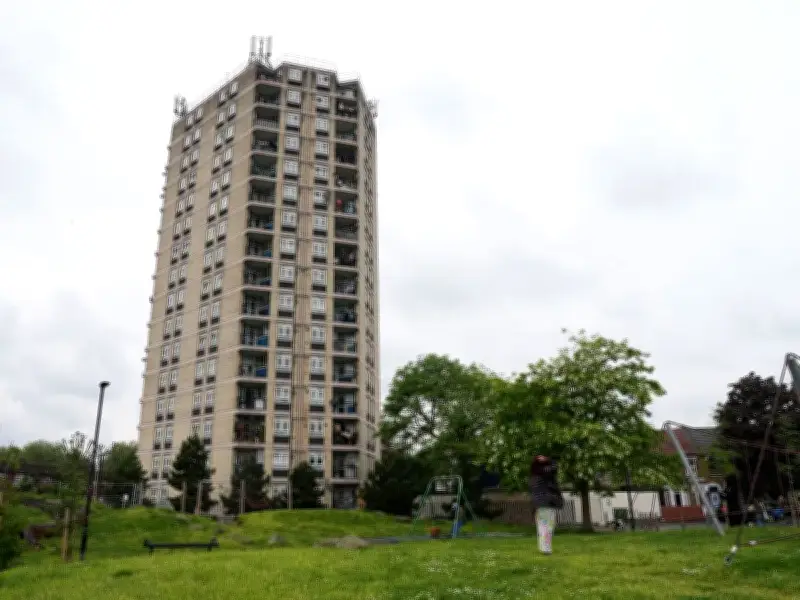
Aalim Ahmed died instantly after falling from a kitchen window at his family’s temporary social housing flat in Plaistow shortly before 6am on May 16, 2024.
Assistant Coroner Ian Wade found the tilt-and-turn window had become “compromised”, but said there was no compelling reason for the landlord to have considered placing Aalim on the 15th floor inappropriate.

Coroner’s narrative conclusion
Delivering a narrative conclusion at East London Coroner’s Court on Monday, Mr Wade said: “Aalim was an active five-year-old boy who suffered from a diagnosed condition called autism, such as to render him incapable of making reliable judgments about his personal safety and abilities.
“In the early hours of May 16 2024… he awoke and went from his bedroom to the kitchen, he climbed onto a chair and then onto the windowsill of an insecure double turn and tilt window.
“He opened the window and in a naïve belief that he could fly or alternatively could come to no harm he leapt from the open window… he died at the scene.”
Window condition and safety concerns
Mr Wade said the windows “were not used appropriately”. He added: “It wasn’t the fact that it was the 15th floor that was significant, what was significant was that the windows had become compromised.”
The coroner said he did not find a basis to issue a report to prevent future deaths. He said: “I find there was no compelling reason why a landlord should’ve considered that placing this little boy on the 15th floor was inappropriate.”
Aalim’s father, Makail Ahmed, rushed from the top-floor flat and discovered his son’s body following the fall. A post-mortem examination found the youngster died from “multiple injuries due to or as a consequence of trauma” following a “fall from height”.
Family’s account and council response
His mother, Sahra Osman, previously told the inquest she believed her son’s death was “preventable” and blamed Newham Council, saying she had repeatedly raised safety concerns about the property.
Ms Osman said she was “scared” and “horrified” when the family was placed in the top-floor flat and felt it was unsuitable for her young children. She told the court Aalim was autistic and had “no sense of danger”. He lived at the flat with his parents, toddler brother and newborn sister.
The inquest previously heard Ms Osman had raised concerns about the property over several months, including fears that the windows opened too widely. She also said she did not have a key for the windows and that they had been locked before the family went to bed on the night before Aalim died. Ms Osman denied any suggestion she may have “forced” a window open to cope with hot weather.
Engineer’s evidence and repair delays
Engineer Charlie Mann previously told the court he visited the property on December 17, 2023, after concerns over repairs had been raised. He said he checked all the windows, including how they operated and whether they were rubbing or catching, and found them functioning correctly.
Mr Mann said the handles also appeared to be working properly and the window restrictors were performing as expected. A restrictor is a safety device designed to limit how far a window can open, usually to between 50mm and 100mm.
Mr Mann recalled Aalim being “a bit lively” during his visit and said Ms Osman told him her son had autism. After speaking to her, he decided the existing button-operated restrictors should be replaced with lockable versions as an additional child-safety measure. He told the court: “I decided to change them to lockable because of her son.” Nine replacement restrictors were ordered, with work carried out before Aalim’s death.
The hearing also heard differing accounts over whether Ms Osman had keys for the windows. Under questioning from Christian Weaver, representing the family, Mr Mann said Ms Osman handed him a key which allowed her to open every window in the flat. Ms Osman denied having any keys.

The court also heard there was paint on the restrictors, although Mr Mann said “the restrictors were working and operating” and he did not believe there was enough paint to make them jam. He said he was “100%” sure the handles were not faulty when he inspected them.
His father, James Mann, director of the company where the engineer worked, previously told the inquest he had viewed police footage of the windows recorded after Aalim’s death. He said: “There needs to be an adjustment, something is not quite right.” Mr Mann Snr said that if engineers had reported windows in that condition, he would have expected the handle to be locked down and the window made safe until replacement parts arrived.
The inquest also heard council engineers had suggested the hinges in the windows’ tilt mechanism had been overridden by force. Questions were raised during earlier hearings over the time taken to respond to repair concerns. The court heard Ms Osman complained in May 2023, with an engineer attending in December that year and further work carried out in January 2024.
Paul Kitson, Newham Council’s corporate director of inclusive economy, housing and culture, previously acknowledged the delay, telling the hearing: “It is a very unacceptable delay.” Mr Kitson also said the windows had been found to be in good condition during inspections. He told the court: “We do know that the windows were in good condition.” He said that if further deterioration had taken place, it was likely to have occurred after April 8, 2024.