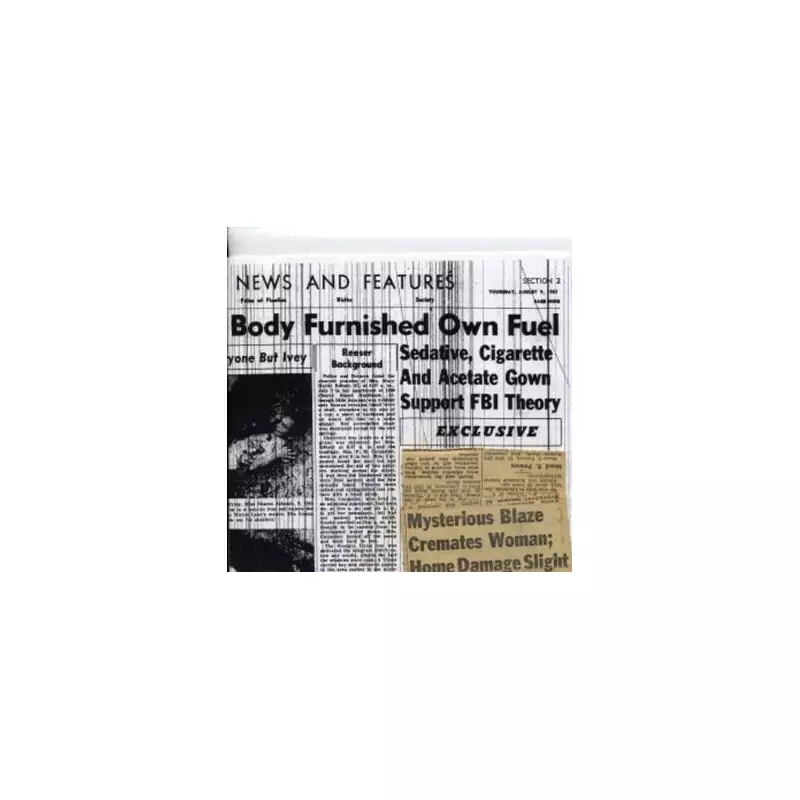
In the early hours of a July morning in 1951, a quiet apartment in St Petersburg, Florida, became the scene of a death so strange it would baffle experts and fuel global speculation for decades. The case of Mary Hardy Reeser, whose body was almost entirely incinerated while her surroundings remained largely untouched, remains one of the most perplexing fatalities in modern history.
The Scene of a Bizarre Tragedy
Mary Hardy Reeser, originally from Pennsylvania, had moved to Florida to be closer to her son, Richard, and his family. She resided in a building with just one other occupant, her landlady, Pansy Carpenter. On the evening of July 1, 1951, after spending time with relatives, Mary returned to her flat. Pansy Carpenter later recalled seeing Mary, dressed in a nightgown and black satin slippers, who mentioned she had taken sleeping pills and was going to bed.
A few hours later, Pansy was awakened by a sound like a door shutting. She investigated but noticed nothing amiss, aside from a faint smell of smoke she dismissed. By 8 am the next day, after a telegram for Mary went unanswered and Pansy found the doorknob to Mary's flat unusually hot, the police and fire brigade were called.

A Chilling Discovery and a Puzzling Investigation
Inside the smoke-filled apartment, responders discovered a scene of eerie, localised destruction. Mary Reeser's remains were almost completely reduced to ash. The only recognisable parts left were her left foot, still inside its slipper, sections of her spine, and her shrunken skull. The fire's reach was astonishingly limited: only the armchair she had been sitting in, a nearby side table, and a portion of the wall showed burn damage.
Plastic items near the chair had melted, yet newspapers close by were unscathed. Candles and Mary's bed were untouched. An electric clock in the flat had stopped at 4:20 am. The bizarre evidence led to immediate wild theories in the press, from a lightning strike to a fireball entering through the window.
The FBI and the 'Wick Effect' Explanation
St Petersburg's Police Chief, deeply puzzled by how a human body could be so thoroughly consumed without destroying the flat, enlisted the FBI. Their forensic analysis found no traces of accelerants like petrol or alcohol. The only fuel detected was Mary's own body fat, which had liquefied in the intense heat.
The official conclusion, after a thorough investigation, was an accidental death caused by what authorities termed 'the wick effect'. The theory posited that Mary, who was a smoker, likely nodded off while smoking. Her clothing caught fire, and subsequently, her own body fat acted as a fuel source, sustaining a fierce, candle-like burn that was contained to her immediate vicinity.
"Once the body starts to burn, there is enough fat and other inflammable substances to permit varying amounts of destruction to take place," stated an FBI document. Mary's daughter-in-law supported this, explaining to newspapers that the cigarette likely fell to her lap, and her fat provided the fuel, with nothing else around her to catch fire.
A Legacy of Mystery
Despite the official accidental ruling, the case of Mary Reeser never fully shed its aura of mystery. It continues to be a prime example cited in discussions of so-called spontaneous combustion, where a body burns with curiously minimal damage to its environment. Mary was laid to rest in Chestnut Hill Cemetery, Pennsylvania, but her death endures as a thoroughly examined, yet endlessly debated, historical enigma.