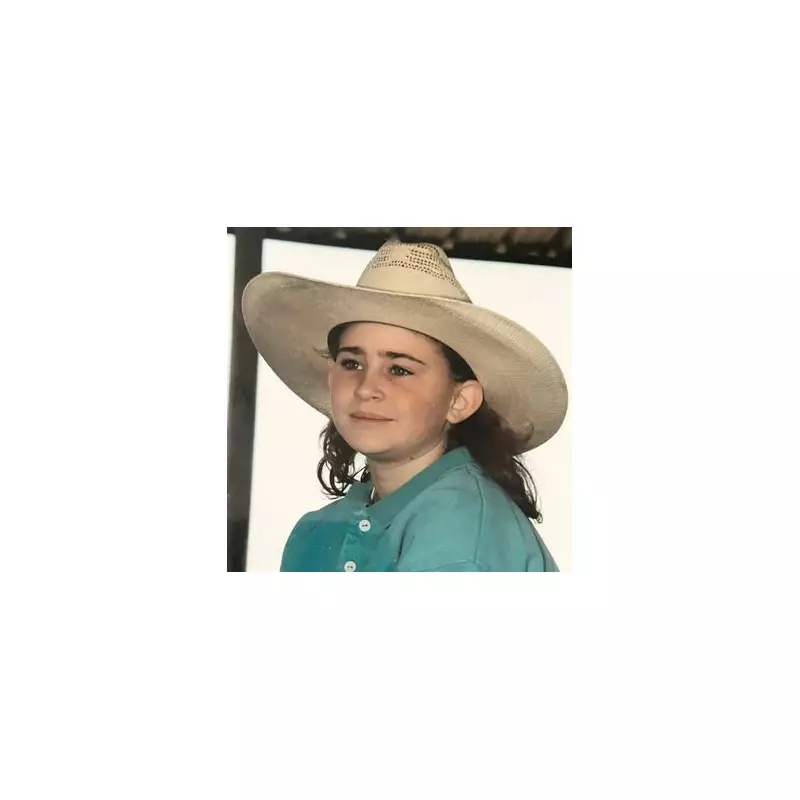
In a remarkable act of posthumous bravery, a 13-year-old girl has provided the crucial evidence needed to solve her own brutal murder more than three decades after the crime. The infamous 'Yogurt Shop Murders', one of Texas's most notorious cold cases, has finally been closed thanks to DNA recovered from under the teenager's fingernails.
A Decades-Long Mystery Finally Unravels
The breakthrough came on September 26, 2025, when forensic science finally linked the DNA to Robert Eugene Brashers, a serial killer who died by suicide in 1999. The case dates back to December 6, 1991, when the bodies of four teenage girls were discovered inside an 'I Can't Believe It's Not Yogurt' store in Austin, Texas.
The victims were Amy Ayers, aged 13, Sarah Harbison, 15, and 17-year-olds Jennifer Harbison and Eliza Thomas. For 34 years, their families were left with agonising questions and no answers, despite previous arrests and trials that ultimately collapsed.

The Final Fight That Secured Justice
Amy's family have now revealed that her instinct to fight her attacker was the pivotal act that led to justice. Her brother, Shawn Ayers, 52, from Fort Worth, expressed immense pride in his sister's courage. "I'm pretty proud of her for being 13 years old and still having the will to fight for your life. That's pretty remarkable," he said.
He explained the profound impact of the revelation: "Everything we thought for 34 years kind of got turned on its head within a sentence... if it wasn't for her fighting, this case would never have been solved. She fought and scratched him and got the DNA underneath her fingernails."
The family were shown conclusive evidence during a briefing with law enforcement. Amy's sister-in-law, Angie Ayers, 49, stated there were "several items that they could 100% say that this individual had murdered the girls."
A Bittersweet Resolution and a Legacy of Advocacy
The identification of Brashers, who cannot face trial due to his death, brings a complex form of closure. While initially feeling robbed of seeing justice served in court, the family's perspective shifted. Angie recalled her mother-in-law's words: "'You know what? If it needed to happen in order to keep other people safe and no one else suffered, then I'm okay with that.' When she said that, it kind of added to the peace. He cannot hurt anybody else."
Both Shawn and Angie acknowledge that full closure remains elusive. "There will never be closure," Angie said, describing the solved case as "just a chapter that's closed." Shawn echoed this, stating that while the major question of 'who' is answered, the painful 'why' will never be satisfied.
The family now plans to use their heartbreaking experience to aid others. They vow to support families facing similar cold case ordeals, building on previous advocacy work that helped pass the Homicide Victims' Families' Rights Act. "We do not want Amy's death to go unheard. We want to help other cold case victims and their families," Angie pledged.
In a further twist, the DNA evidence that solved Amy's murder has also led to a breakthrough in a separate case in Kentucky, demonstrating the far-reaching impact of her final, brave act.