UK Government Proposes Tougher Seat Belt Penalties Amid Widespread Non-Compliance
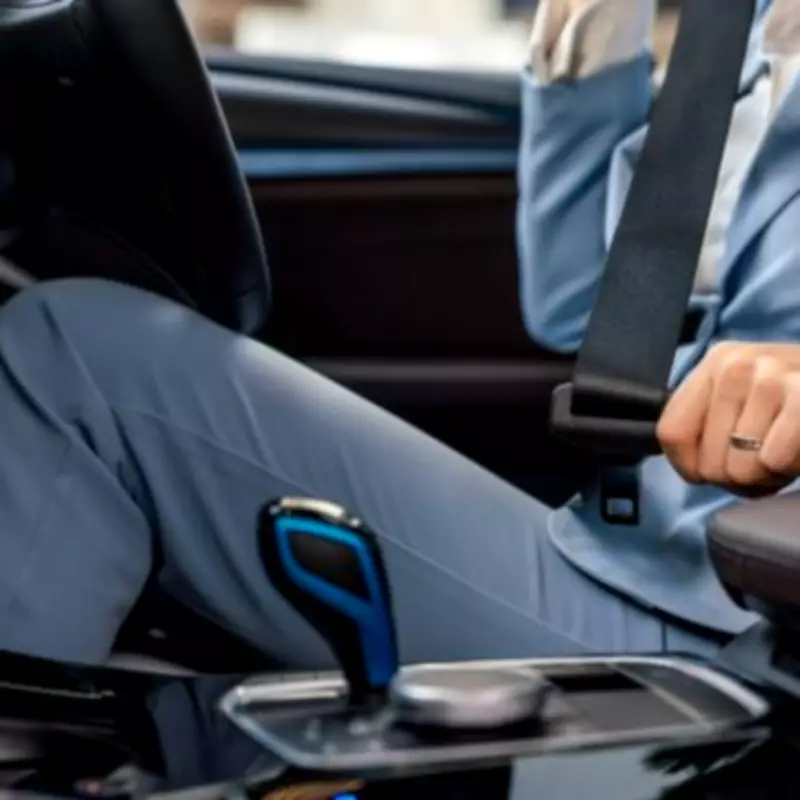
Millions of UK drivers could face significantly harsher penalties for failing to wear seat belts, as the government considers adding penalty points to existing fines. This move comes alongside alarming new research showing that 5.9 million drivers (14%) admit to routinely driving without buckling up.
Shocking Statistics on Seat Belt Non-Use
Data from the Parliamentary Advisory Council for Transport Safety (PACTS) reveals a stark reality: in 2023, a quarter (25%) of car occupants killed in crashes across Great Britain, where seat belt status was recorded, were not wearing one. This troubling statistic underscores the critical importance of seat belt usage in preventing fatalities.
A new survey commissioned by MoneySuperMarket provides further insight into driver behaviour. The study found that while 7.6 million drivers (18%) acknowledge having driven without a seat belt at some point, only just over a third (32%) of those have received a fine for this violation in the past five years. This suggests that current enforcement may be insufficient to deter dangerous behaviour.

Proposed Legislative Changes
The government's consultation proposals outline significant changes to seat belt legislation. Currently, failing to wear a seat belt results in a fixed penalty notice of £100 or a maximum fine of £500 if the case goes to court. Crucially, it is not an endorsable offence, meaning no penalty points are incurred.
The proposed changes would make this violation endorsable, with drivers facing three penalty points on their licence in addition to financial penalties. The consultation document states: "We propose that three penalty points should apply to all drivers who fail to wear a seat belt or who fail to ensure that any child in the vehicle wears an appropriate child restraint."
Insurance Implications and Expert Warnings
Alicia Hempsted, car insurance expert at MoneySuperMarket, warns that the proposed changes could have serious financial consequences beyond just fines. "Because insurers use penalty points as a measure of risk, the proposed changes could leave drivers facing more than just a fine," she explained. "Points on a licence may also push up premiums when it's time to renew."
Hempsted emphasised the fundamental safety importance of seat belts: "Seat belts are one of the simplest and most effective ways to reduce injury and save lives on the road, so it's concerning that a significant number of UK drivers admit to not wearing them when behind the wheel."
Current Seat Belt Regulations
Under existing rules, drivers must wear a seat belt if one is fitted, with only limited exceptions. These include when reversing, for licensed taxi drivers in specific circumstances, certain delivery drivers, and those who are medically exempt. Medical exemptions require carrying a certificate in the vehicle at all times and notifying insurers.
Drivers are also responsible for ensuring children are properly restrained. Children must use appropriate car seats until they reach 135 centimetres tall or their 12th birthday, whichever comes first. Those aged 12 or 13, or younger but over 135cm, must wear seat belts.
The Broader Context of Road Safety
The proposed changes reflect growing concern about seat belt compliance as a critical road safety issue. With mandatory seat belt use in place since 1991, the government appears determined to strengthen enforcement mechanisms to address persistent non-compliance.
For most drivers, the message remains clear: wearing a seat belt isn't just about avoiding penalties—it's a fundamental safety measure that saves lives. As the consultation progresses, millions of drivers may need to reconsider their habits or face stricter consequences.
The MoneySuperMarket research involved 1,000 UK motorists aged 17 and over with full licences, conducted between January 20-23, 2026. DVLA figures indicate 42,120,966 individuals currently hold full UK driving licences.