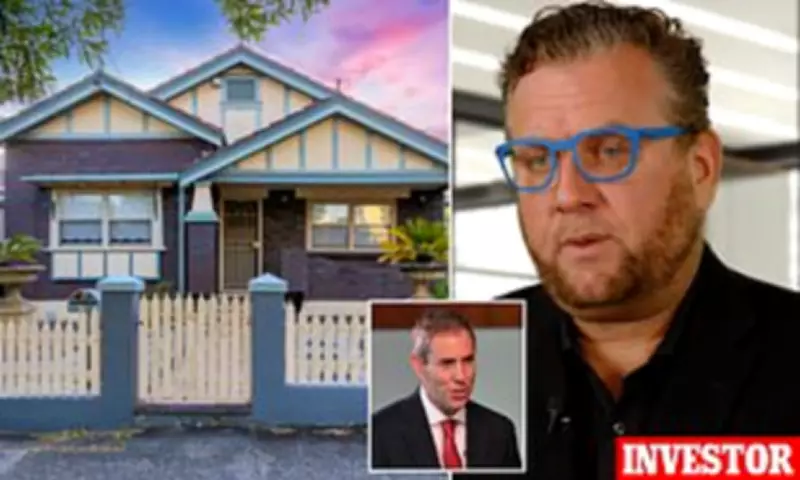
A prominent economist has forecast that tax-free owner-occupied homes will emerge as the primary beneficiaries of the upcoming Federal Budget, as investors redirect capital away from rental properties and other assets in response to the Albanese government's proposed changes to capital gains tax (CGT) and negative gearing.
Christopher Joye, a highly regarded economist and founder of Coolabah Capital Investments, predicts that investors will increasingly channel their funds into their own residences rather than investment properties, stocks, or shares. This shift, he argues, could further inflate property prices.
Proposed tax reforms
Budget leaks indicate that the government will abolish the negative gearing tax break from tomorrow evening. Under current rules, property investors who incur losses—through repairs, strata levies, or similar expenses—exceeding rental income can offset those losses against their salary or other earnings. The proposed changes would restrict this benefit to newly built properties only, aiming to boost housing supply.

Additionally, the government is expected to reform the CGT regime. Presently, Australian residents who hold an asset for over 12 months pay tax on only 50% of the profit when selling, for example, an investment property. The system may revert to pre-1999 rules, which adjusted gains for inflation rather than applying a flat discount.
According to an Australian Financial Review report on Monday, a one-year grace period will apply before the new rules take full effect.
Impact on investment behavior
In a social media post on X, Mr Joye warned that the CGT changes would likely drive investors to withdraw capital from 'businesses, shares, commercial property and rental housing' and redirect it into owner-occupied homes, pushing prices higher. He stated, 'It's a great way to push up the prices of these houses.'
He further cautioned that both the CGT and negative gearing reforms would render rental property investments unattractive. 'It will give Australia the most unattractive capital gains tax in the world,' he added. 'The government's policies will 1) push up owner-occupied house prices, 2) push up rents and 3) reduce the capital available for investing in any small, medium or large sized business. Your best bet will be to buy a house, live in it—and hope they keep dropping 500,000 new people into the country every year to pump up prices.'
Government defends policy shift
Prime Minister Anthony Albanese defended his government's reversal on earlier promises not to alter negative gearing or CGT policies. Before the last election, he had firmly denied any intention to change these measures. However, on ABC Radio National on Monday, Mr Albanese stated that the government would 'respond to the circumstances that are here and now when it comes to intergenerational equity.'
Pressed on what had changed since ruling out such reforms, he cited the persistent lack of progress in housing affordability. 'For a long period of time, young people have tried to save for a home. Another year has passed since the election, and not enough has changed. So many people have had another year of missing out at auctions, of renting and paying someone else's mortgage, and too many young people are close to giving up on the opportunity of owning their own home.'
Details of the changes
The full details remain undisclosed, but the Australian Financial Review reports a one-year grace period for both negative gearing and CGT changes. Any property acquired from Budget night onwards will be subject to the negative gearing change, though the policy will not fully take effect until July 1, 2027. Similarly, the CGT change is expected to commence on July 1 next year.
Opposition criticism
The Opposition has condemned the government's backflip, arguing that housing has 'collapsed' under its watch. Opposition housing spokesman Andrew Bragg noted that the government's Housing Australia Future Fund, part of $80 billion in spending, has delivered fewer homes than the Coalition achieved. 'Over the course of these four years, they have only built, on average, 170,000 houses. Under the last Coalition government, there were 200,000 houses being built every year on average. So the government has spent $80 billion of taxpayer funds to build 30,000 fewer houses each year.'

He accused the government of driving up housing costs for younger Australians through policies such as the uncapped 5% deposit scheme, which has been criticised for boosting demand and increasing house prices. 'They have collapsed supply, and meanwhile they have really made things ugly for younger Australians by pump priming house prices at the entry level with their ridiculous non-means tested 5 per cent deposit scheme.'