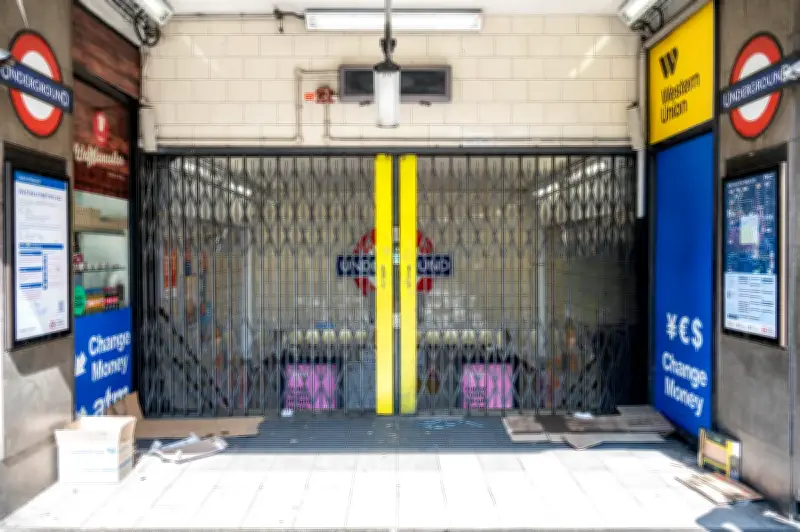
Eight Tube strikes will go ahead after the RMT union rejected the latest proposals from Transport for London, despite a new third option aimed at breaking the deadlock.
Transport chiefs offered Tube drivers a third option for new working arrangements in an attempt to avoid strikes hitting London. London Underground is seeking to push ahead with moves to a voluntary four-day week for Tube drivers.
However, the National Union of Rail, Maritime and Transport Workers (RMT) objected to the reforms as they meant some drivers who wanted to stay on a five-day week would have had to move depot.
Third option fails to bridge gap
To try to resolve the dispute, Transport for London is understood to have put forward a third option, which would have allowed drivers to stay on a five-day week while not having to move depot.
But the RMT union again rejected the latest proposals and is set to hit London with eight Tube strikes in the run-up to Christmas and into the New Year. The first walkout is due to take place on Thursday, November 27.
Paul Swaddle, Conservative leader of Westminster Council, has accused the RMT of threatening to “steal Christmas” from Londoners and businesses who rely on strong takings during the festive season.
Details of the proposed changes
Under the proposed changes, drivers were initially given the option of a four-day week, working 34 hours, with new terms and conditions. They would be paid for 35 hours per week so would not have to accept any pay cut, with many drivers earning more than £70,000-a-year. For a few extra days a year, though, they would do other non-driving work such as safety training.
Alternatively, they could stay on the current 38.5 hours over five days, old terms and conditions, with days off in lieu for hours worked over 35 a week. However, running a four-day and five-day week at the same depot was problematic given different rostering systems. So, some drivers who wanted to stay on a five-day week faced having to move depot, which would have been a disadvantage, particularly if it meant a longer travel to work.
To try to break the deadlock in talks, TfL proposed the third option of drivers working 36 hours over five days, opting into the new terms and conditions, keeping the same leave allowance, and staying at their depot. But this offer did not bridge the gap between the two sides in the dispute.
Strike dates and union reaction
The RMT has announced 24-hour walkouts on the following days: Thursday 26 November 2026, Thursday 17 December 2026, Saturday 19 December 2026, Monday 4 January 2027, Wednesday 6 January 2027, Wednesday 17 February 2027, Tuesday 23 February 2027 and Thursday 25 February 2027.
However, the RMT’s objections to the proposed changes have been hugely undermined by the Aslef train drivers’ union fully backing the reforms. Aslef stressed that the four-day week offered drivers the best working conditions on the whole rail network.
RMT General Secretary Eddie Dempsey insisted: “RMT is not opposed to a genuine four-day working week that benefits our members, but we will not accept it being used as a vehicle for job cuts, intensified working and the erosion of terms and conditions. London Underground must withdraw these damaging proposals and engage seriously with the union to reach a negotiated settlement.”
But Nick Dent, LU’s director of customer operations, stressed: “We have engaged with our trade unions for months about our proposal for a new four-day working week. As a result of that engagement, drivers can now choose to remain on a five-day week with a guarantee of remaining at the same depot.”