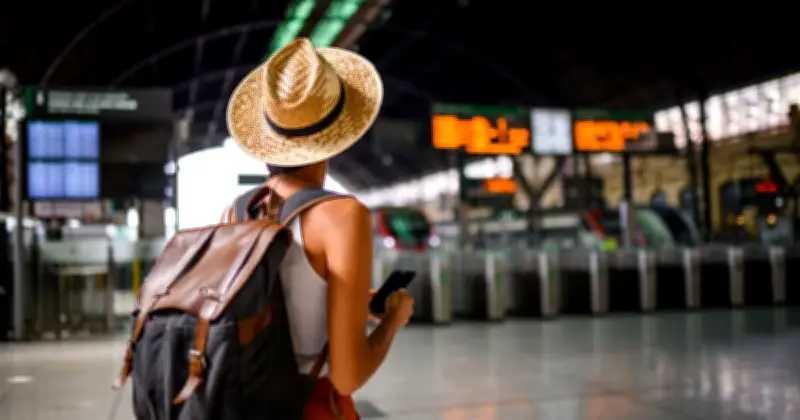
Britons travelling to Spain this week have been warned they will face chaotic scenes as the country braces for several major disruptions, led by a 24-hour nationwide general strike on Wednesday (November 11). This coincides with ongoing high-speed rail disruptions and digital border queues.
Spain’s major unions have called a 24-hour general strike across all sectors - including aviation, public transport and hospitality - over housing costs and working conditions. Spanish authorities have set minimum service levels that still allow significant cuts, particularly to short domestic routes (where only 32% of flights at Madrid are guaranteed to operate) compared to international flights (57%) and island routes (78%). Ground handling and air traffic control absences may also cause airport delays.
Transport and services affected
Metros, local buses and commuter trains will operate on minimum skeleton schedules. Museums, shops, restaurants and pharmacies may close for the day. Both planned and spontaneous demonstrations are expected in major cities, which can cause sudden roadblocks and traffic congestion. Official travel advisories urge visitors to avoid crowds and protests.
Hospitals, schools, public transport and other essential services will remain open, but many will operate with fewer staff than usual. Hospitals and health centres will remain open, but patients may find routine appointments, tests and non-urgent operations cancelled or postponed. A&Es, intensive care units, maternity wards and treatments that cannot safely be interrupted will continue operating.
Now that the digital border system is active and formal congestion-pause exemptions have expired, UK passport holders must register fingerprints and facial biometrics upon arrival. Gov.uk EES guidance warns passengers to expect longer wait times at border control.
This also coincides with Ryanair's stricter baggage check-in cutoff, closing bag drop desks 60 minutes before scheduled departure - up from the previous 40 minutes. For example, someone travelling on a flight scheduled to depart at noon will need to complete baggage drop-off by 11am.
Union backing and essential services
More than 4,500 union branches and works councils have publicly endorsed the walkout, according to trade union Comisiones Obreras (CCOO), though it remains uncertain how many workers will actually take part. The 24-hour protest is set to kick off at midnight on November 11.
Emergency services will continue operating throughout the strike, with enough staff required to ensure urgent calls and life-threatening situations are dealt with. Police officers, members of the Guardia Civil and the armed forces are not allowed to strike, meaning their services will continue as normal. Firefighters and emergency medical teams will also remain on duty, although the number of staff required will vary between regions.
In Catalonia, 85% of the usual staff at the 112 emergency call centre must remain on duty, while fire services will keep enough crews available to respond to emergencies. Private security staff will also be required to work, with 90% of the usual workforce staying on duty at airports, ports and railway stations.
Renfe, Spain’s state-run railway company, will run 75% of its usual commuter trains during peak hours and 50% during the rest of the day. Peak hours are between 6am and 9am, 1.30pm and 3.30pm and 6.30pm and 8.30pm. Medium-distance trains will run at 65% of their usual frequency, while high-speed AVE and long-distance services will operate at 73%, the company said.
Regional transport and further walkouts
Local transport arrangements will depend on the region. Madrid’s Metro will run 80% of its usual services during peak hours and 50% of its usual services for the rest of the day. City buses in the capital will operate at half their usual frequency throughout Wednesday. Catalonia has imposed tighter restrictions, with just 25% of usual public transport services guaranteed during the morning and afternoon rush hours. Outside those periods, no services are guaranteed on the region’s Metro, buses and commuter trains.
International flights and domestic routes where alternative public transport journeys take more than five hours are also covered by these rules. Aena has warned travellers heading to Madrid and Barcelona airports to anticipate delays and passengers should check directly with their airline before travelling to the airport.
More walkouts are due on Thursday (November 12). Carlos Cuerpo, who holds both the roles of First Deputy Prime Minister and Economy Minister, has taken over transport duties from Oscar Puente, who resigned in the wake of the devastating Toledo train crash late last month. He held talks with the union but failed to avert the walkouts, which come less than three weeks before the general election on November 29. Semaf has said it will not call off the stoppages without ‘concrete, material and verifiable’ measures to improve safety.