

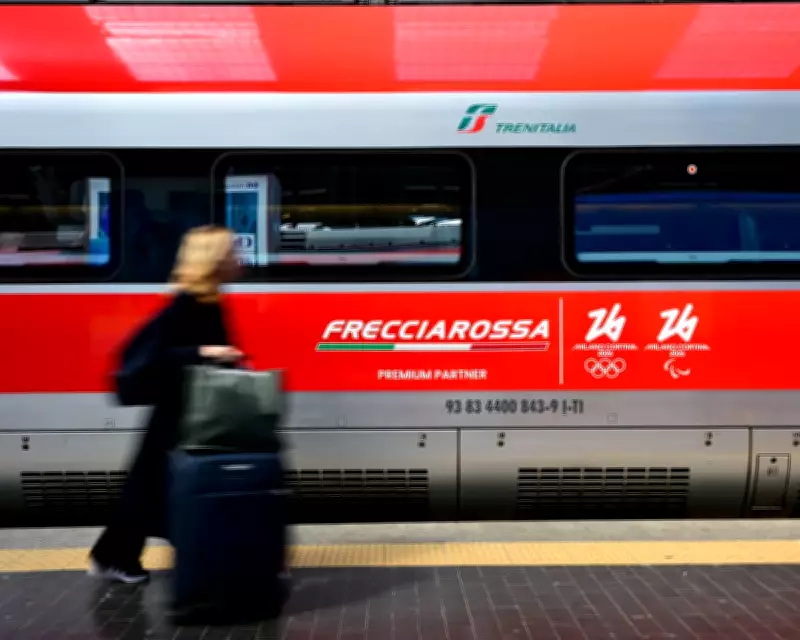
EU's Busiest Flight Routes Lack Train Booking Options, Hindering Climate Action
A new report has exposed Europe's "stone age" system for booking train tickets, which is needlessly complicating efforts for travellers to choose greener alternatives over polluting flights. The analysis from the Transport & Environment (T&E) thinktank reveals that booking equivalent train journeys is "difficult or impossible" on almost half of the European Union's busiest international air routes.
Key Findings on Cross-Border Rail Accessibility
The study examined the 30 busiest international flight paths within the EU, excluding island destinations and routes longer than 1,500 kilometres. It found that passengers could not purchase tickets covering the entire journey on 20% of these routes. On an additional 27% of the routes, tickets were only available from one train operator, severely limiting options for consumers.
Popular flight connections such as Lisbon to Madrid or Barcelona to Milan could not be booked through any rail operator's website. Other major routes, including Paris to Rome and Amsterdam to Milan, were only bookable from a single operator, highlighting the fragmented nature of Europe's rail ticketing systems.

Impact on Climate-Conscious Travel Choices
Georgia Whitaker, a rail campaigner at T&E and author of the report, described the situation as "almost feels a bit silly," noting that an outdated and clunky system is actively holding back climate action. "In the world we live in, you can get pretty much most things, for better or worse, with one click," she said. "When you can't do that to travel by rail – despite people's best intentions – we are not going to see the full potential being utilised."
Aviation remains one of the most challenging sectors to decarbonise through technological solutions alone. Emissions of planet-heating gases from air travel are projected to soar as the industry aims to double passenger traffic by 2050. This makes shifting to rail for short-haul journeys a critical component of climate strategy.
Broader Data and Operator Practices
The disparity was slightly worse when analysing a broader dataset of 50 international routes, which included European countries with quieter airspace. Brian Caulfield, a transport researcher at Trinity College Dublin, commented on the findings: "This report exposes a 'stone age' system where major operators often fail to even display – let alone sell – available cross-border connections or cheaper competitor fares. We are making it structurally difficult for even the most climate-conscious travellers to choose the greener option."
Passengers typically book tickets from the dominant operator in their country, such as Deutsche Bahn in Germany or SNCF in France. The report found that incumbent operators do not sell competitors' tickets on 86% of routes where competition exists. On 59% of these routes, alternative options are not even displayed, leaving travellers unaware of potentially cheaper or more convenient services.
Consumer Behaviour and Policy Implications
A YouGov poll commissioned by T&E last year found that 61% of long-distance rail travellers have avoided journeys due to booking difficulties. More than 40% stated they would travel more often by rail if it were easier to book tickets. Whitaker noted, "One of the barriers to travelling by rail is price because often it is more expensive than flying. But what's happening as a result of not displaying or selling other competitive services on the same routes is that often passengers are not aware of the fact that there are actually cheaper options."
The European Commission is set to publish a single ticketing package on 13 May, as part of a broader initiative to facilitate easier cross-continent travel and enhance consumer protections. This report builds on earlier findings from Greenpeace in August, which examined 109 cross-border routes in Europe and found trains were cheaper than planes on only 39% of them.
Herwig Schuster, a rail campaigner at Greenpeace, emphasised the importance of the T&E report ahead of the new ticketing rules: "When choosing between rail and plane for short-haul journeys, many people prioritise price. However, if they find it too complicated to purchase the necessary train tickets, they will opt for the more polluting flight."






