

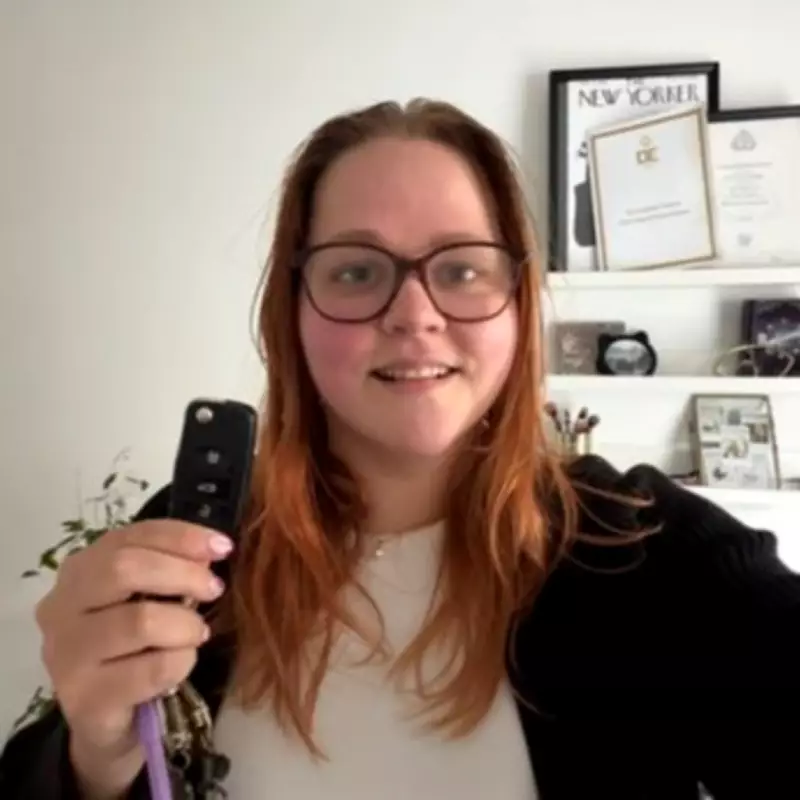
Swedish Expat's Perspective on UK Driving Oddities
After residing in the United Kingdom for more than seven years, reporter Alice Sjoberg has compiled a list of six aspects of British driving that continue to perplex her. Originally from Sweden, where she obtained her driving licence, Alice moved to the UK just before turning twenty and eventually purchased her first car four years later, primarily for work purposes. While she adapted to various driving rules as a pedestrian and public transport passenger, transitioning to driving herself in a new country presented unique challenges.
1. Driving on the Left Side of the Road
One of the most glaring differences is the British insistence on driving on the left side of the road, contrary to the right-side driving practiced by approximately 75% of the world. This fundamental shift requires constant mental adjustment, such as using the left hand to change gears instead of the right and navigating roundabouts in a clockwise direction rather than anticlockwise. Even after four years of driving in the UK, Alice occasionally finds this practice odd, especially when her Swedish parents visit and join her in the car. However, she has come to accept that the UK does not follow the right-side driving norm.
2. Car Insurance System
Another surprising element was the car insurance system, which Alice only fully grasped when purchasing her vehicle. In the UK, car insurance is not only significantly more expensive than in Sweden but also operates on a different principle. Swedish drivers insure their vehicles, allowing any licensed individual to drive them, which facilitates scenarios like having a sober friend drive home after a night out. In contrast, the UK system insures the driver, incorporating various factors that Alice finds complex and difficult to comprehend.

3. The Infamous Magic Roundabout
Living in Swindon, Alice encountered the notorious Magic Roundabout, constructed in 1972. This unique traffic feature consists of five mini-roundabouts arranged in a circle, with the inner ones moving anticlockwise and the outer circle flowing clockwise. Although she had traversed it multiple times as a bus passenger, it took nearly a year of car ownership before she dared to drive through it herself, describing the experience as nerve-wracking. Interestingly, many Swindon locals praise its efficiency once mastered.
4. Driving in Snowy Conditions
Having grown up in Northern Sweden, Alice is well-acquainted with driving in snow, as Swedish driving tests include a mandatory component for demonstrating control in snowy, icy, and wet conditions. In the UK, however, she was astonished by the traffic chaos that ensues with even minimal snowfall, often finding herself stranded at home due to gridlocked streets. Consequently, she now avoids driving altogether during snowy weather to prevent getting stuck in traffic.
5. High Speeds on Narrow Country Roads
Alice remains baffled by the bravery of drivers who reach speeds of up to 60 mph on tiny, winding country roads that barely accommodate one vehicle. She prefers to maintain a cautious pace of around 40 mph or less, navigating each curve carefully to minimize collision risks. This contrast highlights a cultural difference in driving attitudes between Sweden and the UK.
6. Traffic Lights Within Roundabouts
Lastly, Alice questions the necessity of traffic lights installed inside roundabouts. Her first encounter with this feature led to a sudden brake application, as she did not anticipate lights while driving through a large roundabout. In her view, roundabouts should function as alternatives to traffic lights, making their simultaneous use seem redundant and confusing, especially since such setups are absent in Sweden.
Reflecting on her experiences, Alice emphasizes that driving abroad can be more challenging than anticipated, with these six quirks standing out as particularly odd. Her insights offer a fresh perspective on the nuances of UK driving culture through the eyes of a Swedish expat.






