

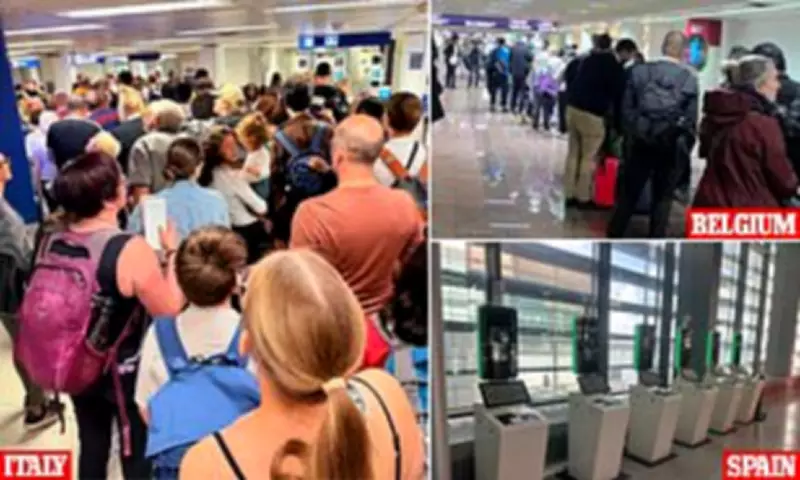
British families are bracing for a summer of travel chaos as volatile oil prices drive airfares sharply higher and force flight cancellations, compounded by lengthy delays at airports due to new European Union border regulations. The aviation industry is confronting an unprecedented crisis, with analysts warning of systemic jet fuel shortages and significant operational disruptions.
Jet Fuel Crisis Intensifies
Jet fuel supplies from the Middle East have been severely disrupted since the US-Israeli conflict with Iran began, following Iran's effective closure of the critical Strait of Hormuz shipping route. This strategic waterway is vital for global energy shipments, and its blockage has triggered a dramatic surge in fuel costs.
Susannah Streeter, chief investment strategist at Wealth Club, predicted the aviation industry faces an 'extraordinary period' ahead. 'There's a growing chance that leisure flights could start being cancelled from May if carriers are unable to source enough fuel from other producing nations,' she warned.

The International Air Transport Association reported the latest average global jet fuel cost reached $198 per barrel last week, doubling from $99 in late February when the conflict commenced. This rapid inflation is being passed through to consumers faster than road fuel or household energy costs, with seat prices already rising by approximately one-fifth and expected to climb further during the peak summer season.
Airline Responses and Capacity Cuts
Airlines worldwide are implementing emergency measures to mitigate the financial impact. Investment bank BNP Paribas estimates global flight schedules for April have been reduced by about 5% compared to earlier plans, with the most significant cuts in the Middle East region, though Europe, Asia, and the United States are also experiencing reductions.
Numerous carriers have announced specific actions:
- Air France-KLM plans to increase long-haul ticket prices, adding approximately €50 (£44) per round trip.
- Delta Air Lines is cutting capacity by around 3.5 percentage points and raising checked baggage fees by $10 (£7) for first and second bags.
- Cathay Pacific will cancel about 2% of scheduled passenger flights from mid-May through June, while its budget subsidiary HK Express cuts 6% of services.
- EasyJet CEO Kenton Jarvis warned European consumers to expect higher ticket prices toward summer's end as existing fuel hedges expire.
- British Airways-owner IAG stated it does not plan immediate ticket price increases due to hedging arrangements, though this position may change.
Budget carriers are particularly vulnerable, as their low-cost models offer less flexibility to absorb such dramatic cost increases compared to major airlines that can employ dynamic pricing or adjust aircraft deployment.
EU Border System Creates Airport Gridlock
Simultaneously, families with young children have been stranded abroad due to the European Union's new Entry/Exit System (EES), which requires travellers from third-party countries including the United Kingdom to submit fingerprints and photographs upon entering the Schengen area. Further checks occur upon departure, creating bottlenecks that have caused some passengers to miss flights entirely.
Passengers travelling across Europe experienced significant delays and cancellations over recent weekends, with extensive queues forming at airports including Geneva, Lisbon, Malta, Brussels, and Amsterdam. In Milan, approximately 100 easyJet customers were abandoned at Linate Airport after crew departed without them due to border control chaos.
Aviation expert Sally Gethin described the EES rollout as 'a bumpy ride and a massive headache for travellers,' noting many flyers remain confused about the scheme. She suggested the UK Government could have done more to raise public awareness about the new requirements.

Industry Calls for Government Intervention
European airlines are urgently requesting EU intervention through emergency measures. Industry group Airlines for Europe (A4E) has proposed multiple crisis responses including EU-level monitoring of jet fuel supplies, temporary suspension of the EU's carbon market for aviation, and elimination of certain aviation taxes. The organization has also urged Brussels to consider joint EU purchasing of kerosene, mirroring the approach used for natural gas following Russia's 2022 supply reductions.
Airports Council International (ACI) director-general Olivier Jankovec warned in a letter to European commissioners that 'if the passage through the Strait of Hormuz does not resume in any significant and stable way within the next three weeks, systemic jet fuel shortage is set to become a reality for the EU.' The organization emphasized that entering the peak summer season only exacerbates these concerns.
ACI has called for urgent monitoring of jet fuel supplies for the next six months and requested temporary lifting of restrictions that limit import capabilities, highlighting the EU's reduced refining capacity and acute dependence on imports.
Political and Economic Fallout
The conflict's repercussions extend beyond aviation, affecting broader travel spending and political discourse. Barclays data reveals travel spending fell 3.3% in March, marking the first decline since COVID-19 lockdowns, with 11% of surveyed consumers cancelling plans due to concerns about holiday disruptions.
Meanwhile, air passenger duty (APD) rates increased from April 1, adding further cost pressures. Reform UK has pledged to abolish the duty on short-haul flights for families travelling with children if it wins the next election, branding it a 'family holiday tax' that would save families approximately £45 on international flights.
Heathrow Airport reported its busiest ever March with 6.6 million passengers, partly due to airport closures in locations like Dubai and Doha redirecting travellers through London. However, chief executive Thomas Woldbye cautioned that 'the outlook for the next few months remains uncertain' given the ongoing crisis.
As geopolitical tensions continue and fuel supplies remain constrained, British travellers face a perfect storm of rising costs, reduced availability, and logistical challenges that threaten to make summer 2024 a season of significant travel disruption.





