
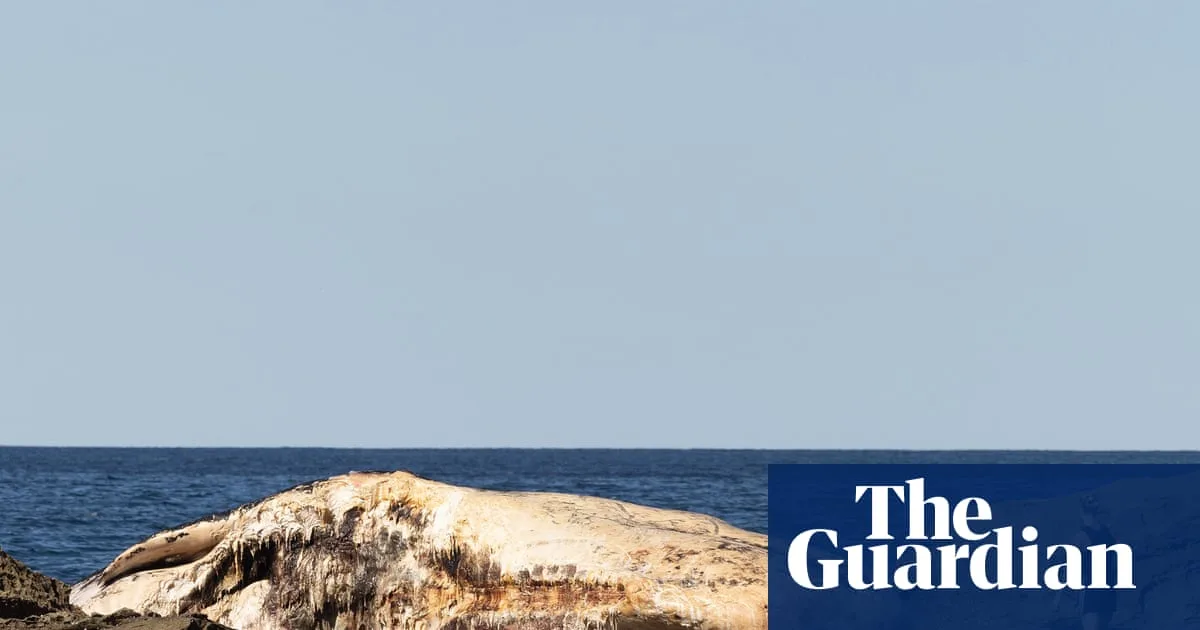
A massive sperm whale carcass, estimated to weigh 25 tonnes, has washed ashore at Era Beach in the Royal National Park south of Sydney, drawing sharks and forcing the closure of nine beaches. The decomposing body, missing its lower half, has been described as resembling a melted candle, with strips of flesh hanging like rotten tinsel and a pungent odour of rotting garbage and fish.
Surf Life Saving New South Wales reported a shark sighting at Era Beach on Saturday morning, leading to the closure of all beaches within the national park, including Garie, North Era, South Era, Wattamolla and Burning Palms. The NSW National Parks and Wildlife Service issued a safety alert warning of an elevated shark risk, which remains in place as of Wednesday.
The carcass, which can only be reached by water or a 45-minute hike, has attracted morbid curiosity from locals and visitors. Hikers, drones, helicopters and boats have been observed near the site. Local Peter Reid, who had never seen a whale carcass before, described the smell as 'delightful' and noted that some swimmers reported smelling it in the water, which he considered risky given the number of sharks.
Dr Vanessa Pirotta, a whale scientist, said the whale likely died at sea weeks ago, with its lower half probably lost to scavengers or decomposition. The level of decomposition has prevented further investigation into the cause of death. She emphasised that public safety is paramount, and the longer the carcass remains, the greater the shark risk.
Authorities are yet to decide how to remove the body, with considerations including cultural consultation with First Nations communities. Dr Pirotta noted that decomposing whales are often eaten by sharks, highlighting their ecological role, but the hazard to humans must be addressed.




