SAS Becomes First Major European Airline to Cut Flights Amid Fuel Crisis
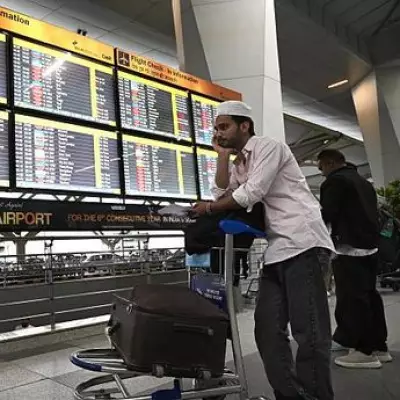
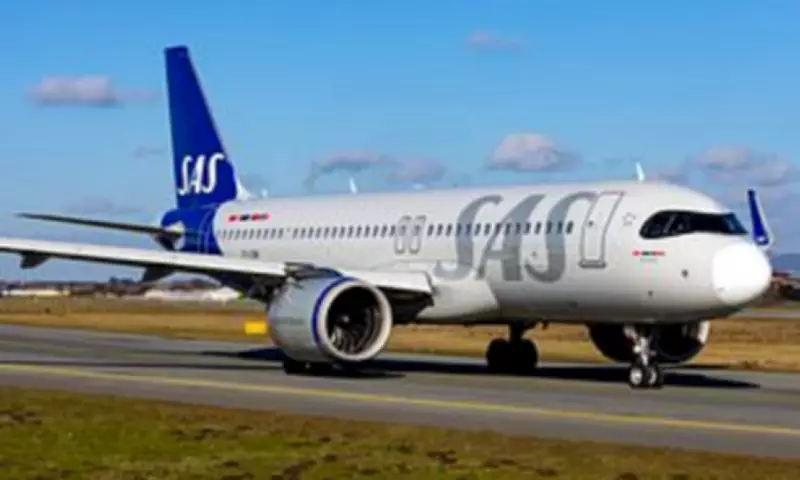
As the ongoing conflict in the Middle East intensifies, the aviation industry is facing severe disruptions with jet fuel costs skyrocketing and supply shortages creating operational challenges for airlines worldwide. Scandinavian Airlines System (SAS), the flag carrier for Sweden, Denmark, and Norway, has taken the unprecedented step of cancelling hundreds of flights in response to what it describes as a 'sharp and sudden increase' in global fuel prices.
Immediate Operational Adjustments
The Stockholm-based airline announced it would be implementing 'limited short-term adjustments' to its traffic program throughout March and April. A spokesperson for SAS explained to the Daily Mail: 'Given the ongoing situation in the Middle East, including the sharp and sudden increase in global fuel prices, we, just like many other airlines, have taken measures to strengthen our resilience.'
The cancellations primarily affect shorter routes within Scandinavia where alternative travel options are readily available. The airline emphasized it is 'consolidating capacity on departures where there are good same-day alternative connections' to maintain reliable travel options for customers. Affected passengers are being notified and offered rebooking to other departures on the same day wherever possible.

'Our aim is always to provide clear information as early as possible and to offer practical same-day alternatives wherever feasible,' the airline stated. While SAS declined to specify exact cancellation numbers or specific routes, citing the 'evolving situation,' it confirmed the adjustments would be 'as limited as possible' and focused on routes where same-day rebooking remains viable.
Geopolitical Factors Driving Fuel Price Surge
The conflict between the US/Israel and Iran has effectively closed the Strait of Hormuz, the critical transit route for jet fuel from the Middle East that lies between the Persian Gulf and the Gulf of Oman. This strategic waterway typically supplies approximately 50 percent of jet fuel to European-based airlines, making its closure particularly disruptive to aviation operations across the continent.
Market data reveals the dramatic impact on fuel costs: before the initial strikes on Iran on February 28th, a ton of jet fuel bound for north-west Europe cost approximately $830 (£621). Over the subsequent two weeks, this price has nearly doubled, placing immense financial pressure on airlines operating in the region.
Industry-Wide Responses and Strategies
While SAS represents the first major European carrier to cancel routes specifically due to the fuel situation, other airlines are implementing various strategies to mitigate the financial impact. Ryanair CEO Michael O'Leary explained earlier this month that his budget airline has hedged fuel supplies for the next twelve months through March 2027 at about $67 per barrel, insulating it from immediate price fluctuations.
'We're hedged for the next 12 months out to March 2027 at about $67 per barrel. So it won't affect our costs and it won't affect our low fares,' O'Leary stated confidently.
International Airlines Group (IAG), which operates British Airways, has similarly hedged 80 percent of its fuel for the remainder of March and 70 percent for the second quarter. However, this protection decreases to less than 60 percent during the busy summer months, potentially exposing the airline and its passengers to higher costs if the conflict persists.
Global Ripple Effects and Passenger Impacts
The fuel crisis is creating global repercussions beyond European aviation. Hong Kong's Cathay Pacific recently introduced an emergency fuel surcharge, effectively doubling it on most routes. Cathay Group CEO Ronald Lam revealed that fuel costs this month have doubled compared to the average of the previous two months.
From March 18th, the surcharge for tickets between Hong Kong and Europe purchased in Hong Kong will increase from HK$569 (approximately US$73) to HK$1164 (about US$149). Meanwhile, flights to destinations like the Maldives that avoid Middle Eastern stopovers have seen sharp price increases for direct routes.

Expert Analysis and Travel Recommendations
Industry experts offer contrasting advice for travelers navigating the uncertain aviation landscape. James Noel-Beswick, head of commodities at market intelligence firm Sparta Commodities, told The Telegraph that 'the case for booking sooner rather than later is reasonably compelling' regarding flight prices.
'Jet fuel costs are already running at elevated levels, and we expect further upward pressure in the weeks ahead as the market digests events in the Gulf,' Noel-Beswick warned. 'Those costs will, with the usual lag, work their way into airline ticket prices; carriers can absorb the pain for only so long before it is passed on to the passenger.'
Conversely, Saj Ahmad, chief analyst at StrategicAero Research, suggested holidaymakers might 'stand to gain if they wait' to book, predicting that a resolution to the conflict could prompt airlines and hotels to offer deals and sales to recoup lost revenue.
Travel expert Laura Lindsay of Skyscanner recently cautioned that flight costs could increase as airlines face mounting expenses. 'While we may see some carriers increase fares to offset increased costs, most airlines will do everything they can to price attractively to stay ahead of the competition,' she told the Daily Mail.
Alternative Booking Strategies
Some travelers advocate for unconventional booking approaches during periods of geopolitical instability. TikTok travel influencer Camila Zilveti, who has visited 94 countries without paying more than $1000 (£747) for return flights, recommends booking during political turmoil.
'Any time there is any political turmoil, change of presidency, onset of war - anything like that - that is the best time to go and book yourself a flight,' Zilveti explained in a video. 'Prices during such events can often fluctuate massively, and they may even decrease for some destinations.'
For more cautious travelers, Google Flights offers a tracking tool that monitors price trends for specific routes over the past 61 days, indicating whether current prices are 'typical' or higher than usual and providing average price ranges for comparison.
As the Middle East conflict continues to evolve, the aviation industry faces ongoing uncertainty regarding fuel supplies and pricing. SAS's decision to cancel flights represents just the initial wave of adjustments likely to affect global air travel in the coming months, with passengers ultimately bearing the financial burden of geopolitical tensions through increased fares and reduced service options.