UK-based airlines including Ryanair, TUI, and easyJet have prohibited power banks in checked luggage following a surge in lithium battery incidents, which the Civil Aviation Authority (CAA) has labelled the 'number one safety risk to aircraft'. The ban comes after footage emerged of a power bank erupting into flames inside an aircraft cabin.
Rising Incidents Prompt Action
Last year, UK authorities were informed of 643 incidents where lithium batteries were detected packed in hold bags, nearly twice the number from the previous year. Reports of devices overheating or malfunctioning also nearly doubled to more than 200, according to the CAA. Most incidents occurred in the cabin where crew could intervene, but the fear is that fires in the hold could go undetected until it is too late.
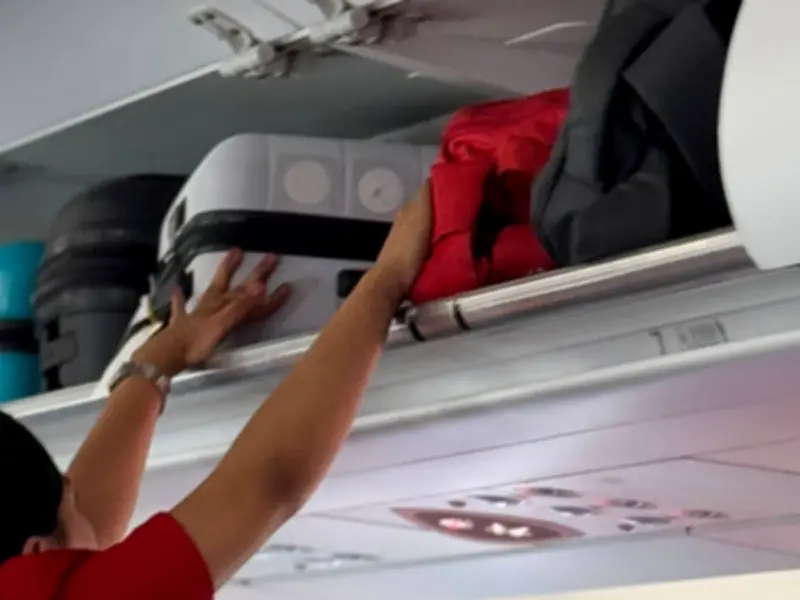
On BBC Breakfast, correspondent Katy Austin described a recent incident as a 'terrifying situation'. She said: 'Flames broke out in the overhead baggage compartment of an Air China plane last October. The cause is thought to have been a lithium battery. They're in loads of commonly used devices like laptops, vapes, phones, and power banks. They can store a lot of energy in a small space, but if they overheat or are defective, this video of a test in a lab shows just how quickly a fire can start.'
CAA Warning and Passenger Awareness
CAA director of aviation safety Giancarlo Buono said: 'Pack right for a safe flight, and that means don't put your batteries in your checked bag. Take them into the cabin with you. This simple tip will make your flight safer for you, and the other passengers you're flying with.' Research involving airline passengers revealed that 36% have no idea about the risks associated with packing batteries in hold luggage.
The advice for plane passengers is to take items like mobile phones, vapes, and power banks on board. Passengers should never charge a power bank on a flight and should turn off laptops completely if they are to be put in checked bags.
Airline-Specific Rules: easyJet
EasyJet enforces stringent rules stipulating that all lithium-ion batteries, spare batteries, and power banks must be carried in cabin hand luggage only, with a blanket ban on hold luggage due to the risk of fire. Power banks below 100Wh (approximately 27,000mAh) are permitted without prior approval; those between 100-160Wh require authorisation from the airline. Portable electronic devices containing batteries must be transported exclusively as carry-on baggage. If any items find their way into checked baggage, steps must be taken to prevent accidental activation and to safeguard the devices from harm; all devices must be completely powered down (not left in sleep or hibernation mode). EasyJet imposes a limit of 15 portable electronic devices per passenger. Smart baggage with non-detachable lithium batteries will not be accepted.
Airline-Specific Rules: Ryanair
Ryanair permits passengers to carry up to 15 personal electronic devices, including power banks. Spare lithium batteries (including power banks) must be individually protected to prevent short circuits by placing them in original retail packaging, or by taping over any exposed terminals or putting each battery in a separate plastic bag or protective pouch, and must only be transported in carry-on baggage. Passengers are also permitted to bring up to 20 spare lithium batteries, as long as they do not surpass 100Wh each. Spare lithium batteries, including power banks taken into the cabin, must not go beyond 100Wh and must not be used to charge or power other portable electronic devices during taxi, take-off, or landing. They must not be placed in cabin baggage stored in the overhead locker but rather kept in cabin baggage under the seat in front of you or carried on your person. Devices or batteries exceeding 100Wh are banned in both the cabin and hold, apart from electric wheelchair batteries.
Airline-Specific Rules: TUI
TUI's regulations forbid passengers from packing loose lithium batteries, power banks, or spare batteries in checked-in luggage. These items must only be carried in hand luggage. Power banks must generally not exceed 100Wh, and terminals must be safeguarded against short circuits. Devices should not be recharged while on board. Dry AA(A) batteries for small personal items are permitted provided they are inside the device or contained in sturdy packaging. When devices are placed in hold baggage, measures must be taken to protect the device from damage and prevent accidental activation; the device must be completely switched off (not in sleep or hibernation mode). Spare batteries and power banks should be individually protected against short circuits by keeping them in their original packaging, with terminals covered in tape or placed in a plastic bag in hand luggage. Airline approval is always required for medical devices. Power banks cannot be used to charge phones or laptops during flight, nor should they be recharged using aircraft power outlets. They should be kept in your seat pocket or under your seat, not in overhead bins.