The Rochdale railway station that was lost forever during a fuel crisis was initially meant to be a temporary closure. As anyone who has been paying attention to the news this year will know, there has been much talk of a fuel crisis due to the ongoing situation in the Strait of Hormuz. It is far from the first time there has been discussion of a fuel crisis in the UK, and it is unlikely it will be the last.
Many readers will remember queueing at the pumps in 2021, or further back the fuel strikes of 2000, which saw huge queues at the petrol stations as drivers attempted to stock up. Most famously perhaps, and frequently being referred to given current events in the Middle East, is the 1973 Oil Crisis, during which Arab oil-supplying nations boycotted supplies to countries that had supported Israel during the Yom Kippur War - leading to misery in the UK.
However, even that was not the first major fuel crisis to hit the UK. And one several decades earlier - which did not involve protests or the Middle East - ended with an area permanently losing its passenger train service.

On track
Broadley Railway Station opened its doors to passengers in 1870 as part of the Lancashire & Yorkshire Railway line from Rochdale to Bacup. Sitting to the west of the village, the one platform station had fairly frequently services in both directions during its early years, with the track also being served by local industry. At some point the line lost its Sunday service, and services were reduced slightly during the Second World War. However they started to improve in frequency shortly after the conflict ended. Unfortunately it was not to last.
The winds of winter
The winter of 1946/47 was particularly harsh, and caused chaos across the United Kingdom, still recovering in the aftermath of World War 2. Roads and railways were blocked and herds of animals froze to death. Communication services, including radios, were limited and some magazines were ordered to stop printing. Entire villages were cut off and had to be supplied by air, with tragic consequences when a plane supplying villagers in the Staffordshire Moorlands crashed, killing eight people on board.
Energy supplies were hit hard, including the supply of coal. The winter of 1947 caused chaos across the UK, as seen in this photo from Cardiff. Eventually the snows melted, often causing flooding in the process, but the economic disruption continued and - with declining passenger use also a factor - the station, along with the rest of the line, was shut to passenger trains in June 1947.
As the London, Midland and Scottish Railway, which had taken over the line by that point, put it: "The serious coal position has forced the company to discontinue certain services in order to conserve fuel supplies." It was initially described as a temporary closure. However was confirmed the passenger service was shut permanently in December 1949.
Legacy
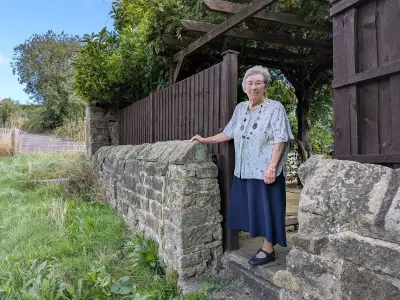
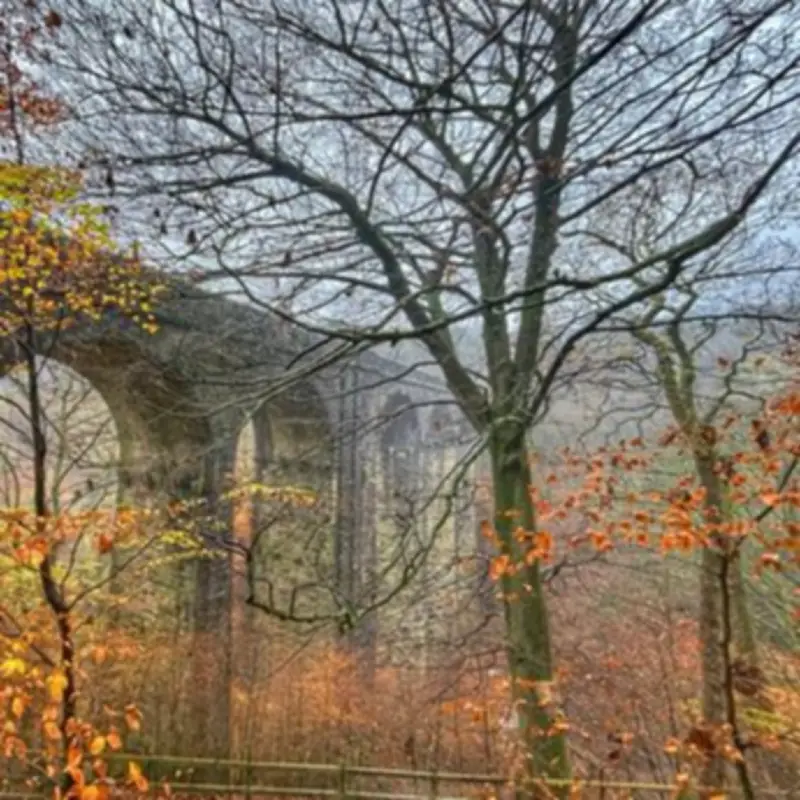
The station's platform still stands, although the track around it has long since gone. The site is now on the Healey Dell Nature Trail, with the most prominent reminder that a railway once ran here being the Healey Dell viaduct.