

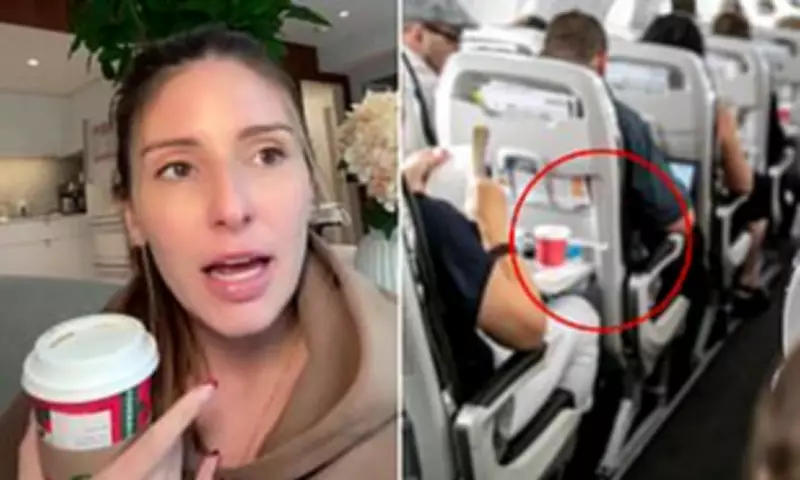
Canadian Podcast Host Ignites Global Debate Over Plane Seat Reclining
A Canadian podcast host has reignited one of air travel's most contentious debates, sparking fierce global discussion about what constitutes acceptable behaviour in the confined space of an aircraft cabin. Carla Bezanson, host of the popular 'Don't Think' podcast, recently shared a twenty-second opinion video that has unexpectedly gone viral, accumulating over 1.6 million views and thousands of passionate comments from travellers worldwide.
The Viral Video That Divided Travellers
In her snappy clip, Bezanson expressed frustration about passengers who recline their plane seats, citing statistics that 62 percent of people claim they won't recline out of consideration for those behind them. 'Which is crazy,' she remarked, 'because as someone in that 62 percent, somehow it's always one of the 38 percent sitting in front of me - every single time.' What began as a lighthearted travel gripe quickly revealed itself as a deeply divisive issue that resonates with frequent flyers across the globe.
The Anti-Reclining Argument: Courtesy Over Comfort
Many respondents firmly supported Bezanson's position, arguing that not reclining represents basic courtesy in shared spaces. 'I am one of those 62 percent - it's just polite,' wrote one commenter, while another declared, 'It's selfish. Reclining minimises the tiny amount of space behind you, invading it without consent.' Numerous travellers emphasised that they could handle sitting upright to ensure the person behind them could use their tray table or stand up without difficulty.

Short-haul flights received particular criticism from this camp, with many suggesting that reclining on journeys under three hours constitutes a significant travel faux pas. The consensus among anti-recliners was clear: personal comfort should not come at the expense of fellow passengers' limited space.
The Pro-Reclining Counterargument: Using What You Paid For
Perhaps surprisingly, the majority of responses to Bezanson's video defended the right to recline, with many declaring themselves 'proud recliners' unapologetically part of the 38 percent. 'It's not rude to use a feature you paid for,' argued one popular reply that garnered over 5,000 likes, while another insisted, 'I recline every time - it's what I paid to do.' Some put it even more bluntly: 'I always recline. My comfort comes first.'
Pro-reclining contributors expressed bafflement at those who leave their seats upright, questioning why passengers would deny themselves one of the few comfort features purpose-built into aircraft seating. 'The feature's there for a reason and I'm getting my money's worth,' wrote one, while another urged, 'Why would we deny ourselves the only bit of comfort purpose-built into the plane? Recline away!' Some even suggested a collective approach: 'If we all recline, we're all comfortable and still have the same space.'
Conditional Recliners and Practical Considerations
A significant number of passengers occupied middle ground, with their willingness to recline depending largely on the behaviour of those around them. 'I usually don't start it, but if the person in front reclines, I go for it too,' read one typical response, while another shared, 'I don't recline unless the person behind me has. Then it's fair game.' This conditional approach suggests many travellers view reclining as a reciprocal arrangement rather than an absolute right.
Several commenters emphasised the importance of awareness and communication before pushing seats back. 'Just look and ask - it's what they do on the Japanese bullet train. It's simple, polite, and you don't come off as thoughtless,' suggested one traveller. Another added, 'Always check who's behind you before reclining. When I do recline, I check first. If the person behind is sleeping, fair game. Otherwise, I'll stick it out because I care about others as well as myself.'

Universal Agreement on Meal Times and Tall Traveller Perspectives
One area of near-universal consensus emerged regarding meal service times, with both pro- and anti-recliners agreeing that reclining during food and drink service represents unacceptable behaviour. 'Team recline - but never at meal times,' read one representative response, while another agreed, 'I think it's only rude during meal service. Otherwise, it's fine by me.'
Tall travellers presented surprisingly divided perspectives on the issue. Some complained that reclining seats pressed painfully into their long legs, creating genuine discomfort, while others swore by reclining as a rare method to gain a few extra inches of relief during lengthy flights. This split highlights how physical differences can significantly influence individual experiences and opinions regarding seat reclining.
Airline Insider Perspectives and Practical Solutions
Even airline professionals joined the debate, with one former cabin attendant explaining, 'Seats only need to be upright during take-off and landing for safety. Otherwise, you're free to recline - it's better for your circulation.' Another airline worker advised, 'Reclining is a built-in feature. Most people use it. Don't let anyone tell you otherwise.' These insider perspectives suggest that airlines themselves consider reclining a legitimate use of seat functionality.
Some practical-minded respondents suggested booking seats with more legroom, such as emergency exit rows or upgraded economy options, if passengers are particularly bothered by space limitations. One cheeky commenter added broader in-flight perspective: 'I don't care if you recline, but if you use speakerphone out loud on your mobile for calls or videos? Straight to jail!'
The Fence-Sitters and Broader Implications
Not all respondents took strong positions, with some occupying neutral territory. 'I never recline myself, but I don't mind if the person in front does. I'm not sure how you'd use the lost space anyway,' said one, while another mused, 'Reclining doesn't make my seat any more comfortable, and someone else reclining doesn't make it worse. Honestly, everyone needs to calm down.'
This global debate, sparked by a single Canadian podcast host's twenty-second video, reveals deeper questions about shared space etiquette, personal rights versus collective consideration, and how modern air travel continues to test social boundaries in increasingly crowded conditions. As air passenger numbers continue to grow worldwide, such discussions about in-flight etiquette are likely to become even more frequent and heated in the coming years.





