

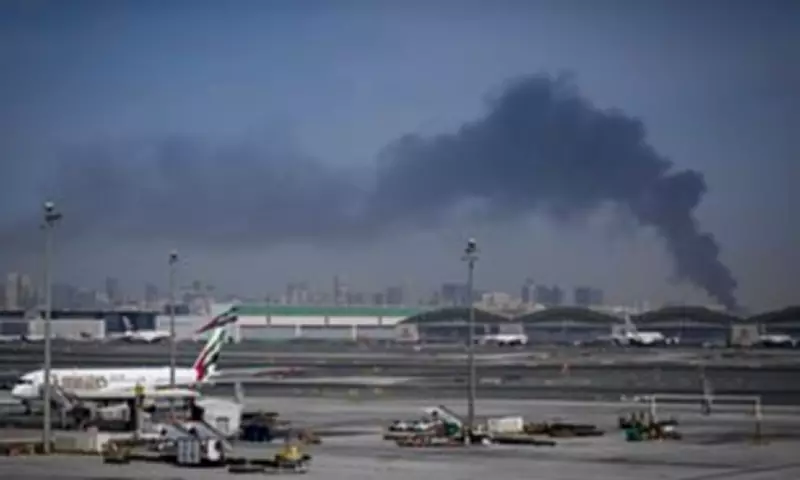
The skies above the Middle East, once bustling with passenger jets carrying holidaymakers, are now dominated by drones and missiles as regional conflicts intensify. This dramatic shift has created a severe aviation crisis, with thousands of flights delayed or cancelled and those still operating facing significantly extended journey times.
Prolonged Flight Routes and Major Disruptions
Pilots are being forced to navigate alternative routes to avoid dangerous airspace over Iran and the Persian Gulf, adding as much as two hours to many journeys. This disruption is not isolated to the Middle East; the ongoing war in Russia has similarly closed airspace over Russia and Ukraine, compounding global flight path challenges.
A Stark Decline in Air Traffic
According to data from the Economist, normal pre-conflict conditions would see approximately 3,700 passenger planes crossing the Persian Gulf over a 48-hour period. However, on March 3 and 4 this year, only 47 flights traversed the same path, highlighting a near-total collapse in air traffic through this critical region.

The impact from the Russian conflict is equally severe. In January 2022, 15 percent of international passenger flights crossed Russian, Ukrainian, Iranian, or Persian Gulf airspace. By March of this year, that figure had plummeted to just 1 percent, forcing airlines to adopt much longer alternative routes.
Specific Flight Time Increases and Route Changes
The consequences for specific routes are substantial. Flights from London to Tokyo now take almost two hours longer, while Air India has added approximately 50 minutes to its London to Delhi service. Perhaps most strikingly, the route from Helsinki to Tokyo, which previously flew over Russian airspace, has been rerouted around the Black Sea and over the North Pole. These changes add more than three hours to what was once a nine-hour journey, as reported by the New York Times.
Fuel and Operational Challenges
The longer flight paths have led to increased fuel requirements, creating additional operational and financial pressures for airlines. This aviation turmoil is part of a broader crisis affecting the entire tourism industry in the Middle East, which is suffering devastating financial losses.
Tourism Industry in Freefall
Less than two weeks into the latest Middle East conflict, the region's tourism sector has already incurred catastrophic damage, with recovery expected to take years. Current estimates indicate the conflict is costing the industry an astonishing €515 million (£444 million) every single day it continues.
Visitor numbers are declining rapidly across the region, even in areas not directly affected by hostilities. Since the US and Israel launched strikes on Iran on February 28, tourism has been in freefall, with the highest number of airline cancellations since the 2020 pandemic being recorded.
Global Transit Impact and Future Projections
Stop-over flights to destinations including India, South East Asia, and Australia have been particularly affected, disrupting 14 percent of global international transit traffic that normally passes through the Middle East. While repatriation flights are underway, general travel to and through the region remains firmly paused.
With bombardment continuing from multiple sides, projections based on World Travel & Tourism Council figures suggest total tourism industry losses could reach a staggering £35 billion, underscoring the profound and lasting economic impact of these conflicts on global travel and commerce.






