

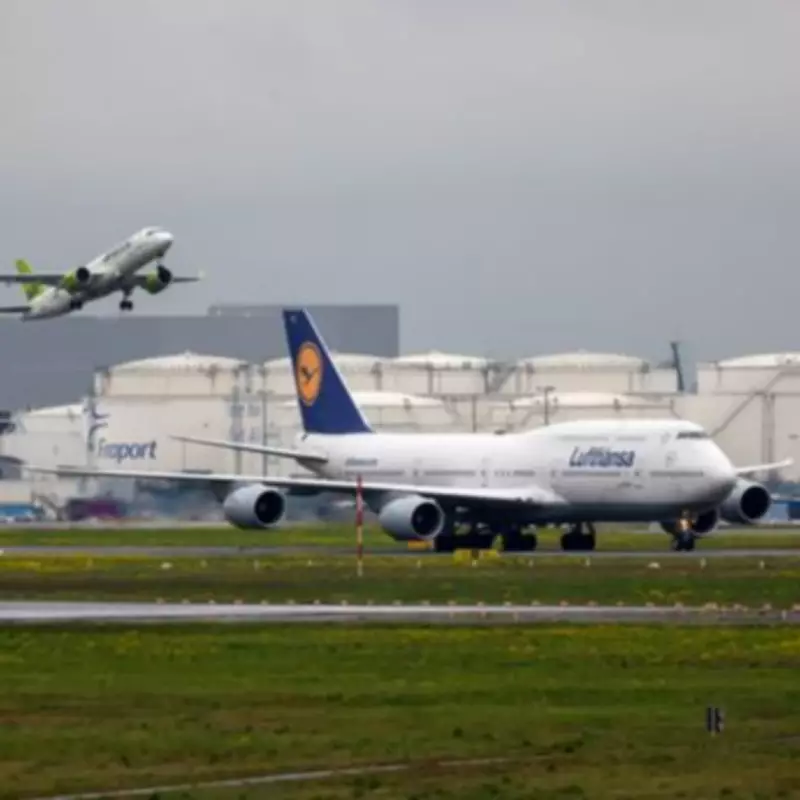
Lufthansa Issues Dire Warning as Aviation Fuel Crisis Escalates
Another major airline has sounded the alarm over the deepening aviation fuel crisis, with Lufthansa warning that grounding flights may become unavoidable. The ongoing conflict in the Middle East, particularly the Iran blockade of the Strait of Hormuz, has triggered severe disruptions to global jet fuel supplies, leading to cancelled routes and soaring costs for carriers worldwide.
Global Airlines Grapple with Supply Shortages and Rising Costs
Since US-Israeli strikes erupted on February 28, the aviation industry has faced mounting challenges. The situation worsened significantly when Iran blocked the Strait of Hormuz, a critical maritime passage for approximately 20% of the world's oil and gas. This action has precipitated a worldwide shortage of aviation fuel, forcing airlines to implement drastic measures.
Cathay Pacific has already cancelled select flights scheduled between May 16 and June 30. Meanwhile, Qantas Airways and Virgin Atlantic have issued warnings about supply shortages and escalating operational expenses. Now, Lufthansa, one of Europe's largest carriers, has joined the chorus of concern, indicating that flight groundings may be inevitable if conditions do not improve.

Lufthansa CEO Details Potential Capacity Cuts and Aircraft Groundings
Lufthansa CEO Carsten Spohr provided a sobering assessment in an interview with German newspaper Frankfurter Allgemeine Zeitung. He stated, "Kerosene will remain in short supply and therefore more expensive for the rest of the year." Spohr emphasized that kerosene supply is particularly crucial for airports in Asia, though record revenues on Asian routes have somewhat mitigated the impact of rising prices.
However, Spohr warned that if the fuel crisis persists without significant improvement, Lufthansa could reduce its capacity by 2.5% to 5%. This reduction would involve grounding between 20 and 40 older, less fuel-efficient aircraft that were already slated for early retirement. While no planes have been grounded yet, the airline is preparing for this contingency as the situation remains precarious.
Passengers Face Soaring Fares Amid Ongoing Uncertainty
The fuel crisis is not only affecting airline operations but also hitting travellers' wallets. Virgin Atlantic recently announced substantial fare increases, with economy-class tickets rising by £50, premium economy by £180, and business class by £360, bringing some fares to as much as £360. Virgin Atlantic Chief Executive Corneel Koster cautioned that prices could continue to climb in the coming months and potentially throughout the rest of the year.
Koster explained, "We have never seen jet fuel at this level and airlines cannot sustain those sorts of high costs. If the fuel price goes much higher, I think the surcharges may go higher. If they go up in a week and you book in two weeks' time, you'll be paying higher." He noted that while there are currently no fuel shortages, guaranteeing supplies beyond the next one to two months is impossible, with visibility limited for April and May but uncertain thereafter.
Industry-Wide Concerns Over Prolonged Disruptions
The aviation sector is bracing for prolonged turbulence as the Strait of Hormuz remains partially closed. Holidaymakers are likely to encounter higher flight prices and potential cancellations as airlines struggle with supply chain issues and escalating costs. The collective warnings from major carriers underscore the severity of the crisis, with no immediate resolution in sight.
As airlines navigate these challenges, passengers are advised to monitor travel advisories and prepare for possible disruptions. The coming months will be critical for the industry, with the potential for further capacity cuts and fare increases if the fuel shortage persists.






