
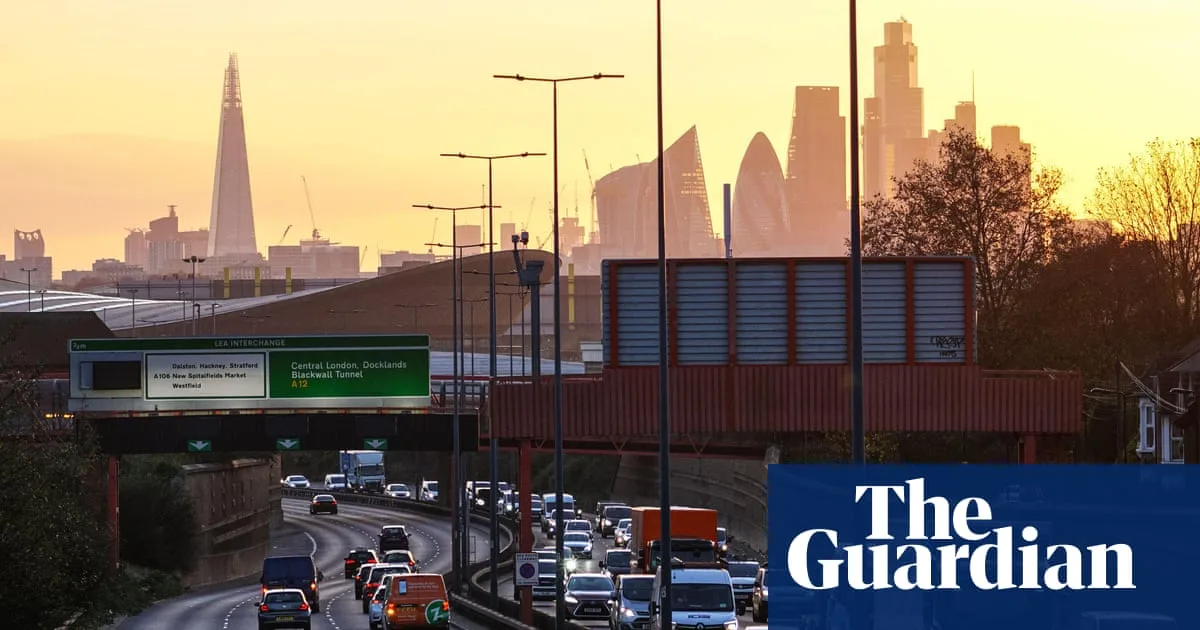
Emergency hospital admissions in central London fell after the introduction of the T-charge and ultra-low emission zone (Ulez), according to a new study by Imperial College London. Researchers analysed health records and found that annual trends for emergency admissions shifted from a 3% increase per year before the schemes to a 3% reduction after their launch.
The study, published in the journal The Lancet Public Health, focused on adults living in the central London zone. It found an 8% reduction in emergency admissions for heart problems and a 6% reduction for breathing problems, though the latter did not reach statistical significance. The researchers controlled for other factors by comparing central London with similar areas elsewhere in the country.
Dr Rosemary Chamberlain, who led the research, said: 'Given what we know about the link between air pollution and health, we wanted to understand if the introduction of the T-charge and Ulez also resulted in a reduction in people being admitted to hospital.' The T-charge, introduced in 2017, imposed an additional fee on older, more polluting vehicles, while the central London Ulez began in 2019.
The study noted that nitrogen dioxide from traffic had fallen by about 44% on central London roads before the Covid-19 pandemic. However, researchers could not distinguish the separate effects of the T-charge and Ulez due to insufficient health data. Dr Daniela Fecht, who supervised the study, said: 'We controlled for other factors and trends in our study design so we can conclude that reductions in hospital admissions are directly linked to the emission reduction initiatives in central London.'
Fecht added that other factors such as increased walking and cycling or reduced traffic noise may also contribute, but the team is 'fairly certain that these improvements in health are due to the reductions in air pollution.' The findings add to growing evidence that low emission zones can improve public health, following similar results from Bradford and earlier surveys in central London.




