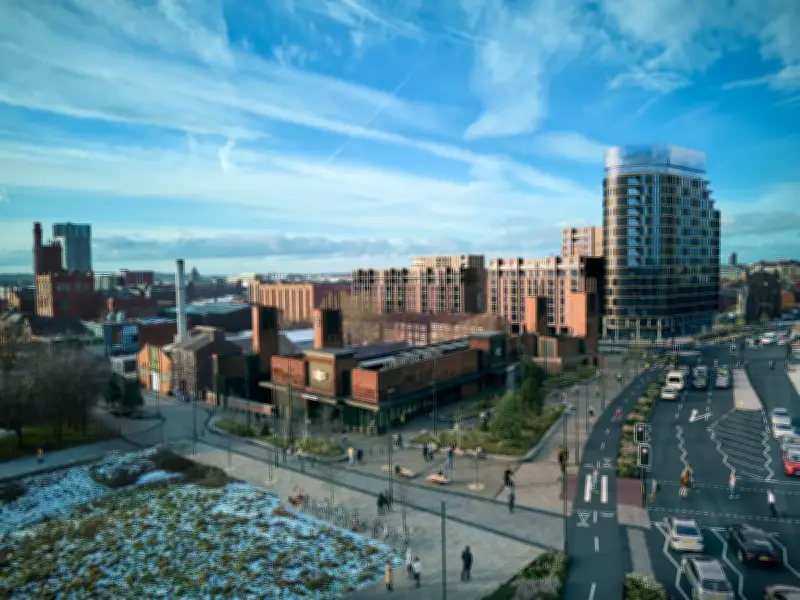
The cost of delivering the heavily delayed new Liverpool Baltic Railway Station has risen to £160m, around double the initial estimates for the project.
Plans for the station on the edge of Liverpool city centre were approved by city council planners in April 2025, with the plans formally submitted by the Liverpool City Region Combined Authority (CA) the previous November.
An investigation by the ECHO in January this year revealed that the project was significantly delayed, with the CA yet to appoint a main contractor nine months after planning permission was granted.
Costs double to £160m
The Combined Authority has now reported that construction is expected to begin early next year, but has also reported significant additional costs.
A report released ahead of the CA meeting next week indicates that the overall costs for the project are now set to be £144.4m for the station build itself and £15.7m for associated highway works, a total of £160m and double the initial estimates.
When the station was first proposed in 2022, it was hoped it would cost around £80m and be completed by 2025. After plans were approved last year, it was hoped work would start by the end of 2025 and be completed in late 2027 at a cost closer to £100m.
Reasons for the increase
The CA report states: "Scheme development has been extremely complex and has been impacted by major challenges arising from cost inflation, however, the full business case concludes that Liverpool Baltic Station represents a deliverable and affordable investment, capable of generating significant transport, economic and social benefits for the Liverpool City Region."
The report adds: "Cost increases from values previously reported to the Combined Authority primarily reflects the progression of the project from an early concept estimate to a mature development-stage cost model. Key drivers include rail market inflation driven by global factors, increased understanding of the engineering complexity associated with constructing an underground station, enhanced accessibility, fire safety and operational requirements, and the inclusion of appropriate risk and contingency allowances."
The station, which will be named Liverpool Baltic, is seen as a key part of Mayor Steve Rotheram's 'Merseyrail for All' pledge. It will be created by redeveloping the disused former St James Station, which lies beneath the Baltic Triangle, a former industrial area now filled with creative and hospitality businesses.
Construction timeline and other stations
The application site involves an existing cutting to the Northern Line of the Merseyrail network, located midway between Liverpool Central Station and Brunswick Station, where an underground train station once stood but was closed in 1917 during the First World War.
Liverpool Baltic is one of four new Merseyrail stations being planned by the Mayor and the combined authority. The other three are at Carr Mill in St Helens, Daresbury in Halton and Woodchurch on the Wirral.
The latest progress on all four projects will be considered by the Liverpool City Region Combined Authority on Friday November 6, alongside plans for further investment in existing stations across the region.
Subject to the necessary approvals, construction is expected to begin in 2027. Elsewhere in Halton, work is underway to explore plans for a new station at Daresbury, with feasibility studies and an initial business case commissioned, with findings expected in early 2027.
At Carr Mill in St Helens, initial plans and designs have been completed, with further development work planned alongside Network Rail, Northern and St Helens Council. On the Wirral, plans for a new station at Woodchurch are also progressing, with early development work underway and findings expected in early 2027.
Mayor Steve Rotheram said: "When I became Mayor, it had been nearly 20 years since the last new Merseyrail station opened. Since then, we've opened two more – and now we're making progress on another four."
A Liverpool City Region Combined Authority spokesperson said: "Building a new railway station in the heart of an existing, busy rail network is a complex undertaking, particularly in a constrained location where services need to continue operating safely throughout construction. Rail infrastructure ownership is fragmented and responsibilities are spread across a number of public and private sector organisations."
The spokesperson added: "As plans for Liverpool Baltic have developed, we've gained a clearer understanding of the engineering challenges involved, while the project has also been affected by significant increases in construction costs across the country. These factors have required us to revise our estimates for the cost and delivery of the station."
The case for a new station at Liverpool Baltic remains strong, bringing better rail connections to communities in the Baltic Triangle and Toxteth, and supporting the continued growth of one of Liverpool's most important regeneration areas.