

Leeds' Tram Dream: Decades of Promises Face New Reality Check
In 1993, a young James Lewis embarked on work experience in Leeds City Council's highways department. At that time, Leeds United FC had just relinquished their title as defending English champions, and the council was pushing forward with ambitious plans, including the Supertram project. Fast forward 33 years, and Lewis now leads the city council, but one aspiration remains unfulfilled: Leeds still lacks a tram system, a reality that has persisted through decades of promises and setbacks.
A History of Unrealised Ambitions
Lewis recalls drawers filled with paper plans for the Supertram, a project that saw funding promised by the incoming Labour government only to be withdrawn in 2005 due to cost concerns. A cheaper alternative, a trolleybus network, was abandoned in 2016. Now, the latest iteration, West Yorkshire Mass Transit, has gained fresh government backing. Outlined by Mayor Tracy Brabin, this integrated network aims to combine buses with two tram lines—one through south Leeds and another linking to neighbouring Bradford.
Development funding of £200 million has been allocated, with potential future support from a £2.1 billion city region fund. However, following a critical independent review for the Treasury, the government has mandated strict adherence to its processes, pushing the opening date for any tram into the late 2030s. Brabin describes this as a two-year delay but insists the project remains on track, though some locals view it as another chapter in a story of eternal postponement.

The Urban Landscape and Connectivity Challenges
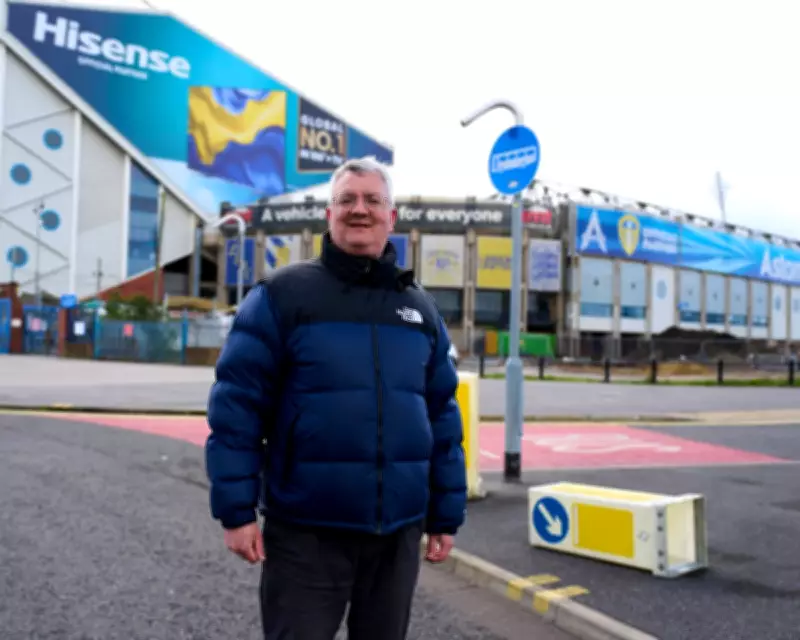
Leeds holds the dubious distinction of being the biggest city in Europe without a mass transit system. It once had double-decker trams, discontinued in 1959, and now grapples with wide roads inherited from 1970s planning for a "motorway city." The M621, flanking Elland Road stadium, is seen as having severed south Leeds from prosperity. While buses serve the area, match days see most fans walking two miles from the city centre to the stadium.
Lewis envisions a tram line that could "float over or under the motorway," akin to the Docklands Light Railway, avoiding past pitfalls of squeezing trams onto existing bus routes. He emphasises the goal of anchoring the city and linking key institutions like the White Rose shopping centre, Elland Road stadium, the main railway station, and St James's Hospital with "legible, easy to use, high-quality public transport."
Scepticism and Calls for Devolution
Not everyone is convinced. Greg Marsden, a professor at Leeds University's Institute for Transport Studies, questions the 18-year timeline for building a tram line, suggesting it reflects a lack of real commitment. Tom Forth, co-founder of the Data City company, argues that the root cause lies in centralised decision-making in London, advocating for local tax-raising powers and devolution to expedite projects.
Both experts point to France as a model, where tram systems are funded and decided locally, bypassing the need to prove value for money to a sceptical Treasury. Marsden highlights the need for a "Field of Dreams" approach—building it in the hope that connectivity and growth will follow—while Forth laments a "lingering sense that Britain can't build anything," contrasting it with projects like Heathrow's third runway, which faces opposition unlike Leeds' widespread desire for trams.
Potential for Regeneration and Investment
Pete Lowy, a Leeds United investor and director, is a vocal supporter, noting that mass transit could catalyse a £1 billion investment for 2,500 new homes, retail, and leisure spaces around the stadium. He sees it as an opportunity to transform south Leeds beyond match days, integrating infrastructure, housing, and regeneration. Recent developments, such as Leeds South Bank's shortlisting as a government new town, could accelerate growth, with murals by artist Kid Acne symbolising renewal in areas like Sweet Street.

Public Opinion and Future Prospects
Public sentiment is mixed. A builder at Sweet Street doubts Leeds needs a tram, comparing it unfavourably to Manchester, while Gladys Crosby, a 24-year-old personal trainer trainee, expresses scepticism after a lifetime of unfulfilled promises. In Armley, an elderly couple reflects the dichotomy: she welcomes the idea, but he dismisses it, noting trams were discontinued the year he was born.
Henri Murison, chief executive of the Northern Powerhouse Partnership, stands on a bridge above Bradford interchange, pointing to new developments like a clinic as evidence of "provable investment" spurred by the tram promise. He views the current delay as beneficial, ensuring adherence to Treasury processes to avoid past failures.
Focus on Buses and Broader Transport Strategy
Brabin pledges "spades in the ground" by 2028 for preparatory works, with efforts meanwhile focused on improving bus services, which will come under public control in 2027. Rob Johnson of the Centre for Cities argues that increasing bus frequencies could connect more residents than new trams, but Lewis and Brabin counter that trams are crucial for underpinning massive development, offering greater reliability, capacity, and job creation.
Brabin remains resolute: "I promised tram, and tram is what we're going to get." As Leeds navigates this latest chapter, the dream of a tram system endures, balancing hope against the weight of history and bureaucratic hurdles.





