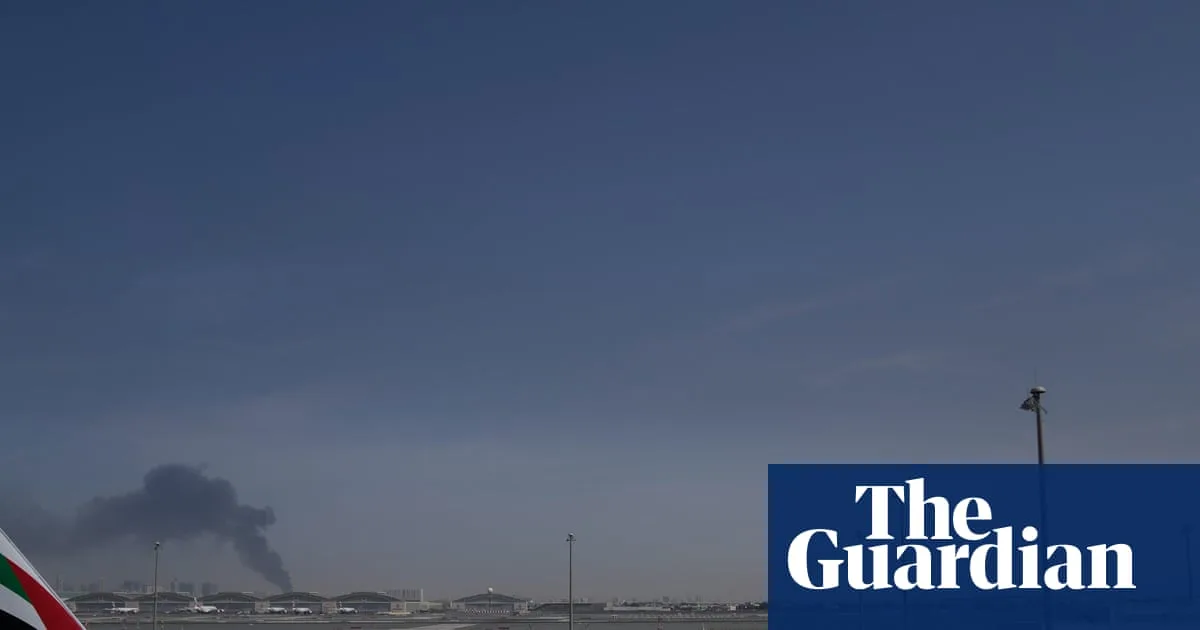
Iran Conflict Causes Widespread Flight Cancellations and Air Travel Disruption
The ongoing military conflict in Iran continues to create massive disruption to global air travel networks, with airlines worldwide cancelling flights to key Middle Eastern destinations and rerouting aircraft to avoid volatile airspace. The situation has left many British travellers stranded abroad and facing significant uncertainty about their return journeys.
Severe Impact on Middle Eastern Travel Hubs
Global air travel faces unprecedented disruption as the conflict in Iran forces airlines to cancel services to major Middle Eastern hubs including Dubai, Doha, Abu Dhabi, and Tel Aviv. The Foreign Office has issued travel warnings for several destinations, leaving British travellers effectively stranded in locations like Dubai despite the appealing surroundings.
Adding substantial pressure to an already strained aviation industry, jet fuel prices have doubled since the conflict began, creating additional financial burdens for carriers already grappling with restricted airspace and complex rerouting requirements. Pilots are being forced to navigate alternative flight paths that bypass the volatile Middle East region entirely.
Comprehensive List of Airline Cancellations
Below is the latest information on which airlines have cancelled flights to the region, presented in alphabetical order with specific details about affected routes and suspension timelines.
Aegean Airlines: Greece's largest carrier has cancelled flights to Tel Aviv, Beirut, and Amman until April 22, and to Erbil and Baghdad until May 24. Services to Dubai have been suspended until April 19 and to Riyadh until April 18.
airBaltic: The Latvian airline has cancelled all flights to Tel Aviv until April 29 and all Dubai services until October 24.
Air Canada: The Canadian carrier has suspended all flights to both Tel Aviv and Dubai until September 7.
Air Europa: The Spanish airline has cancelled all Tel Aviv flights until April 10.
Air France: The French flag carrier has suspended Tel Aviv and Beirut flights until April 4, with Dubai and Riyadh services cancelled until March 31, including an April 1 departure from Dubai.
British Airways: The UK airline has extended cancellations of flights to Amman, Bahrain, Dubai, and Tel Aviv until May 31 and to Doha until April 30. Services to Abu Dhabi remain suspended until later this year. Meanwhile, British Airways is adding additional flights to Bangkok and Singapore to accommodate rerouted passengers.
Cathay Pacific: The Hong Kong-based airline has cancelled all passenger flights to Dubai and Riyadh until May 31. To meet increased demand for European travel, Cathay Pacific will operate extra passenger flights to London, Paris, and Zurich during April, with additional capacity specifically allocated to London routes.
Delta Air Lines: The American carrier has cancelled its New York-Tel Aviv flights and delayed the restart of its Atlanta-Tel Aviv route until September 5. The planned launch of a Boston-Tel Aviv service, originally scheduled for late October, has been postponed indefinitely.
EL AL Israel Airlines: The Israeli national carrier has cancelled all flights for customers planning to depart Israel through April 11, including relevant return journeys. The airline is currently operating only a limited number of flights to several key international destinations.
Emirates: The UAE airline has implemented a reduced flight schedule following a partial reopening of regional airspace, though services remain significantly curtailed compared to normal operations.
Ethiad Airways: The Abu Dhabi-based carrier has resumed a limited commercial flight schedule connecting Abu Dhabi with approximately 80 international destinations, though frequency remains below pre-conflict levels.
Finnair: The Finnish airline has cancelled Dubai flights until March 29 and Doha services until July 2, while continuing to avoid the airspace of Iraq, Iran, Syria, and Israel entirely.
Flynas: The Saudi budget airline has suspended flights to Dubai, Abu Dhabi, Sharjah, Doha, Bahrain, Kuwait, Iraq, and Syria until April 15.
Indigo: The Indian low-cost carrier suspended operations to Doha, Kuwait, Bahrain, Dammam, Fujairah, Ras Al Khaimah, and Sharjah until March 28.
ITA Airways: The Italian airline has suspended flights to Tel Aviv until April 2 and extended Dubai cancellations until March 29, while avoiding the airspace of Iraq, Iran, Syria, and Israel.
Japan Airlines: The Japanese carrier has suspended scheduled Tokyo-Doha flights until April 10 and Doha-Tokyo services until April 11.
KLM: The Dutch airline has suspended flights to Tel Aviv, Riyadh, Dammam, and Dubai until May 17.
LOT Polish Airlines: The Polish carrier has cancelled all flights to Dubai until March 28 and to Tel Aviv until May 31. Services to Riyadh have been suspended until April 30 and to Beirut from March 31 to April 30.
Lufthansa Group: Lufthansa, Swiss, Austrian Airlines, Brussels Airlines, ITA Airways, and Edelweiss have collectively suspended flights to Dubai and Tel Aviv until May 31, and to Abu Dhabi, Amman, Beirut, Dammam, Riyadh, Erbil, Muscat, and Tehran until October 24. Lufthansa Cargo has implemented similar suspensions, except for Tel Aviv services which will remain suspended through April 30. Low-cost carrier Eurowings plans to suspend flights to Tel Aviv, Beirut, and Erbil through April 30 and to Dubai, Abu Dhabi, and Amman through October 24.
Malaysia Airlines: The Malaysian flag carrier has suspended all flights to Doha until April 15.
Norwegian Air: The Scandinavian low-cost airline has postponed planned launches of its Tel Aviv and Beirut services to June 15, from original start dates of April 1 and April 4 respectively. All Dubai flights have been cancelled through April 8.
Pegasus Airlines: The Turkish carrier has cancelled flights to Iran, Iraq, Amman, Beirut, Kuwait, Bahrain, Doha, Dammam, Riyadh, Dubai, Abu Dhabi, and Sharjah until April 13.
Singapore Airlines: The carrier has extended the suspension of its Singapore-Dubai flights until April 30. Meanwhile, Singapore Airlines is adding services on the Singapore-London Gatwick and Singapore-Melbourne routes from late March until October 24 to accommodate higher demand resulting from the Middle East disruptions.
Qantas: Australia's national carrier is increasing flights to Rome and Paris to meet growing demand for European routes. Paris services will increase to five return flights weekly from three, while the Perth-Singapore route will increase from daily to ten flights weekly. These schedule changes will take effect progressively from mid-April and continue until late July.
Qatar Airways: The Doha-based carrier is gradually increasing flight frequencies to and from its hub, with additional services planned to more than 90 destinations as regional conditions permit.
Turkish Airlines: The Turkish flag carrier has cancelled most Middle East flights until the end of March. SunExpress, its joint venture with Lufthansa, has cancelled flights to Dubai until April 6 and to Bahrain until April 30.
Wizz Air: The European low-cost airline has suspended flights to Israel until April 13, and to Dubai, Abu Dhabi, and Amman from mainland European destinations until mid-September. All flights to Medina have been suspended indefinitely.
Broader Implications for Global Aviation
The widespread flight cancellations and airspace restrictions are creating ripple effects throughout the global aviation industry. Airlines are facing not only immediate operational challenges but also significant financial pressures from increased fuel costs and lost revenue. Passengers worldwide are experiencing travel disruptions, with many facing extended stays abroad or complicated rerouting through alternative hubs.
The situation remains fluid, with airlines continuously reassessing their Middle East operations based on security assessments and airspace availability. Travellers are advised to check directly with their airlines for the latest information and to allow extra time for potential disruptions when planning journeys that might be affected by the ongoing conflict in Iran.






