

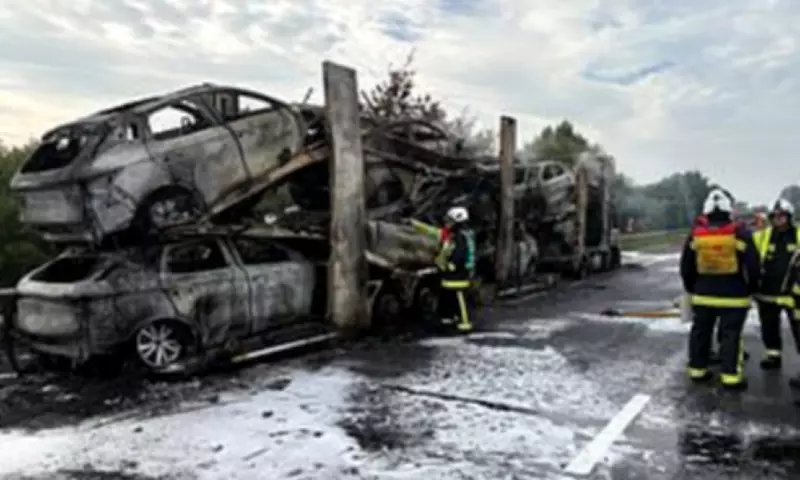
Emergency Services Overhaul Hybrid Car Accident Investigations Amid Safety Crisis
Emergency services across the United Kingdom are implementing a comprehensive overhaul of how they investigate accidents involving hybrid vehicles. This urgent revision follows a startling revelation by The Mail on Sunday that motorists are three times more likely to die in hybrid car crashes compared to those in petrol cars. The move underscores growing concerns over the safety of these popular vehicles, which combine traditional petrol engines with electric batteries and motors.
Heightened Death Rates Linked to Fire Risks
Experts attribute the elevated fatality rates to the complex interplay of petrol engines, batteries, and electric motors in hybrid cars, which may render them more susceptible to fires. Some safety analysts have starkly described hybrids as representing "the worst of both worlds" when it comes to vehicle safety. In response, ministers have confirmed that fire and rescue services will now meticulously track the causes of blazes in such incidents. First responders are mandated to report whether the ignition source was a battery and if that battery was charging at the time of the accident.
Statistical Analysis Reveals Alarming Disparities
According to Department for Transport figures analysed by The Mail on Sunday, a total of 122 individuals perished in hybrid car crashes in 2024, contrasted with 777 fatalities in accidents involving petrol cars. Given that hybrids are outnumbered by nearly 20 to 1 on British roads by petrol models, this data indicates that hybrids are three times more likely to be involved in a fatal crash. Previously, the Government had dismissed concerns, citing insurance industry analysis suggesting hybrid vehicles are less prone to catching fire than internal combustion engine vehicles. However, officials declined to publicly share these findings, fueling skepticism.

Contradictory Evidence and Industry Insights
Contrary to governmental assertions, Tusker, an insurer covering 30,000 company cars, found that hybrids exhibit a higher propensity to catch fire. Additionally, some experts propose that the increased death rates might be explained by the greater mileage accumulated by hybrids, which are frequently favoured by Uber drivers and other high-usage operators. Shadow transport secretary Richard Holden remarked, "It's quite clear that The Mail on Sunday's reporting has moved the dial on this issue, causing the Government to think again and recognise the impact of the dangers of some hybrids."
Safety Guidelines for Electric Vehicle Charging
In light of these risks, safety advocates emphasize proper charging practices for electric and hybrid vehicles to mitigate fire hazards. Key recommendations include:
- Never use a domestic multi-socket extension lead for charging; opt for outdoor-suitable cables if necessary.
- Avoid "daisy-chaining" extension leads, as this increases fire and electric shock risks.
- Purchase charging cables from reputable retailers or manufacturers adhering to UK safety standards.
- Regularly inspect cables for wear and tear, replacing them if damage is evident.
- Ensure home wiring is checked before using a 13A mains socket for overnight charging.
- Install a dedicated wall box charging point via a qualified electrician, leveraging Government schemes to offset costs.
These measures, endorsed by organisations like Electrical Safety First, aim to enhance safety amidst rising concerns over hybrid vehicle incidents.






