House Vote to Determine Mandatory Aircraft Locator Technology Implementation
A crucial vote in the US House of Representatives scheduled for Tuesday will likely decide whether commercial airliners and all other aircraft operating near busy airports must install advanced locator technology. National Transportation Safety Board Chairwoman Jennifer Homendy has stated this technology would have prevented last year's tragic midair collision near Washington, D.C., which claimed 67 lives.
Legislative Proposals and Industry Responses
The Senate has already unanimously passed legislation known as the ROTOR Act, which would mandate all aircraft be equipped with two specific systems: one to broadcast their precise locations and another to receive data about surrounding aircraft positions. Currently, only the broadcasting system is required. This legislative push implements recommendations the NTSB has advocated since 2008.
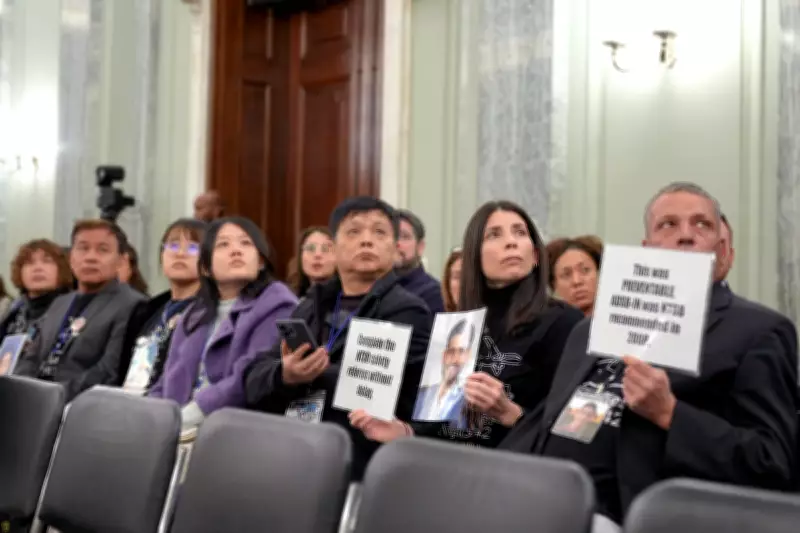
Families of the victims from the collision between an American Airlines jet and an Army Black Hawk helicopter strongly support the Senate bill. Major pilot unions, flight attendant organizations, and aerospace worker associations have also endorsed the ROTOR Act. However, House committee leaders have drafted an alternative bill addressing all fifty NTSB recommendations from the crash investigation, not just the locator technology aspect.

Victims' families have expressed support for the Senate bill while industry groups favor the House alternative. The Families of Flight 5342 organization stated that while the House bill contains valuable reforms, they cannot support it in its current form. All passengers aboard both aircraft perished when they collided and plunged into the icy Potomac River, including Olympic figure skater Maxim Naumov's parents and twenty-six other members of the figure skating community.
"The measure of legislation is not how many items it addresses but how well it addresses the most critical ones," the families' group declared. "On the central question of how quickly and effectively aircraft will be required to carry collision mitigation technology, the two bills are materially different."
Diverging Approaches and Political Dynamics
The Airlines for America trade association and major general aviation organizations representing business jet and small plane owners have endorsed the House bill. American Airlines specifically supports the Senate version. The Defense Department withdrew its December endorsement of the ROTOR Act on Monday, citing "significant unresolved budgetary burdens and operational security risks affecting national defense activities."
House Transportation and Armed Services committee leaders have urged colleagues to reject the Senate bill during debate, arguing it lacks comprehensiveness and House input. The key distinction between the proposals is that the House version would not immediately mandate both types of Automatic Dependent Surveillance-Broadcast systems. Instead, it would require the Federal Aviation Administration to conduct thorough investigations through a lengthy rulemaking process before determining optimal technology solutions.
The House legislation also addresses numerous systemic failures identified by the NTSB as contributing to the January 29th crash. Senate leaders behind the ROTOR Act, including Republican Senator Ted Cruz and Democrat Maria Cantwell, maintain their bill represents a necessary first step before developing additional legislation.
Technological Improvements and Safety Imperatives
Under special fast-track procedures, the ROTOR Act requires more than two-thirds support to pass the House on Tuesday, while the House alternative bill remains unprepared for floor voting. Rachel Feres, who lost her cousin, his wife, and their two young daughters in the crash, emphasized that both bills are necessary but the ROTOR Act is ready for immediate implementation to address critical collision avoidance technology.
"The same risk that took our families' lives is still there today," Feres stated. "And so it is so vital that we address that as soon as possible."

Current regulations require aircraft near major airports to have ADS-B Out systems that continuously broadcast location and speed data. However, ADS-B In systems that receive these signals and create cockpit displays showing surrounding air traffic are not standard on airliners, though many general aviation pilots use portable receivers with tablet displays.
The NTSB investigation confirmed that ADS-B In systems would have provided significantly earlier warnings to the pilots involved in the Washington collision, potentially allowing avoidance maneuvers. Unlike current technology that merely alerts pilots to nearby traffic, ADS-B In provides detailed positional information about surrounding aircraft.
"The question is: How many more people need to die before we act?" NTSB Chairwoman Homendy asked in a social media post shortly before the House bill's release. "We have an obligation to fix what went wrong on January 29th. Not only must we do this for the 67 people who died, we must do this for all those who lost their lives in accidents we've investigated. We must do this for their families. We must do this for future generations... lives we can still save."