Heathrow Faces Losing Europe's Busiest Airport Crown Due to Capacity Crunch
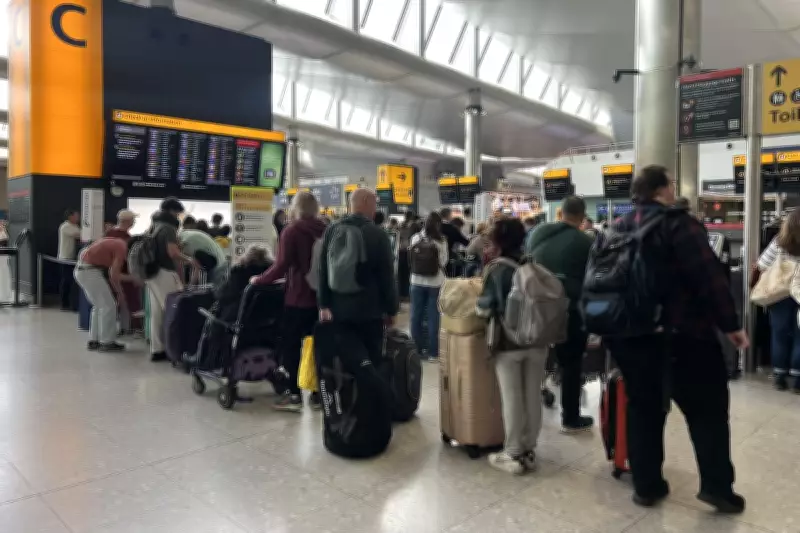
Heathrow Airport risks surrendering its position as Europe's busiest airport this year because of severe capacity limitations, chief executive Thomas Woldbye has issued a stark warning. The airport's growth is being stifled as its two runways operate at full capacity, trailing behind European competitors who are expanding more rapidly.
Third Runway Project Deemed Critical for UK Economy
Mr Woldbye emphasised that this looming threat underscores why Heathrow's project to construct a third runway is absolutely critical. He stated, "We remain Europe's largest airport, but latest figures show we may lose that position in 2026 and we cannot keep driving growth for the UK economy without more capacity. That's why Heathrow expansion is so critical."
The airport chief executive highlighted that decisions by ministers and the Civil Aviation Authority (CAA) this year are essential to enable delivery of what he termed the UK's flagship growth project. Securing planning permission by 2029 and ensuring adequate flight and cargo capacity for the nation depend on these crucial determinations.

Regulatory Decisions Looming This Year
This summer marks a pivotal period for Heathrow's expansion ambitions. The Department for Transport is expected to publish the draft Airports National Policy Statement (ANPS), which will establish the framework for decisions on airport growth across the country.
Simultaneously, the Civil Aviation Authority is scheduled to decide on a long-term model for airport charges, a key factor determining whether Heathrow will proceed with investing billions in a third runway. Parliament will then be asked to decide on the final ANPS in the autumn, creating a tight timeline for critical approvals.
Passenger Numbers Reveal Stagnating Growth
Heathrow handled 84.5 million passengers through its four terminals last year, representing a mere 0.7% increase from 83.9 million in 2024. This modest growth pales in comparison to European rivals who are expanding at significantly faster rates.
The west London airport's passenger numbers were only narrowly ahead of Istanbul Airport last year, which welcomed 84.4 million passengers representing a substantial 5.5% increase. Other major European hubs showed stronger growth patterns:
- Paris Charles de Gaulle ranked third with 72.0 million passengers (up 2.5%)
- Amsterdam Schiphol followed with 68.8 million passengers (up 2.9%)
- Madrid recorded 68.1 million passengers (up 3.0%)
In January 2026, Heathrow recorded 6.5 million passengers, a 2.0% increase from the same month in 2025, continuing this pattern of modest growth that threatens its continental leadership position.
Capacity Constraints Threaten UK Competitiveness
The capacity crisis at Heathrow represents more than just a statistical concern about passenger numbers. As Mr Woldbye emphasised, without expansion, the airport cannot continue driving growth for the UK economy. The lack of runway space limits both passenger traffic and cargo operations, potentially hampering Britain's trade and tourism sectors.
With European competitors investing in infrastructure and experiencing stronger growth rates, Heathrow's warning serves as a crucial reminder of the infrastructure decisions facing UK policymakers. The coming months will determine whether Britain's premier aviation hub can maintain its competitive edge or cede ground to international rivals.