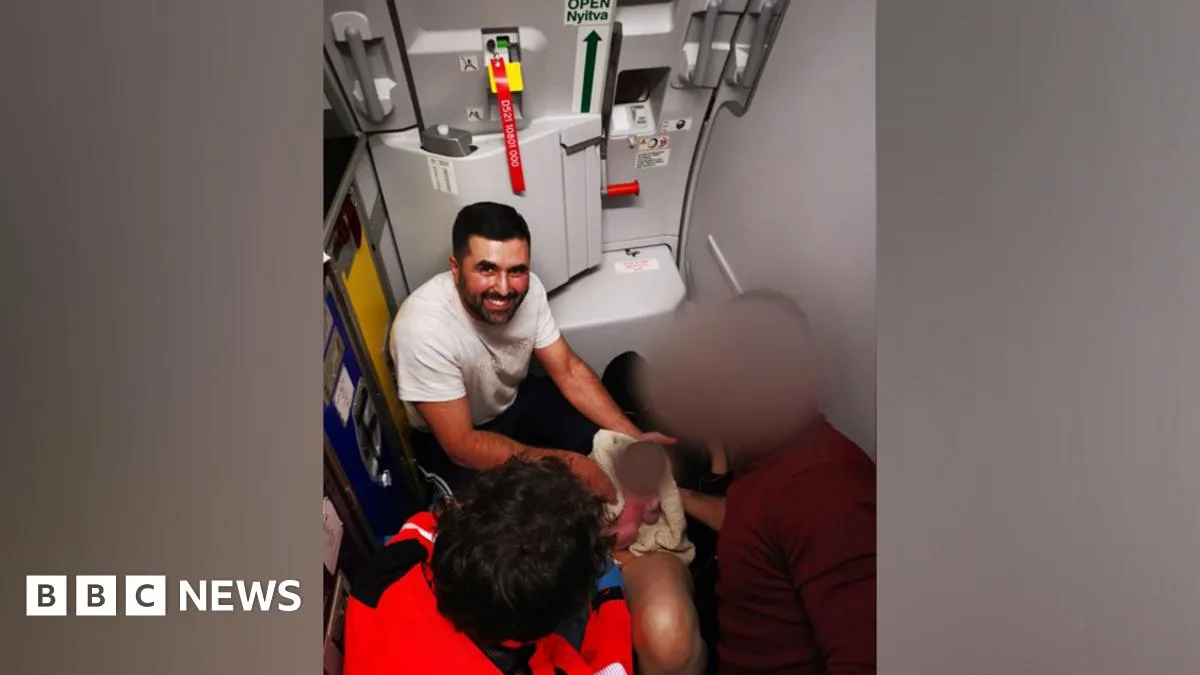
Former Emirates flight attendant Marika Mikusova has provided a rare insight into what truly occurs when a passenger gives birth during a commercial flight, emphasising that cabin crew are trained for such emergencies but are not medical professionals. The revelation comes after a recent birth on a flight from Kingston, Jamaica to New York City on April 4, which added to the fewer than 100 recorded births on aircraft globally.
Initial Steps and Medical Assistance
Mikusova, author of Diary of a Flight Attendant, explained that while cabin crew receive training for childbirth onboard, it is not part of their annual testing regimen. The first critical action in such a scenario is to immediately ask if there is a doctor on board and contact ground medical support for guidance. This ensures that the crew follows proper procedures and maximises safety for both mother and baby.
"Although we do receive training for childbirth on board, it's not something we're tested on annually," Mikusova told The Independent. "So, if a childbirth were to happen during a flight, our first step would be to immediately ask if there is a doctor on board and contact ground medical support for guidance on how to proceed, to make sure we are doing everything we can."
Location and Preparation for Delivery
Once medical support is secured, the next priority is to move the passenger to an area with more space. Ideally, delivery would occur near bulkhead seats, where the passenger can be positioned upright with knees parted against the partition wall. However, in reality, the galley often becomes the preferred location due to its greater space, especially on larger aircraft like the Boeing 777 and Airbus A380.
Mikusova noted: "If circumstances allow, the delivery would ideally take place near the bulkhead seats. As stated in the manual, we would place the passenger in a comfortable position, preferably upright with knees parted and drawn back against the bulkhead. However, since bulkheads are located in front of passenger rows, in reality we would most likely move the situation to the galley, as it offers the most space."
Hygiene and Onboard Delivery Kits
Despite aircraft floors not being known for cleanliness, flight attendants use common sense to maintain hygiene. The labouring passenger is placed on a clean blanket that has been unwrapped from plastic beforehand, and the delivery is conducted using rubber gloves with disinfectant readily available. Cleaning the area is a lower priority in the moment, as the focus remains on the birth itself.
"The cleaning of the area, floors and adjacent surfaces isn't included in the manual, but it's only logical," Mikusova said. "Having said that, cleaning and disinfecting the surrounding space would be the last thing we'd have time for at that moment. We would place the labouring passenger on a clean blanket that had been unwrapped from plastic beforehand and the delivery would be conducted using rubber gloves, with disinfectant kept close at hand."
Medical Equipment and Crew Limitations
Cabin crews have access to a delivery kit that includes essential items such as a mucous extractor, scissors, cord clamps, and absorbent pads. Ground medical support guides the crew through using these tools, but Mikusova stressed the importance of adhering strictly to trained procedures.
"We have a delivery kit on board, which includes items such as a mucous extractor, scissors, cord clamps, and absorbent pads – so we are fairly well prepared," she explained. "That said, it's important to stress that we are not doctors. We must strictly follow procedures and only perform tasks we are trained for. For example, if the mother is able to clean herself before delivery, she is encouraged to do so – we would of course provide wet towels or baby wipes if available. We also prepare all necessary medical supplies from the onboard kits."
Decision to Divert and Flight Continuation
Whether the aircraft diverts to land immediately depends on the pilots' assessment and the situation's stability. If a doctor is assisting with the delivery and ground medical support is involved, with the cabin crew feeling in control, pilots might decide to continue to the original destination, provided there are no signs of complications for the mother or baby.
"I'm not sure what the pilots' manual says about in-flight births or whether they are instructed to divert as a priority," Mikusova said. "Based on my experience with various medical situations on board and how we've handled them, I'd say that if we had a doctor assisting with the delivery, along with guidance from ground medical support, and the cabin crew felt the situation was under control, the pilots might decide to continue to the original destination - provided that both the mother and baby showed no signs of complications."
Pregnancy Travel Guidelines
It is generally safe to fly while pregnant, but most airlines require a "fit to fly" letter after 28 weeks of pregnancy. This letter confirms the due date and ensures there are no complications, helping to mitigate risks during air travel. This precautionary measure aligns with the rare but prepared-for possibility of in-flight births, underscoring the aviation industry's commitment to passenger safety in extraordinary circumstances.






