

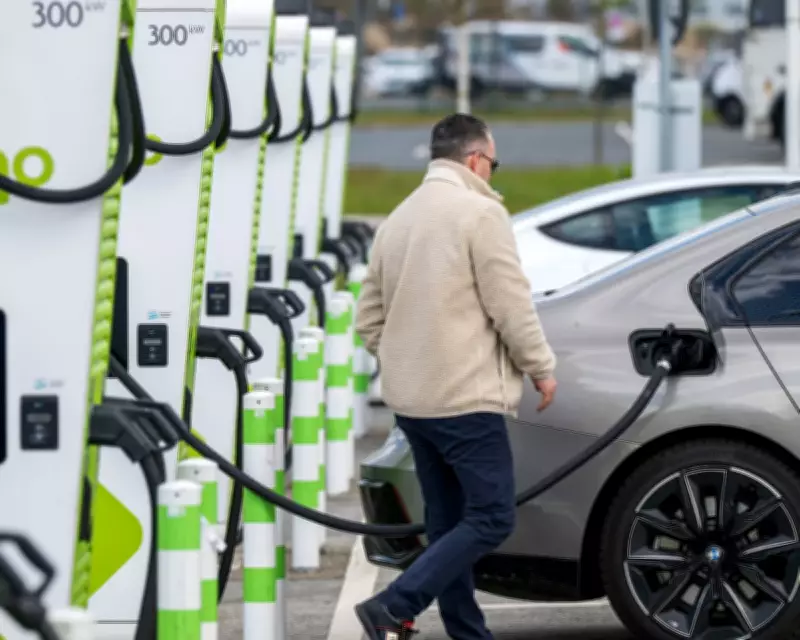
Interest in electric vehicles has escalated dramatically across Europe since the onset of the war in Iran, as escalating petrol and diesel costs underscore the economic advantages of plug-in power. According to fresh analysis, sales of electric cars skyrocketed by 51% in continental Europe last month, marking a significant shift in consumer behaviour.
March Registration Data Highlights Rapid Growth
Data compiled by New AutoMotive and the trade body E-Mobility Europe shows that 224,000 new electric vehicles were registered in March alone across 15 European nations. Over the first quarter of the year, total EV registrations reached 500,000, representing a substantial 33.5% increase compared to the same period last year.
Nordic Nations Lead the Electrification Charge
Norway continues to dominate the transition to electric mobility, with an astonishing 98% of all new cars sold in March being fully electric. Denmark followed closely with 76%, while Finland recorded nearly 50% EV adoption. These Nordic countries benefit from higher average incomes, substantial government subsidies, and well-developed charging infrastructure that facilitates widespread adoption.

Chris Heron, Secretary General of E-Mobility Europe, emphasised the broader implications: "March's surge in electric car sales represents one of Europe's most significant recent gains in energy security. At a time when oil dependence has become a critical vulnerability, this shift has already reduced annual forecourt demand by the equivalent of 2 million barrels of oil per year."
Central and Southern Europe Show Remarkable Progress
While Western automakers have recently scaled back EV investments amid signs of waning demand, the Iran conflict and consequent fuel price spikes over the past seven weeks appear to have revitalised consumer interest. Germany, France, Spain, Italy, and Poland collectively recorded a 40% increase in EV uptake during the first quarter.
France experienced a remarkable 50% year-on-year growth in EV sales, largely attributable to generous government incentives. These include grants of up to €5,700 for low-income households, €4,700 for middle-income buyers, and €3,500 for others. Additionally, France has implemented a social leasing scheme targeting households with incomes below €16,300 per person who commute at least 15 kilometres to work, making EVs particularly attractive in rural areas.
Notable Performances Across Key Markets
Italy, traditionally one of the EU's slowest adopters of electric vehicles, posted a striking 65% year-on-year increase in March, though its overall market share remains modest at just 8.6% compared to France's 28%. Germany, meanwhile, recorded a 42% rise in EV sales despite challenges from an influx of Chinese electric vehicles. The German automotive trade body recently noted that restructuring and new investments are yielding results, with every second electric car sold in Europe now manufactured in Germany.
The broader European context includes Sweden's Polestar, the continent's only all-electric car manufacturer, reporting record sales of 60,000 vehicles last year. This growth occurs against a backdrop where former US President Donald Trump has frequently criticised Europe's renewable energy initiatives, yet the data suggests the US-Israel war on Iran is inadvertently accelerating the transition away from combustion engines.
As petrol prices continue to climb, the economic case for electric vehicles becomes increasingly compelling, potentially heralding a permanent transformation in European transportation habits and energy security strategies.






