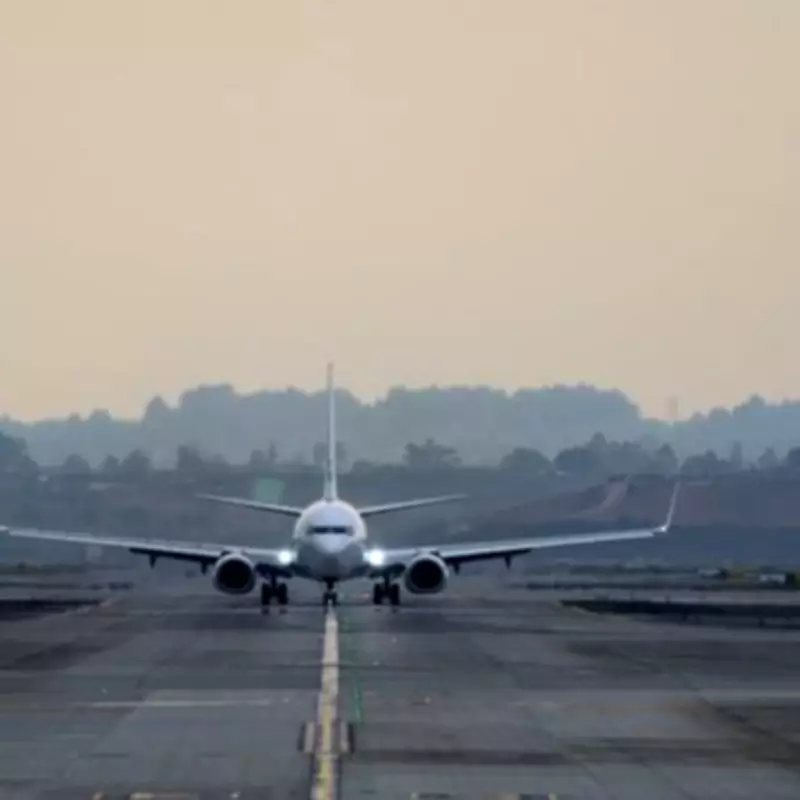
The head of the Airports Council of Europe (ACI Europe) has issued a stark warning that smaller airports across the continent are confronting an 'existential threat' as the ongoing Iran War drives up jet fuel prices and forces widespread flight cancellations.
Fuel crisis and its impact
Since the closure of the Strait of Hormuz during the conflict, jet fuel prices have doubled, leading numerous airlines to cancel routes. Olivier Jankovec, director general of ACI Europe, cautioned that some regional airports may not survive the combined pressures of supply shortages and reduced demand.
Regional airports are particularly vulnerable because their routes tend to be more price-sensitive. The pandemic already left many such airports operating at 30% below 2019 levels, according to Jankovec. 'The current levels of jet fuel prices and the prospect of a new cost of living crisis mean that many regional airports across our continent are likely to face both a supply and demand shock. For them, this is nothing short of an existential threat,' he told the Guardian.

Heathrow's contrasting challenges
While smaller airports struggle, Europe's largest hubs face a different problem. Heathrow, the UK's busiest airport, reported that it is 'full' amid a surge in transfer passengers caused by Middle East airspace closures. Chief financial officer Sally Ding stated, 'Heathrow is full,' as first-quarter figures showed 18.9 million passengers passed through in the first three months of 2024, a 3.7% increase year-on-year.
Airspace closures linked to the Iran conflict have boosted transfer traffic, a trend expected to persist as geopolitical uncertainty continues. This has impacted Dubai, one of Heathrow's main competitors for global connections. Heathrow's trading update noted it had 'temporarily absorbed demand from elsewhere' but warned that 'passenger numbers for the rest of the year are likely to be impacted whilst there is significant uncertainty in the Middle East.'
Third runway saga
Ding also highlighted that Heathrow's capacity constraints mean 'fewer choices and higher fares for passengers and missed opportunities for the UK economy.' The airport's long-running plan for a third runway, which would increase capacity from 84 million to 150 million passengers annually and allow 756,000 flights per year (up from 480,000), has been stalled for years amid political wrangling.
'Our plan is privately financed, rigorously assessed and focused on value. With the right regulatory framework and government policy in place, we are ready to invest, grow and keep the UK connected to the world,' a Heathrow statement said. The project involves diverting part of the M25 motorway into a tunnel.
For the first time, the government considered a competing expansion proposal from the Arora Group, which runs hotels and property asset management. That cheaper £25bn bid would have avoided the M25 altogether but was rejected last autumn by Transport Secretary Heidi Alexander. She selected Heathrow's proposal, but further delays followed a government decision to reassess its overarching strategy in the Airports National Policy Statement, now expected this summer.