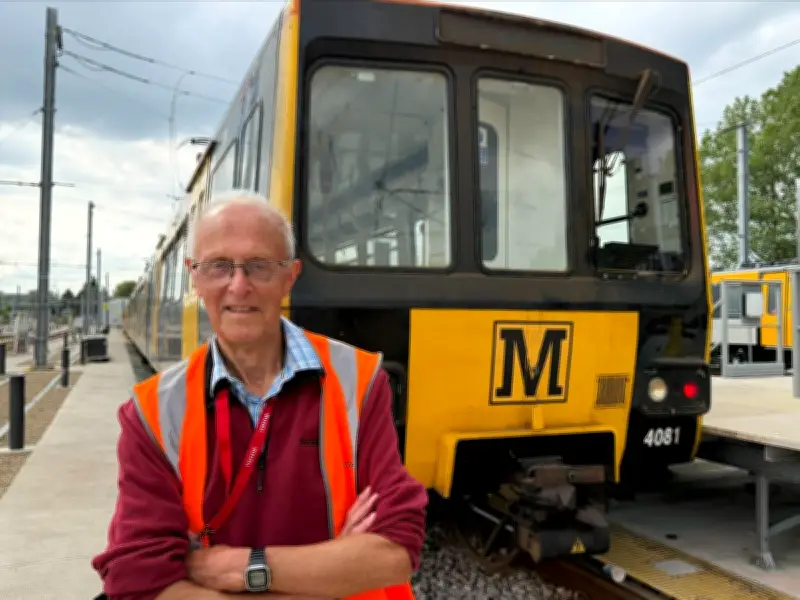
Retired engineer Phil Watts, 82, who helped design the Tyne and Wear Metro trains that served the region for 46 years, made an emotional visit to see the original fleet on their final week of passenger service. Watts worked on the Metro project from 1969 to 1979, helping to formulate the route and writing specifications for the trains that became a daily part of life for millions.
Return to the North East
Watts, now living in Birmingham, returned to the North East to visit Gosforth Metro Depot and see the last few remaining Class 599 trains. The old fleet completed its final guaranteed journeys on Friday 26 June, drawing crowds from around the world to say goodbye. The trains carried 1.7 billion customer journeys since entering service in August 1980 and clocked up half a billion kilometres.
Proud of his contribution
"It was amazing to come back after all these years and see the last few old Metro trains before they go," Watts said. "They have served the region well. I'm proud to have played my part in the development of them." He added that there is a lot of sentiment for the old fleet, which he shares, as it was his first large project. "Unfortunately, it is a fact of life that trains have a lifespan, and now it is time for new ones. The technology has changed beyond all recognition."
Beating other UK cities
Watts moved from Manchester to Newcastle to work on the Metro project. He recalled: "I joined the PTE in late 1969 as a planning assistant. I was part of the team who took the project from a concept to being ready to start detailed design and construction. It was fascinating." He noted that the idea of a Metro system was initially just a glint in the eye of the PTE, with local approval but no Parliamentary approval or government finance. "The work of the team was concentrated on filling in the detail of the proposed routes and the justification for the grants required."
Once funding was in place, Watts translated board requirements into specifications for tenders, first for two prototypes and later for the full fleet of 90 carriages. He highlighted the key principle: taking control of the local rail network from the nationalised railway, simplifying it, and integrating it into the local transport system. This principle was later adopted by Manchester's Metrolink and Nottingham's tramway.
Design and testing
Watts identified overall train dimensions, focusing on the platform-to-train interface for level access and minimal gap. Birmingham-based Metro-Cammell built the trains. "We worked closely with all the manufacturers, reviewing their designs and proposals," he said. The creation of a test track in North Tyneside allowed testing of different equipment. "Part of the test programme required us to cover as much distance as possible. We all took the opportunity to drive the prototypes, which is another special memory. They were great days and our work made a real difference."
Legacy and farewell
In 1979, Watts moved to Hong Kong for a new opportunity but watched with pride as the Metro opened in summer 1980. "That train fleet has given the people of the North East 46 years of great service," he said. "We managed to beat other UK cities to get a Metro system funded and built."