

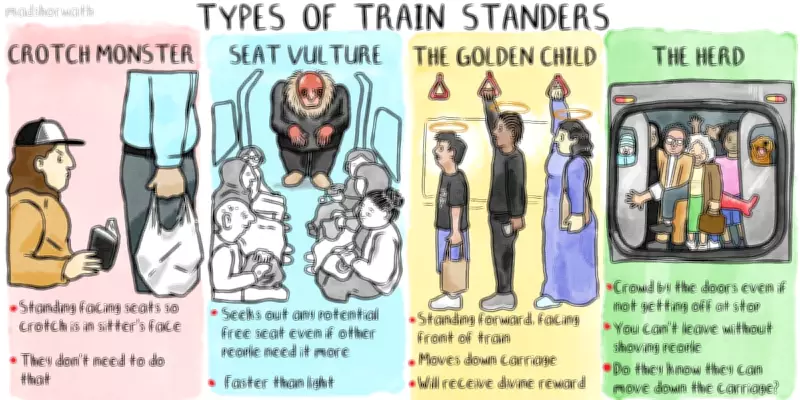
Madeline Horwath, a renowned cartoonist, has released a new illustration that vividly captures the everyday ordeal faced by commuters across the United Kingdom. The artwork, published on March 14, 2026, portrays a crowded train carriage where passengers are crammed together, forced to stand for their entire journey, with expressions of exhaustion and resignation etched on their faces.
The Art of Social Commentary Through Cartoons
Horwath's cartoon serves as a powerful piece of social commentary, using humour and visual storytelling to shed light on the persistent challenges within the public transport system. By focusing on the mundane yet universal experience of standing on trains, she taps into a shared frustration that resonates with millions of daily travellers.
Highlighting Broader Transport Issues
Beyond the immediate discomfort, the cartoon subtly critiques broader issues such as overcrowding, inadequate infrastructure, and the strain on rail services. It reflects a growing public sentiment that transport networks are struggling to meet demand, leading to decreased passenger satisfaction and potential impacts on productivity and well-being.

This artistic critique comes at a time when discussions around transport policy and funding are increasingly prominent in public discourse. Horwath's work adds a creative voice to these debates, encouraging viewers to reflect on the state of public services and the need for sustainable solutions.
The Role of Satire in Public Discourse
Satirical cartoons like Horwath's play a crucial role in engaging the public with complex issues in an accessible and entertaining manner. By distilling frustrations into a single image, they can spark conversations, raise awareness, and even influence public opinion, making art a valuable tool in societal critique.
In summary, Madeline Horwath's cartoon is more than just a humorous take on train travel; it is a poignant reminder of the everyday struggles faced by commuters and a call to address the underlying problems in public transport. As such, it stands as a significant contribution to both the art world and ongoing discussions about infrastructure and quality of life.






