
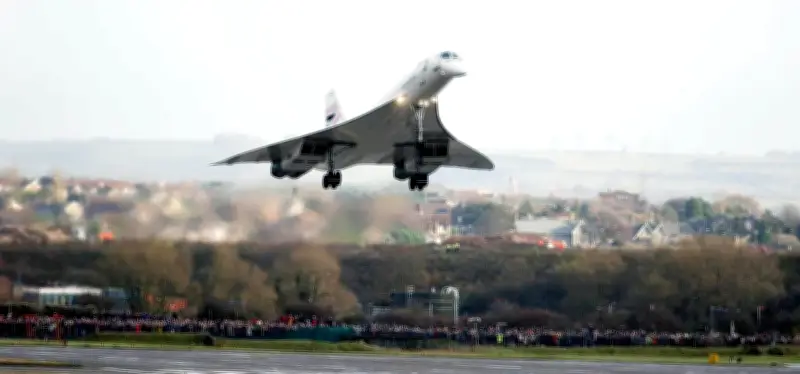
Boom Supersonic has finished assembling the core of Symphony, the first engine designed to bring back supersonic passenger flight, with the engine set to be turned on for the first time next month. The company, founded by Blake Scholl in 2014, aims to fix the shortcomings of Concorde, which was retired by British Airways in 2003.
From Amazon to aerospace
Scholl, a former software engineer from the early days of Amazon, first became interested in supersonic flight in 2007 when he climbed into a retired Concorde. He set a Google alert on "supersonic flight," but years passed without any credible progress. After teaching himself aerospace engineering, he quit his job and started Boom in 2014.
"This is the first large-scale supersonic core since the Olympus 593," Scholl explains. The Olympus 593 engine was built by Rolls-Royce in Bristol, and the last commercial Concorde landed at Heathrow in 2003.
Why Concorde failed
Concorde's immediate demise came after an Air France crash in 2000 that killed 113 people, followed by the 9/11 attacks that reduced transatlantic premium travel. But Scholl argues the deeper problem was that Concorde was built for national prestige, not passengers. "It was a taxpayer-funded project without any commercial voice," he says, adding that it was "a 100-seat aeroplane with 100 uncomfortable seats" and too expensive.
Scholl also criticises America's role, noting the ban on supersonic flight over land and the industry's stagnation under two giants. "Boeing doesn't do anything unless Airbus does it. Airbus doesn't do anything unless Boeing does it," he says.
Symphony's innovations
Boom's Symphony engine avoids Concorde's loud afterburners, and the company claims to have solved the sonic boom problem by flying at speeds like Mach 1.2, where shock waves bend back upwards before reaching the ground. On its test jet XB-1, "six times we predicted no sonic boom, and all six times we were right."
Boom's financial strategy involves powering AI data centres with Symphony before it carries passengers, providing test data and revenue. "By shipping to data centres first, we become independent of investors quite quickly," Scholl says. United, American Airlines and Japan Airlines are among those holding orders and pre-orders for 130 jets.




